I grew up in an age when men held open a door for women, when they walked on the outside of the footpath, when they offered to carry a bag.
I miss it.
I grew up, too, in the era of radical feminism, a time when it seemed that for some women, men could do no right. I’m perfectly capable of opening my own door, thank you. I can protect myself on the street, and I can certainly carry my own bag.
These are trivial examples, I know. There was much more going on. But any time I heard the words feminist or feminism, they carried with them an underlying stridency I came to detest.
I distanced myself. I wasn’t a woman who needed liberating.
I wrote some years ago about the joy of discovering my femininity when I had yet to get to grips with feminism. It turns out, though, that despite my misgivings, I am a feminist at heart. I believe in equal rights and opportunities for women. It’s that simple. Considering the progress the world is making, it’s mindboggling that the feminist movement hasn’t done itself out of a job. If anything, it’s becoming ever more relevant.
Enter Antonia Burrows, a long-time Budapest resident, herself an ardent feminist.
I’d seen a petition doing the rounds on social media to extend her residence permit in the national interest, and I was curious to know more. I’ve long been fascinated by how foreigners assimilate into their host country’s culture, and was particularly interested in her work with women in civil society.
Hers is a long story.
Burrows first visited Hungary in her 20s, later moving to Budapest to teach English in 1988. ‘There was tremendous fire in the women’s movement in the UK around then, but not much happening for women in Hungary,’ she said. She went about connecting with other women who ‘felt like changing the world’.
The 90s in Hungary were exciting times. Civil society was blooming. Burrows was teaching at Eötvös Loránd University within the Department of English Applied Linguistics (DEAL). She was given latitude to design her advanced courses on race, class, gender, and feminist theory and literature. ‘I regarded my role not simply as language instruction, but as helping students acquire the intellectual and communicative skills necessary for participation in an increasingly open and democratic society.’
She was involved in establishing Feminista Hálózat (Feminist Network), one of the earliest independent women’s organisations in Hungary. In 1994, she co-founded one of the most important civil organisations in the country: NANE (A Nők a Nőkért Együtt az Erőszak Ellen – Women for Women Together Against Violence), an association whose work I support. Burrows wrote the grant that secured funding for NANE and trained the first volunteers. She also worked within the Women’s Rights Programme at the Constitutional and Legal Policy Institute (COLPI), then part of the Open Society Institute network. ‘This work focused on supporting the development of women’s rights initiatives and civil society organisations across the post-communist region during a period of rapid democratic and institutional transformation.’
Well used to trotting out her CV, Burrows was only warming up.
I listened.
Fascinated.
This was more than assimilation; this was total immersion. And this was only Part I.
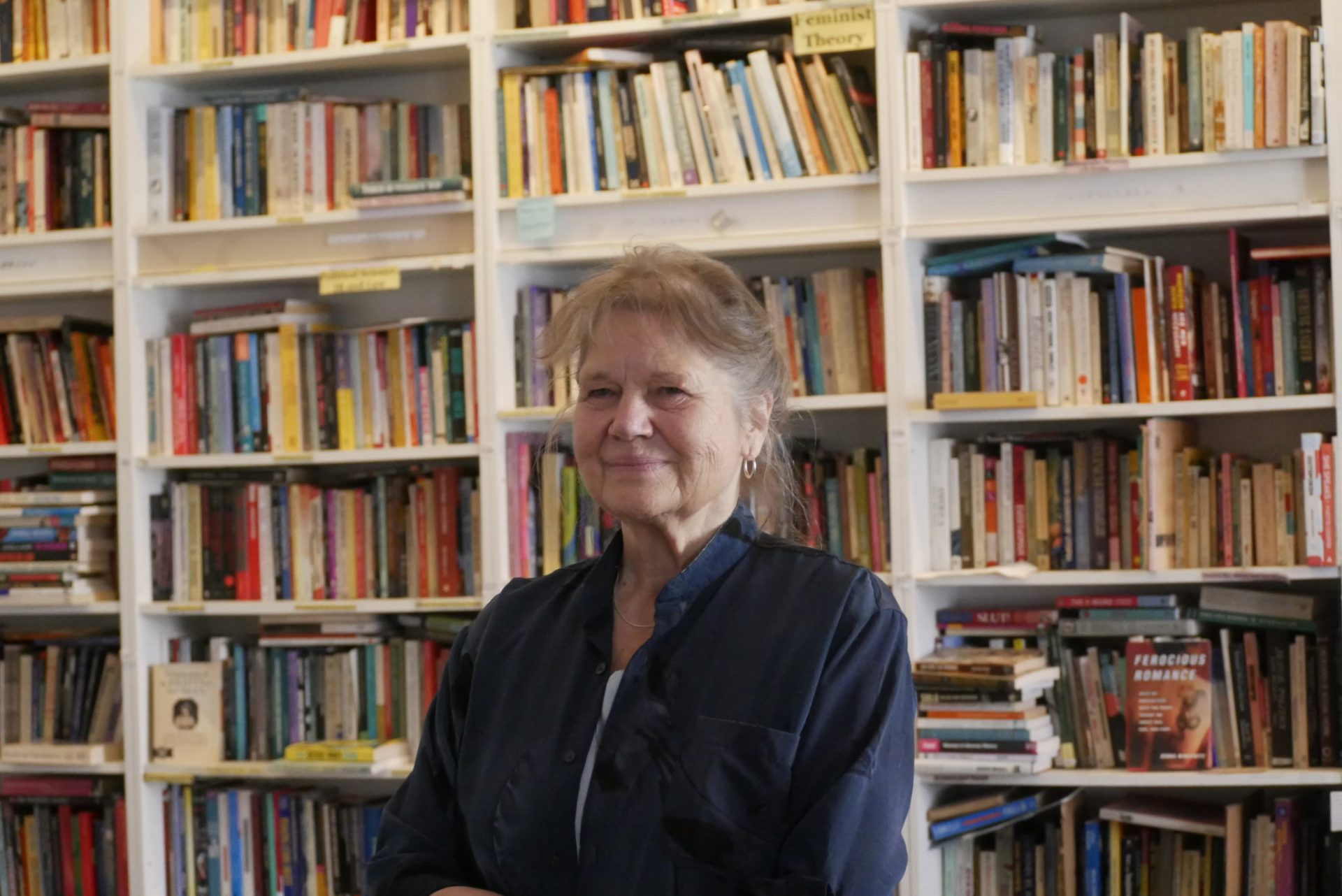
While living in the States in the early 2000s, Burrows began collecting books that were difficult to access in Hungary. Books on social sciences, feminist studies, critical theory, history, philosophy, literature, art, and children’s and young adult literature. She planned to return to Budapest and open a library. Nay, more than a library; a community space that couldn’t be shut down by any government. By this time, civil society had ‘less and less wiggle room’, she noted. But voices still needed to be heard.
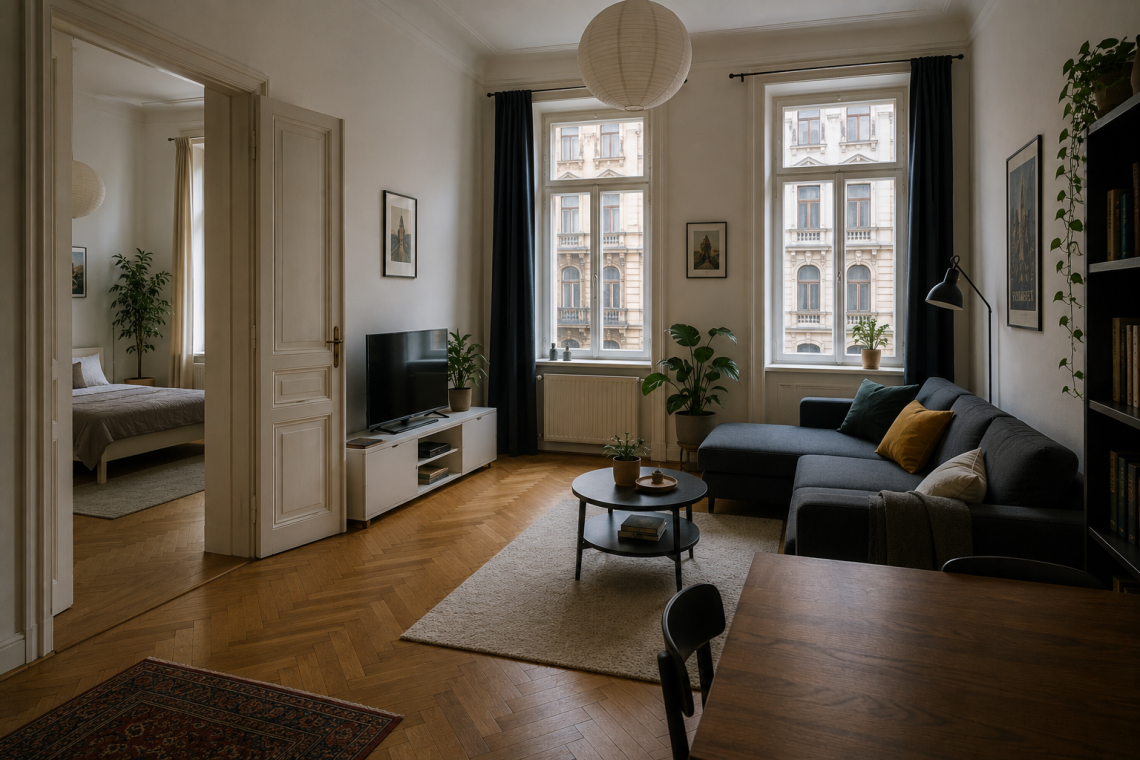
After 14 years in California, Burrows returned to Budapest and bought a flat in the city, near Astoria. She turned it into the Közkincs Könyvtár (Public Treasure Library), a feminist library and community space.
And so began Part II.
A library during the day, Közkincs Könyvtár morphs into a venue for book clubs (4), film clubs (3), discussion groups, book launches, workshops, and more at night. Here, people from all walks of life, from all parts of the world, find common ground.
Conversations. Discussions. Debates.
More than 30 years later, her former students have children of their own and now form the backbone of the community. International students, eager to connect with their host country, find their way there, too. There’s an LGBT film club, a left-wing political book club, two feminist book clubs, weekend psychodrama workshops, and so much more.
The library is also a gathering place for Hungary’s women’s civil society. It provides a permanent base for Magyar Női Alap (Hungarian Women’s Foundation) and Magyar Nők Érdekérvényesítő Szövetsége (Hungarian Women’s Lobby). She4She ‒ the Hungarian Association for Migrant Women ‒ offers regular Hungarian classes at the library, providing childcare so that mums can participate. And She4She members visit local schools and speak to children about their countries and cultures of origin, helping to broaden horizons and break down stereotypes.
As Burrows spoke, I noticed something in me.
Envy.
Here was a woman who has done and is doing so much in her community. I like to think I make a difference, and in my own small way I do. But Burrows? She’s in a class all of her own.
She’s realised my dream.
For me, the pièce de résistance was hearing about NADE (Női Adományozó Kör), a group of professional women who each contribute 15,000 forints a month for 12 months. As a group, they research women’s initiatives and distribute the 4 million+ to smaller organisations that receive little or no institutional grant support.
Women helping women.
It had been a while since I was this impressed. My heart was bursting.
The 130m2 space is crammed with thousands of titles. There’s a soon-to-be podcast studio, where young people will learn the mechanics of podcasting. Burrows has also started a publishing house, Közkincs Kiadó, to translate ‘significant contemporary European feminist texts into Hungarian for a general, non-academic readership’. They’ve received their first grant, and their first translation is underway.
As Burrows told me of her plans to set up a foundation to continue her work when she retires, I marvelled at her enthusiasm for life, her determination to give young people a voice, her strength and conviction. And not a hint of stridency.
What a woman. What a legacy. What a smile.
The library is open from 2 till 6 on weekdays. Budapest, Rákóczi út 11, 1088. Doorbell 125.
Pop in and say hello. It’s a public treasure indeed.