Overview:
From Haiti’s roughly 10,000 police officers to thousands of foreign troops and private contractors, six forces are confronting gangs amid a deepening security crisis. Yet their numbers, resources and mandates vary widely— as Haitians continue to demand better coordination and more than just short-term fixes from authorities.
Haiti’s fight against armed gangs is no longer being waged by its national police alone. As criminal groups continue to threaten communities, control strategic roads and challenge state authority, the government has assembled an increasingly complex security response involving domestic forces, international troops and private military contractors.
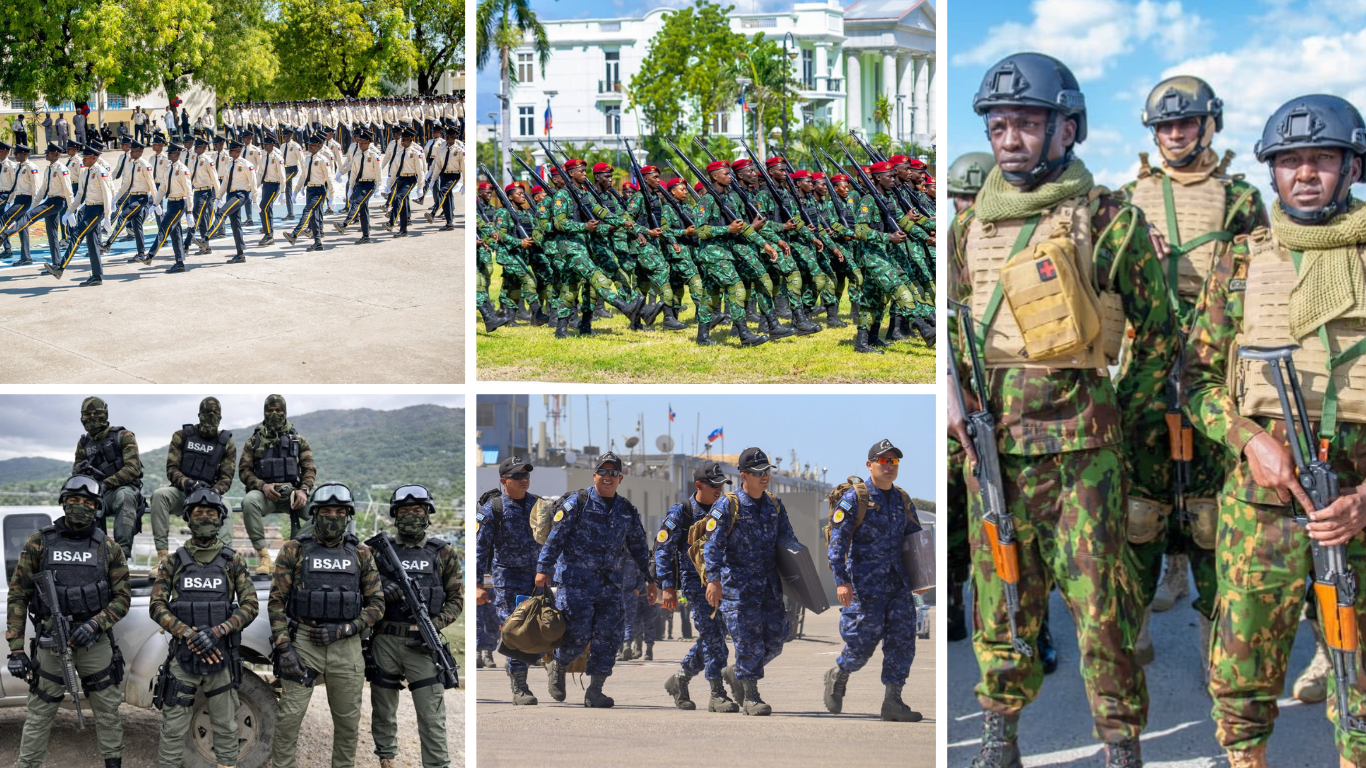
Six main forces are now involved in that effort: the Haitian National Police (PNH), the Protected Areas Surveillance Brigade (BSAP), the Haitian Armed Forces (FAd’H), the United Nations-backed Gang Suppression Force (GSF), a Prime Minister’s Office Task Force led by Erik Prince’s contractor firm, Vectus Global, and Salvadoran troops deployed under President Nayib Bukele’s order.
Their numbers range from approximately 200 private military contractors to thousands of Haitian and foreign security personnel. But their mandates, resources and levels of operational independence differ considerably.
Here’s a closer look at who they are and what their numbers reveal about Haiti’s struggle to restore security.
Haitian National Police: 10,000 active officers
New members of the National Police force parade during their graduation ceremony at the Police Academy in Port-au-Prince, Haiti, Friday, Jan. 23, 2026. (AP Photo/Odelyn Joseph)
The Haitian National Police (PNH) remains the principal institution responsible for maintaining public order, investigating crimes and confronting armed gangs. But years of violence, attrition, killings, political instability and inadequate resources have weakened its ability to operate across the country.
A recent assessment by the International Crisis Group (IGC) puts the active police force at approximately 10,000 officers, significantly below the 13,196 officers reported by the United Nations Integrated Office in Haiti (BINUH) at the end of 2023.
The decline has come as officers have been killed, injured or left the institution amid increasingly dangerous working conditions.
To address the staffing shortage, the government launched the P-4000+ recruitment initiative in October 2025, aiming to add at least 4,000 officers. The United States supports this initiative financially through the State Department’s Bureau of International Narcotics and Law Enforcement Affairs. Canada and the United Nations Integrated Office in Haiti (BINUH) also provide technical assistance to the law enforcement training program.
As of late last month, more than 3,200 recruits had graduated and joined the police force under the ongoing initiative.
On Nov. 15, the National Police Academy welcomed 1,200 aspiring officers into its 38th promotion, the fourth cohort associated with P-4000+.
However, observers say, recruitment does not immediately translate into operational capacity.
“Quality training, equipment, retention, and strategic deployment remain critical challenges,” said Himler Rebu, a former Haitian Army colonel.
The IGC has also raised concerns about the shortening of police training from seven months to less than four.
With Haiti’s population exceeding 12 million, the police force remains stretched thin. Increasing its numbers will be important, but its ability to protect communities will also depend on stronger institutions, adequate resources and sustained operational capacity.
Protected Areas Surveillance Brigade: 3,000 active members
A police officer inspects a Protected Areas Security Brigade (BSAP) vehicle with gunshot holes in its windshield, on the third consecutive day of protests demanding the resignation of Prime Minister Ariel Henry, in Port-au-Prince, Haiti, Wednesday, Feb. 7, 2024. (AP Photo/Odelyn Joseph )
Established in 2018 by the late President Jovenel Moïse, the Protected Areas Surveillance Brigade (BSAP) is a curious entity within the country’s medley of security bodies. It was created to safeguard the country’s most sensitive ecological areas. But BSAP members have largely fallen out of state control and operate with little oversight.
According to human rights leader Pierre Espérance, the group has grown into a freelance force, with some members allegedly linked to drug trafficking, theft, kidnapping, extortion and armed rebellion. The brigade officially claims more than 3,000 officers, though unofficial estimates suggest it may have thousands more on its rolls.
Haitian Armed Forces: 900-1,000 active soldiers
Members of the Haitian armed forces patrol the streets in Port-au-Prince, Haiti, Saturday, May 11, 2024. (AP Photo/Ramon Espinosa)
Haiti’s Armed Forces (FAd’H) were reestablished in 2017 by then-President Moïse, 22 years after former President Jean-Bertrand Aristide disbanded the country’s military.
Initially assigned responsibilities including disaster response, border security and support for the police, the army has increasingly been called upon to participate in security operations as gangs expand their territorial influence.
The force currently has approximately 900 to 1,000 active soldiers, Prime Minister Alix Didier Fils-Aimé estimated during high-level talks on Haiti at the UN on Sept. 24.
“Give them the drones and the dogs!”
Haitian protesters
The government is actively seeking to expand the institution.
In a June recruitment campaign, the Defense Ministry registered 17,522 applicants. Of those, 2,000 were invited to undergo medical, physical, psychological and intellectual screening. The ministry said it would select the 700 highest-ranked candidates for military training.
Defense Minister Mario Andrésol has also announced an ambitious plan to increase the military’s strength to 15,000 personnel within the next five years.
Gang Suppression Force: 2,000 personnel
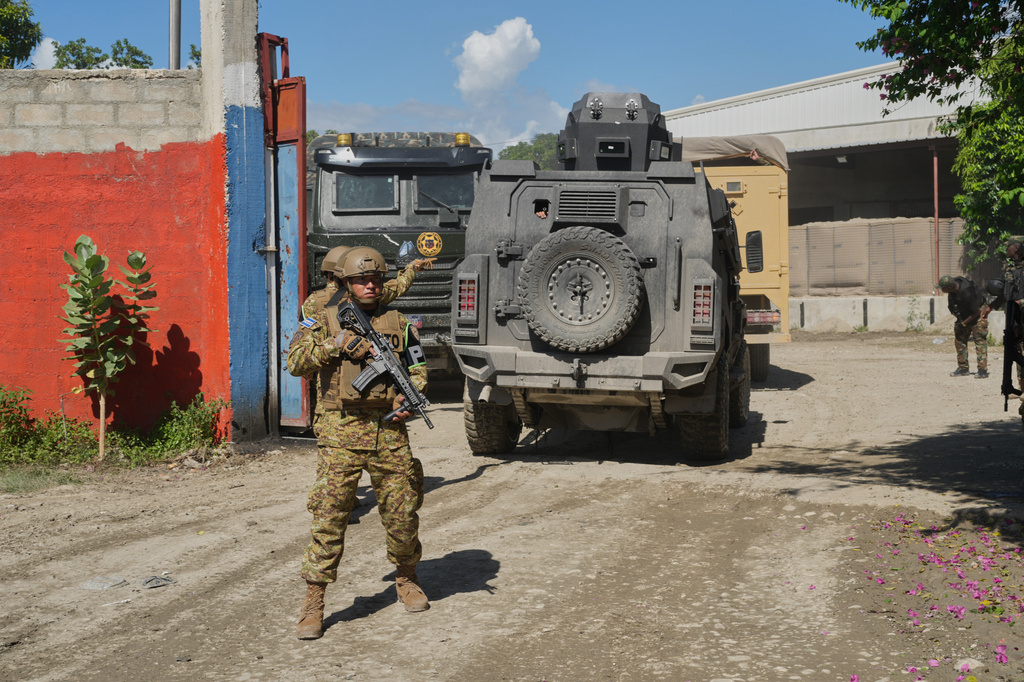
Armored police vehicles that are part of the Gang Suppression Force (GSF) patrol near the airport in Port-au-Prince, Haiti, Tuesday, Oct. 20, 2026. (AP Photo/Odelyn Joseph)
The GSF is a UN-authorized international security force established to conduct countergang operations in Haiti, working independently or alongside Haitian security institutions.
It succeeded the Kenya-led Multinational Security Support mission (MSS), which struggled to achieve its operational objectives because of personnel, equipment and funding constraints.
The UN Security Council approved the GSF in September last year, with a ceiling of 5,500 uniformed personnel and 50 civilian personnel.
The force began operations nearly a year after the UN vote. Its contingents include personnel from Chad, Sri Lanka, Guatemala, El Salvador, Mongolia, and Jamaica. Argentina, Bangladesh and Benin have reportedly pledged to provide more personnel to the force.
According to the UN secretary-general’s October report, the force had 1,563 uniformed personnel deployed as of Oct. 12. By November, the International Crisis Group (IGC) reported a strength of slightly more than 2,000.
That remains considerably below its authorized capacity.
Under its framework, the force is tasked with neutralizing, isolating and deterring armed gangs, securing critical infrastructure and supporting efforts to restore state authority. It has also expanded its operations beyond Port-au-Prince, notably deploying in the Artibonite department.
On Sept. 29, the Security Council extended the force’s mandate through March 31, 2027, as additional contingents continued arriving.
Task Force or Erik Prince’s Vectus Global contractors: Approximately 200 personnel
Blackwater founder Erik Prince speaks at the Conservative Political Action Conference, CPAC, at the Gaylord National Resort & Convention Center, Saturday, Feb. 22, 2025, in Oxon Hill, Md. (AP Photo/Jose Luis Magana)
Since March 2025, private security contractors working for Vectus Global have operated alongside Haitian security personnel with about 200 agents under the government’s Task Force.
Erik Prince, a former U.S. Navy SEAL and founder of the now-defunct Blackwater security company, owns the company behind a multi-year deal worth hundreds of millions of dollars with the Haitian government, according to multiple media reports.
The arrangement represents an unusual component of Haiti’s security response: a private contractor supporting government-led countergang operations alongside the national police.
Vectus Global contractors have reportedly provided technical and operational support, particularly involving drones equipped with explosives and other security technologies. Their activities have been concentrated largely in the Port-au-Prince metropolitan area.
The company’s involvement is part of a multimillion-dollar agreement with the Haitian government, which has also involved a longer-term customs modernization arrangement.
Salvadoran troops: 2,500 personnel
Soldiers from El Salvador patrol the area of Sylvio Cator National Stadium in downtown in Port-au-Prince, Haiti, Thursday, Nov. 12, 2026. (AP Photo/Patrice Noel)
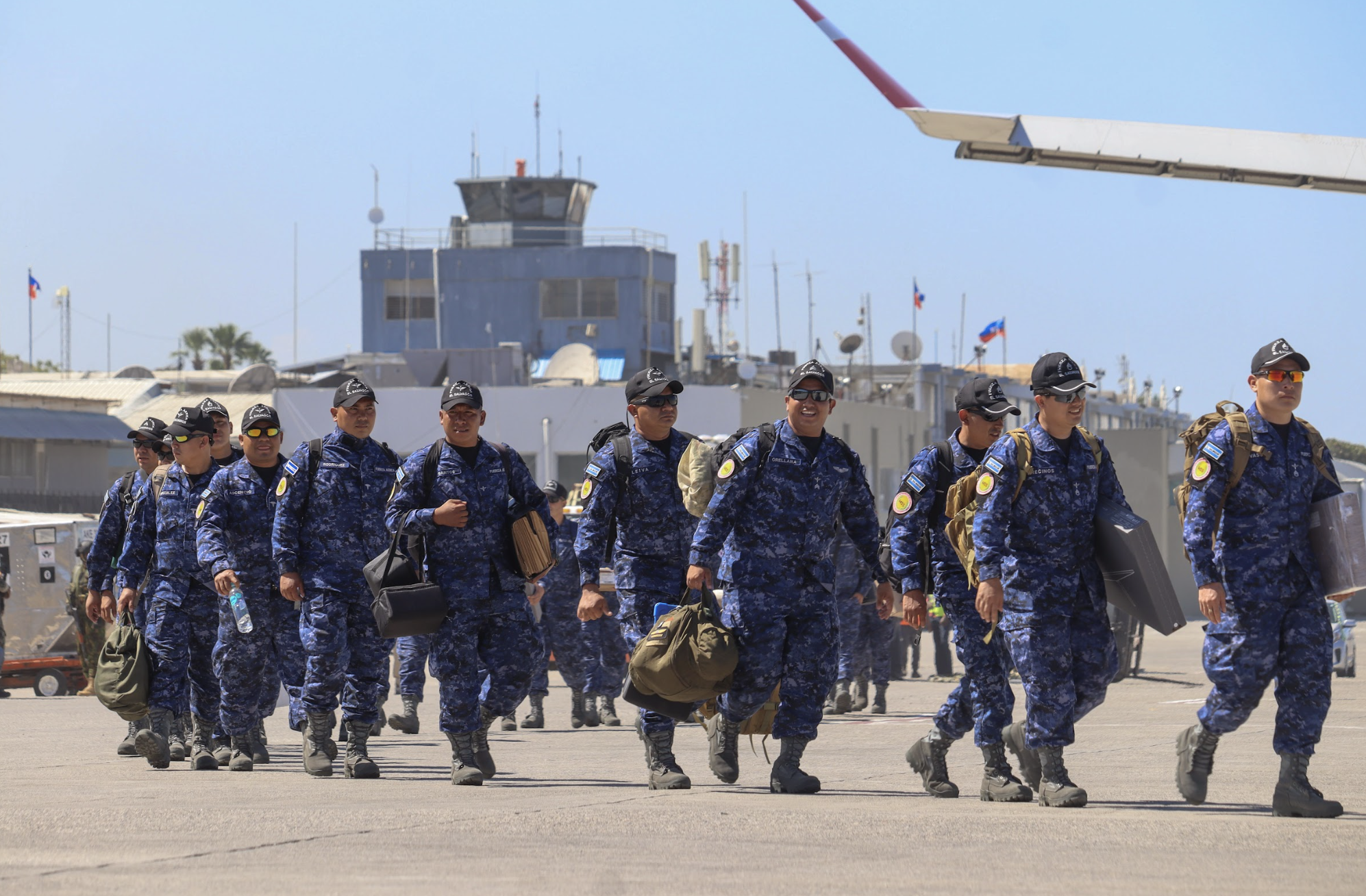
El Salvador’s military deployment to Haiti began after four of its soldiers, serving as aviation technicians with the GSF, went missing on Oct. 18 following a gang ambush in Santo, part of the Croix-des-Bouquets area— a stronghold of the 400 Mawozo gang.
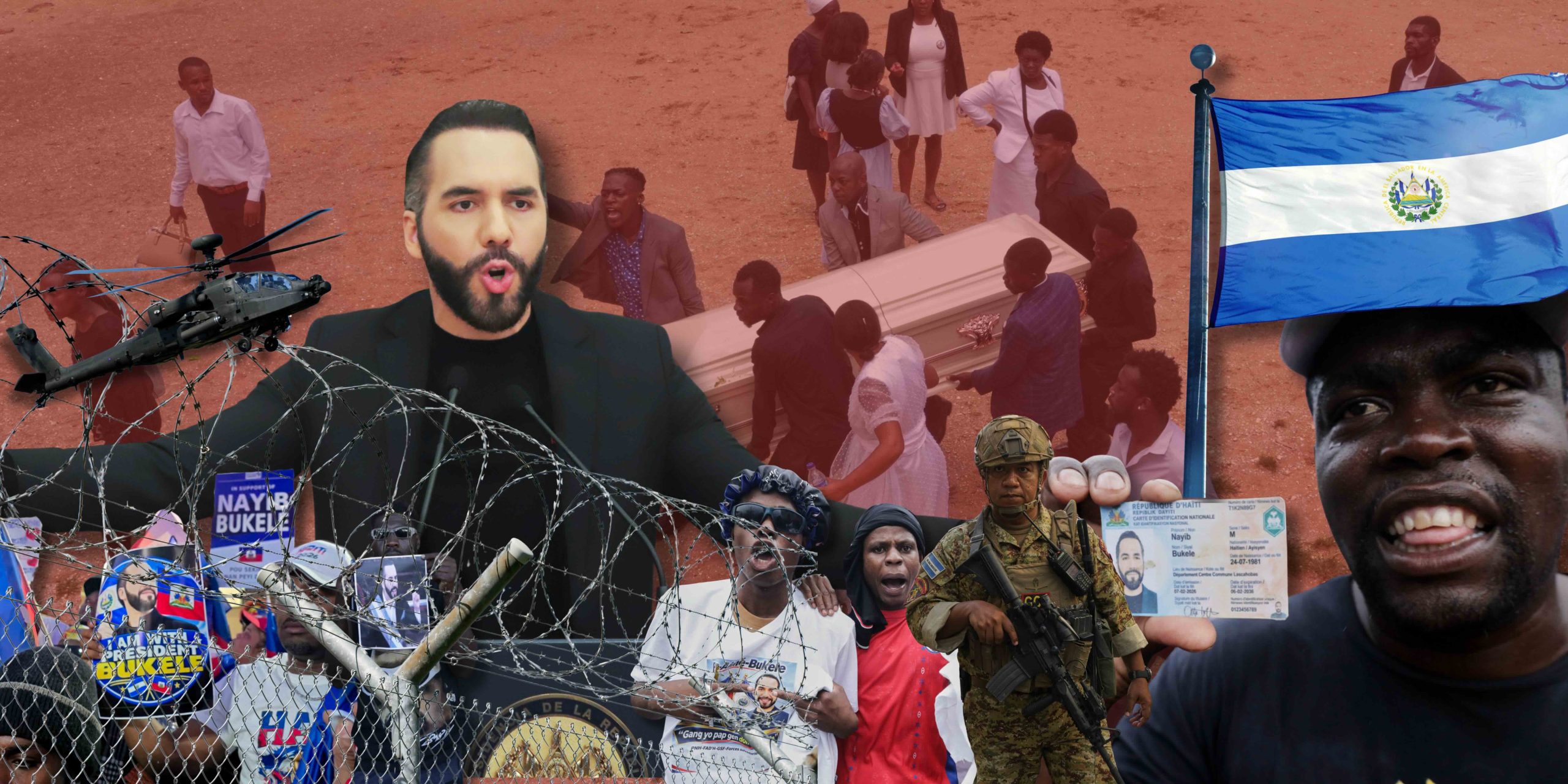
President Nayib Bukele immediately announced a special military operation separately from the GSF to help locate the missing soldiers and threatened a stronger response if they were not returned alive.
A first contingent of 100 Salvadoran special forces soldiers arrived in Haiti on Oct. 22.
The deployment subsequently expanded, highlighting the distinction between about 200 Salvadorans already serving under the GSF and the much larger contingent deployed separately by Bukele’s government. By Nov. 17, an estimated 2,500 Salvadoran soldiers were sent to Haiti.
Initially deployed to search and rescue their four missing compatriots, the Salvadoran forces have expanded their operations against armed groups. Their presence has drawn considerable public attention, with some Haitians welcoming the additional military support as gangs continue to terrorize communities.
On Nov. 17, thousands of people marched in Port-au-Prince to express support for Bukele and the Salvadoran deployment. The support has since spread to other parts of Haiti and to diaspora communities abroad in Florida and New York.
“Give them the drones and the dogs!” some Haitians shouted in reference to the explosive drones that have targeted areas controlled by powerful gangs and the newly unveiled robot dogs making their rounds in Port-au-Prince.
On the same day, Haiti’s Council of Ministers approved a bilateral agreement signed by the two countries, according to the Haitian Prime Minister’s Office Facebook page. Then, on Nov. 19, the Salvadoran parliament voted overwhelmingly to allow the troops to remain in Haiti until October 2027.
Still, many raise questions about the deployment’s command structures, coordination with Haitian authorities, accountability and the long-term sustainability of relying on foreign troops.
For one, the Group of Seven wealthy nations (G7), including Canada, France, Germany, Italy, Japan, the United Kingdom and the United States highlighted the concerns in a joint statement last week while throwing their support behind the GSF.