Overview:
A self-described “nationalist” inspired by family history going back to Haiti’s War of Independence, sociocultural advocacy and a business portfolio tells The Haitian Times she wants to restore control of the country to the state.
Savannah Savary, an heir to two sugarcane-fueled businesses whose multifaceted interests span across Haiti’s economic, social and cultural sectors, says she intends to seek Haiti’s presidency and is in talks with a political party to officially register her bid.
Born to a Lebanese mother and Haitian father with roots in rural La Chapelle, Savary’s enterprises include kleren liquor sales and real estate. The 61-year-old said she has also been active as “an economist, entrepreneur, social organizer, public intellectual, writer, visual artist and media producer” over the years.
Her entrée into politics now is an extension of a commitment to serve Haiti she first put into action 17 years ago, Savary said. If elected, the self-described nationalist vows she will prioritize taking back control of the country from gangs and reforming institutions so they can serve the population.
“I will never compromise on Haiti’s sovereignty and the integrity of its people,” Savary said in an exclusive phone interview with The Haitian Times on Oct. 16.
First, however, she has to be registered by the Oct. 31 deadline and then approved as a candidate for the elections tentatively scheduled for Dec. 13. If registered, Savary will join the ranks of candidates, currently a list comprising overwhelmingly men with controversial histories, including former President Michel Martelly.
With such a tight timeline and date looming, Savary, like many potential candidates, is going through a complex process the Provisional Electoral Council (CEP) put in place that calls for a political party or coalition, of which there are 105, to register candidates — even as the rules and calendar keep changing.
Who is Savannah Savary?
Savannah Savary pictured at an early age with her father, Philippe, and her mother, Soad Chamy. Photo courtesy of Savannah Savary.
Born in Port-au-Prince, Savary grew up as the only child of Philippe Savary, an agricultural entrepreneur and senator, and Soad Chamy Savary, a tableware and fabric merchant of Lebanese-descent operated from their home in the capital’s Downtown.
Her father was a member of Les Cinq Glorieuses, a 1946 political movement that staunchly supported his cousin, future president Léon Dumarsais Estimé. The senior Savary joined the Senate race that year, representing the West Department.
From that hub of commercial and political activity, Savary learned much about Haiti’s history and politics.
For school, Savary attended the all-girls Catholic Collège Marie-Anne in Bourdon, a suburb of Port-au-Prince. She then enrolled at the Faculty of Law and Economics (FDSE) at the State University of Haiti, where she earned a bachelor’s degree in 1990.
Philippe Savary’s May 1946 campaign postcard seeking support from voters in the West Department. Photo courtesy of Savannah Savary.
After her parents’ deaths, Savary inherited two significant companies. One is Distillerie 1928, a sugarcane mill based in Saint-Michel-de-l’Attalaye that produces more than 150 barrels of rum, kleren and sugarcane syrup each month. The other, Habitation Robert, is the first sugarcane plantation in the West Department’s Cul-de-Sac Plain that was the site of the Sibert Battle, a pivotal clash in the post-independence struggles between Henri Christophe and Alexandre Pétion.
Together, the two enterprises employ more than 100 people and work with scores of contractors in the communities, she said. She declined to provide financial details for fear of being targeted.
As a media personality, Savary first worked in television and newspapers. She wrote more than 300 articles for Le Nouvelliste and Le National between 2009 and 2026, covering the environment, society, culture and politics. To date, Savary has built a social media following of 120,000 across major platforms.
A mother of four and grandmother of two, the twice-divorced Savary has an array of social interests encompassing community development, women’s empowerment and cultural advocacy, particularly Vodou. She heads the Savary Foundation for Haiti, a philanthropic entity she said primarily supports women in rural areas, and founded a communal women’s federation in Pignon, northern Haiti.
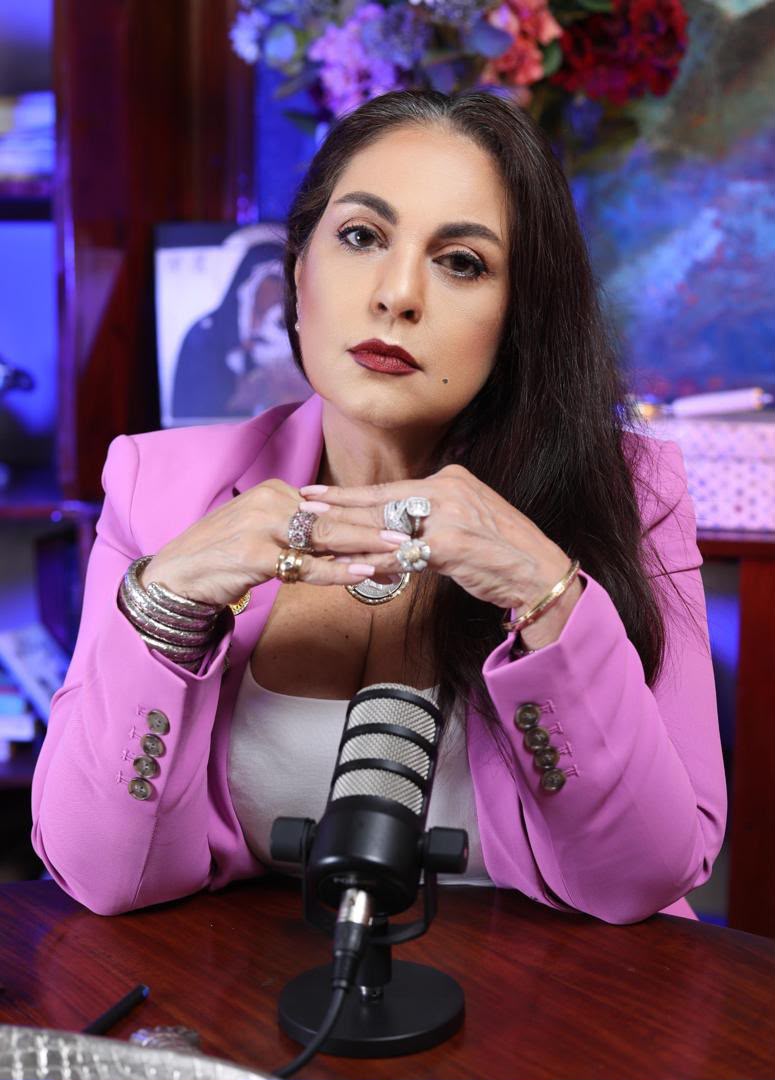
Savannah Savary, candidate for president of Haiti. Photo courtesy of Savannah Savary
She has embraced Vodou and seeks to connect with Haitians through frequent visits and her shows. On Radio Tele Eclair and YouTube, she hosts Kan Pèp La and Ayiti Leve Kanpe, Haitian Creole for “The People’s Side” and ‘Haiti Stand Up.’
“I’ve been engaged on the side of marginalized people in rural communities across the country, empowering women to believe in themselves and their capacity to become financially independent,” she said.
“I understand the country inside and outside — its scars, resistances and dignity that I carry deeply in my core,” she added. “I’m 100 percent Haitian, that’s all I know.”
Campaigning through pending candidacy
As the December elections approach, Savary said she is prepared to take on the challenge of running for president despite the uncertainty surrounding the electoral process. As of this writing, she said she was in discussions with a political coalition, which she declined to name, about officially registering her.
Like many candidates, she appears to be juggling campaign warm-up activities and completing CEP-required paperwork. Recently, she took part in a presidential primary forum organized by Debout Patriotes (DPA), a newly formed coalition of 11 parties. She has also posted on social media about her intentions to run.
In her speeches, Savary has said if she wins, she plans to restore the state’s authority by freeing the country from gangs, return institutions to public service, rebuild Haiti’s productive capacity and unite national and Haitian diaspora forces around a common project.
“I am running for president of Haiti to continue building what I have long begun.”
Savannah Savary
Though not yet officially registered, Savary’s declaration is drawing some reactions, with some showing excitement.
“After Madame Manigat, she’s the second woman I would love to vote for,” said a user commenting on YouTube as @TianGlade, referring to Haiti’s two time-presidential candidate Mirlande Manigat.
“Now, we have a serious candidate in this election! There’s absolutely no excuse not to vote.”
Others are more measured in their reception.
Women’s rights advocate Pascale Solages welcomed Savary’s announcement, though she pointed out she does not know the candidate personally.
“I don’t know her at all, but my principle is that I support all women in fully participating,” Solages said.
“And this woman is no exception, unless she is involved in everything I am denouncing and in things that all of us Haitians are fighting against — such as corruption and gang ties.”
Related