by Curlan Campbell
- Dispute stems from long-running legal battle over land adjoining Tyrell Bay Marina
- 7 October successful appeal before Eastern Caribbean Court of Appeal
- Tyrell Bay Marina release dated 21 October, announced resumption of operations
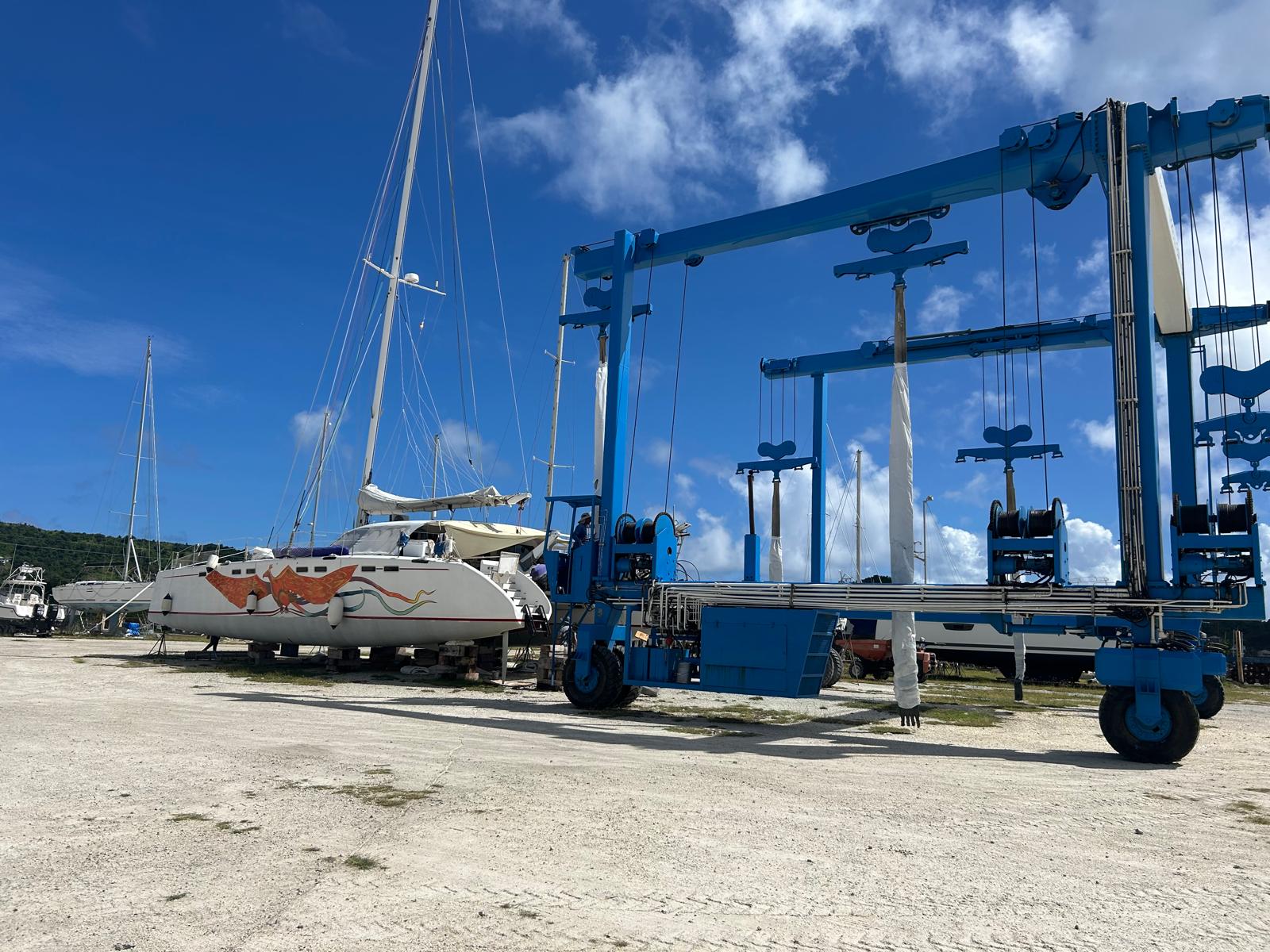
Tyrell Bay Marina has resumed operations following a successful appeal before the Eastern Caribbean Court of Appeal on 7 October, but questions surrounding the six-month disruption that left boat owners unable to leave the facility remain unanswered.
In an email response to questions about the situation, the marina said, “As you know, we are limited in what we can comment on due to the ongoing court proceedings. We are unable to address most of your questions at this time.”
The marina also provided a press release dated 21 October, announcing the resumption of operations and welcoming customers back.
In the statement, Tyrell Bay Marina thanked its customers for their patience, flexibility, understanding and continued support throughout what it described as a challenging period. It acknowledged the commitment of its employees and thanked the wider Carriacou community for its encouragement. “Our commitment remains unchanged: to stand by our customers, support our community, and protect Carriacou’s marine industry.”
The marina said it looked forward to welcoming returning customers and members of the wider sailing community, as well as continuing to contribute to the marine industry in Carriacou and Grenada.
However, the statement did not address specific questions concerning the financial losses experienced by affected boat owners, possible compensation, accountability for the restrictions on access or the broader impact on local marine businesses.
The dispute stems from a long-running legal battle over land adjoining Tyrell Bay Marina. In January 2023, the Judicial Committee of the Privy Council ruled that the disputed land belonged to the Estate of Samuel Corion. However, questions concerning possession and the continued use of the property remain before the courts.
One affected boat owner, Leslie Bell-Friedel, who had been living aboard her vessel with her husband since 25 April, said the removal of the fence and the restoration of access had allowed them to launch their vessel and resume their lives. She said the immediate situation had improved, but the financial, physical and emotional consequences of the 6-month ordeal remained.
The couple incurred thousands of dollars in additional expenses, including increased shipping and customs costs, alternative internet arrangements, immigration expenses, travel and legal fees. Their vessel also experienced difficulties because it had remained out of the water far longer than the 2-week period originally anticipated. The couple had to discard frozen food and purchase a separate air-conditioning unit after the vessel’s existing systems could not operate as needed while it was on land.
The boat owner said the uncertainty had also affected relationships, family plans and the wellbeing of those living aboard the vessels. Concerns about the possibility of severe weather affecting Carriacou while they were unable to leave added to their anxiety. She further said the prolonged disruption had prevented the owners from using their boats for their intended purpose.
Beyond the financial consequences, the boat owner described prolonged anxiety and uncertainty among those living aboard the detained vessels. She said the owners had worried about how long they would remain unable to leave and what might happen to them and their boats if a tropical storm or other severe weather affected Carriacou.
The situation also placed strain on personal and family relationships. She described the experience as a sustained period of emotional distress, with the restrictions, financial losses and uncertainty contributing to tension among those affected. The couple’s family circumstances were also affected. Their relatives were unable to visit during the period, and she said her father-in-law’s declining health meant he might no longer be able to make a trip that had been planned while they were detained.
Bell-Friedel said she believed the marina had treated the affected boat owners fairly by not charging fees for the period they were ready to leave but unable to launch, while operating under restrictions arising from the court proceedings. The boat owner maintained that the incident was not a dispute between the marina and its customers, but part of a wider land dispute involving Corion Estate and the marina.
Bell-Friedel held Corion Estate responsible for erecting the fence and refusing to agree to a temporary arrangement that would have allowed the detained vessels to leave. She also criticised the relevant authorities, alleging that they had failed to enforce the law and protect those affected. These remain the boat owner’s allegations and interpretation of the events. The underlying land dispute is ongoing, and the marina has declined to address most questions while court proceedings continue.
Despite the restoration of access, Bell-Friedel said the losses suffered by affected boat owners had not been adequately acknowledged and that no meaningful recognition of their experience had come from those she considered responsible. “No, the losses incurred by affected boat owners have not been adequately acknowledged by the responsible parties,” she said. “I hold the Corion Estate directly responsible for our detainment, and there has never been even an apology by their representatives for the hell they have put us through, nor any sense of wrongdoing on their part.”
She also criticised the response of the Royal Grenada Police Force, the government and the Planning and Development Authority, arguing that they had failed to enforce the law and protect residents and visitors. Bell-Friedel maintained that “This was not a dispute between the boat owners and the marina — this was a 3rd party trying to gain possession of their land through force, contrary to the court, and who used the detained boats and halted operations as leverage to extort money from either the marina or the government.” She said the marina could have communicated more effectively with the wider public after the fence was erected and following its removal. Those living aboard their vessels, she added, had received regular updates.
For Bell-Friedel, preventing a recurrence would require compliance with the law and enforcement by the relevant authorities. “The only thing to keep a similar thing from happening in the future is for people to follow your laws and for responsible authorities to uphold them.”
She alleged that the fence and the refusal to agree to a temporary arrangement allowing the detained vessels to leave violated Article 12 of the Grenada Constitution, which concerns freedom of movement. She also argued that the circumstances breached provisions of the Criminal Code and the Physical Planning and Development Control Act.
“It is astounding that no authorities were able, or willing, to uphold the law,” she said.
Concerns for Carriacou’s marine industry
The disruption has also raised concerns about the impact on Carriacou’s tourism and marine services sector.
According to Bell-Friedel, , news of the detained vessels had circulated internationally through sailing websites, social media groups and boating communities in France, Germany and across the Caribbean. “The reputational damage for Tyrell Bay and for Grenada as a whole is significant in the yachting world,” she said.
She warned that the incident could affect Grenada’s reputation among international sailors and influence decisions by boat owners considering where to moor their vessels, conduct business or spend extended periods. While she praised the support shown by many Carriacou residents and businesses, she expressed concern that the handling of the situation could undermine confidence in the fair application of the law.
For another affected boat owner, French citizen Lou Le Sommer, losses incurred amounted to approximately €30,000 in financial losses. The prolonged period ashore also resulted in problems with the vessel’s anchor chain, water maker and engines. The couple incurred additional accommodation costs when family members visited Martinique, as they had originally planned to stay aboard her boat.
Despite her love and appreciation for the island, its people and its natural beauty, she said the experience had undermined her confidence in the country’s legal and administrative protections. “I would also never put my boat in a boatyard in Grenada again, nor would I recommend doing so to my friends,” she said.
She believed the situation has damaged Grenada’s reputation within the international boating community, with some sailors potentially reconsidering visits to the islands.
Le Sommer acknowledged that local businesses would be better placed to assess the overall impact on tourism but said marine-related businesses had suffered while the fence remained in place. She hopes those businesses will recover from the disruption.
For Le Sommer, the matter is not simply about the losses suffered by individual boat owners but also about accountability and ensuring that others do not experience similar circumstances. “The authorities need to demonstrate that they follow their own laws, rules and procedures, and that these apply to everyone equally,” she said. She added that rebuilding trust within the boating community would take time.
Ultimately, Le Sommer wants those responsible for any failures to follow established procedures to be held accountable. “I believe it is important to ensure that what happened to us does not happen to anyone else and that the rules are respected.”
With the affected boats now able to return to the water and marina operations reportedly back to normal, attention turns to the ongoing court proceedings and whether the concerns raised by the boat owners will be addressed.
Marina welcomes sailing community back
In its 21 October statement, Tyrell Bay Marina said its operations had resumed following the appeal ruling and invited returning customers and first-time visitors to use its services. The marina said it remained committed to supporting customers, the local community and Carriacou’s marine industry.
Its decision not to address most questions leaves outstanding issues concerning the experiences of affected boat owners, the extent of their losses and whether any measures will be taken to address the consequences of the disruption.
For the boat owners, restoring access is only the first step. Leslie Bell-Friedel said rebuilding confidence in Grenada as a destination for sailors would require a sustained commitment to honesty, integrity and compliance with the law.
Although vessels have now been able to leave the marina, the wider dispute remains before the courts, and questions of accountability, compensation and the long-term impact on Carriacou’s marine sector remain open.
Efforts to reach a representative of the Corion Estate have again proven unsuccessful.
NOW Grenada is not responsible for the opinions, statements or media content presented by contributors. In case of abuse, click here to report.