Theme:
Towards Vision 75: Powering Progress Through People’s Participation and Innovation.
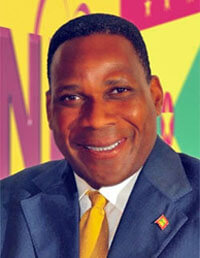
Presented by Honourable Dennis Cornwall
Minister for Finance
to
The House of Representatives
Parliament Building
Mt Wheldale, St George
1 December 2025
10 am
Table of Contents
- Protocol
- Introduction
- Macroeconomic and Social Context
- Estimates of Revenue and Expenditure for 2026
- Transformation in Motion
- 5.1 Health and Wellness
- 5.2 Education and Skills Development
- 5.3 The Youth Economy
- 5.4 Housing
- 5.5 Renewable Energy Transition
- 5.6 Agriculture, Land & Forestry
- 5.7 The Blue Economy
- 5.8 Tourism, the Creative Economy, and Culture
- 5.9 The Digital Economy
- 5.10 Infrastructure Development & Community Renewal, Public Utilities, and Transport
- 5.11 Social Protection, Gender and Inclusion
- 5.12 Legal Affairs, Labour, and Consumer Affairs
- 5.13 National Security, Home Affairs, Information and Disaster Management
- 5.14 Sports Development
- 5.15 Carriacou and Petite Martinique Affairs
- 5.16 Economic Development and Planning
- 5.17 Mobilisation, Implementation and Transformation
- 5.18 Climate Resilience & Environmental sustainability
- 5.19 Foreign Affairs, Trade and Export Development
- 5.20 Development of Grenada’s Oil and Gas Potential
- 5.21 Building Resilience to Economic and Climate Shocks
- 5.22 Public Sector Governance and Prudent Economic Management
- 5.22.1 Prudent Economic Management
- 5.22.2 Public Sector Modernisation and Digital Transformation
- 5.22.3 Strengthening of Statutory Bodies and State-Owned Enterprises Governance
- 5.22.4 Strengthening Parliamentary Representation
- 5.22.5 Enhancing the Citizenship by Investment Programme
- 5.22.6 Private Sector Development
- 5.22.7 Structural Reforms
- 5.22.8 A Government That Cares
- Conclusion
- Acknowledgements
- Appendices
- Protocol
Mr Speaker, I beg to move the following Motion standing in my name:
“Whereas it is necessary to provide for the services of the State of Grenada for the year 2026 by means of an Appropriation Act;
Be it resolved that the Estimates of Revenue and Expenditure for the fiscal year 1st January 2026 to 31st December, 2026 be approved.”
Mr Speaker, as this is a Money Motion, I wish to signal to this Honourable House that I have the consent of the Governor General to proceed.
Mr Speaker, in compliance with the Public Finance Management Act and Regulations, the Fiscal Resilience Act, and the Public Debt Management Act, I wish to advise that the following accompanying documents are laid before this Honourable House:
- The Medium-Term Economic and Fiscal Strategy Report 2026–2028, in accordance with Section 12 (a) of the Public Finance Management Act No. 17 of 2015, as amended;
- The Medium-Term Debt Management Strategy 2026–2028, in accordance with Sections 5(1) to 5(3) of the Public Debt Management Act No. 28 of 2015, as amended; and,
- The 2024 Annual Debt Report. The following additional reports are laid:
- Report on the Contingency Fund as of 31 October 2025, pursuant to SRO 42 of 2015 National Transformation Fund Regulations as amended; and,
- State-Owned Enterprises and Statutory Bodies: Statement of Performance Report 2024.
2. Introduction
Mr Speaker, it is my distinct honour to present to this Honourable House, and to the people of Grenada, Carriacou, and Petite Martinique, the 2026 Budget Address under the theme: “Towards Vision 75: Powering Progress Through People’s Participation and Innovation.”
This theme captures the essence of our transformative journey over the past three and a half years—a journey marked by purpose, determination, and resolve. It reflects our shared aspiration to build a Grenada that is not only economically stronger, but socially just, environmentally resilient, and guided by the enduring principles of inclusion, participation, and innovation.
Mr Speaker, this fourth budget of our tenure sets the stage for the next phase of national transformation. It is more than a financial plan. It is a statement of faith; faith in the creativity and capacity of our people, faith in our collective potential, and faith in the divine guidance that continues to steer our nation through challenge and change. It reminds us that real progress is never imposed from the top down; it is powered by the active participation, innovation, and perseverance of our people—the true drivers of national transformation.
As we embark on this next chapter, we are guided by the timeless words of the Apostle Paul in Galatians 6:9: “Let us not become weary in doing good, for at the proper time we will reap a harvest if we do not give up.”
These words remind us that nation-building is neither easy nor instant. True progress requires patience, perseverance, and purpose—but it promises that our collective efforts will bear fruit for generations to come.
Therefore, as we reflect on our achievements and chart our path forward, we do so with faith and confidence, knowing that Grenada’s progress is powered not only by sound policies and the passion of our people, but also by the grace and mercies of our Almighty God.
Mr Speaker, as we move from vision to action, it is important to understand the environment in which this budget is presented. The 2026 budget is framed by a specific macroeconomic and social context—shaped by global uncertainties, regional dynamics, and the lived experiences of Grenadians. By grounding our plans in these realities, we ensure that our strategies are not only ambitious but also practical, resilient, and responsive to the needs of all Grenadians.
Mr Speaker, from the outset of this administration, we committed to creating a strong environment for economic prosperity based on Industrial Peace; Fiscal Sustainability and Financial Stability. All these Mr Speaker are fully in place. With this perspective, I now turn to the macroeconomic and social context that shapes our budget for the year ahead.
3. Macroeconomic and Social Context
Mr Speaker, Grenada’s economic performance in 2025 was nothing short of remarkable. Building on the solid foundation laid in 2024, the International Monetary Fund (IMF) estimates that real GDP growth will accelerate to 4.4% in 2025, and moderate to 3.2% in 2026, positioning us among the fastest growing economies in the Caribbean.
Mr Speaker we are more optimistic about our macroeconomic developments and prospects. We estimate that real GDP will reach
6.2% in 2025, driven by robust construction activity underpin by both public and private sector investments, sustained strength in the manufacturing, wholesale and retail, transport and storage sectors, and a rebound in the agriculture and fisheries sectors.
In 2026, growth is projected to moderate slightly to 4.1%, signalling a winding down of Hurricane Beryl reconstruction activities and a return to the core strategic focus of Government’s transformative agenda and the expansion and diversification of our productive base.
Mr Speaker, inflationary pressures continued to ease in 2025, following the high global price volatility of recent years. The Government’s continued efforts to contain the cost of living—through targeted subsidies on electricity and petroleum products, and the removal of VAT on basic food and essential items—helped to cushion vulnerable households. As a result, headline or overall inflation (period average) declined to an estimated 0.7% in 2025, with food inflation, though higher than headline inflation, trending downward. Over the medium term, period-average inflation is expected to remain low and stable, at around 1% during the period 2026-2028, preserving purchasing power and supporting real income growth.
Mr Speaker, from an unemployment rate of 16.6% at the end of the second quarter of 2021, Grenada has witnessed a transformative improvement in labour market conditions. By the end of October 2025, the unemployment rate had fallen to 7.5%, the lowest level in our modern economic history. Youth unemployment experienced an equally transformative improvement, dropping from 42% to 20.2% – a fall of 21.8%age points or more than half over the same period. Continued economic expansion in 2026 combined with intense skills-training are expected to bring further improvements in employment opportunities, particularly for our youth and women.
Mr Speaker, the fiscal position in 2025 is estimated to be much stronger than expected, reflecting greater revenue collections and contained recurrent spending, despite higher capital outlays related to Hurricane Beryl’s recovery. A primary deficit of EC$126.4 million, equivalent to 3.1% of GDP was realised, significantly better than the budgeted primary deficit of EC$208.6 million or 5.2% of GDP. Likewise, the overall deficit, which was budgeted at EC$337.4 million or 8.3% of GDP, is projected at EC$279.1 million, $58.3 million more favourable than originally envisaged and roughly 6.9% of GDP. This Mr Speaker confirms the fiscal management prowess of this administration and strength of the Grenadian economy.
Looking ahead in 2026, the fiscal position is projected to improve relative to the 2025 Budget and largely unchanged relative to the estimated outturn, signalling as planned, a gradual return to the fiscal rules and targets under the Fiscal Resilience Act in 2027.
Mr Speaker, the financial sector remains sound and well-capitalized. Non-performing loans have continued to decline, liquidity levels are healthy, and the sector’s profitability – though reduced – is still strong.
External stability also remains well anchored, with gross international reserves estimated to exceed three months of import cover at the end of 2025. Looking ahead, financial and external sector conditions are expected to remain stable, providing a firm foundation for continued growth.
Mr Speaker, more details of the macroeconomic and social context for the 2026 Budget are set out in the Medium-Term Economic and Fiscal Strategy Report 2026–2028, which is laid before this Honourable House together with the Appropriation Bill (2026).
Mr Speaker, I now turn to the Estimates of Revenue and Expenditure for the fiscal year 2026.
4. Estimates of Revenue and Expenditure for 2026
4.1 Overview
Mr Speaker, consistent with our Administration’s philosophy of inclusive governance and participatory development, the preparation of the 2026 Budget once again involved extensive engagement with our citizens, both at home and across the diaspora. Through these consultations, Grenadians from all walks of life contributed their perspectives and ideas, helping to shape a Budget that truly reflects our collective aspirations and priorities. All of which Mr Speaker are set in the context of Grenada’s National Sustainable Development Plan 2035 and Vision 75.
I wish to express my profound gratitude to all who participated in this process—our citizens, partners, and friends—whose contributions have enriched the policies, programmes, and projects contained in this Budget. Your continued involvement underscores our shared commitment to building a resilient, equitable, and prosperous Grenada.
Mr Speaker, this fourth Budget of our Administration deepens our national transformation agenda. It consolidates the gains achieved over the past 3½ years, accelerates the implementation of our strategic priorities, and strengthens the foundation for sustainable growth and social advancement.
The 2026 Budget provides for total expenditure (including principal repayments) of EC$1,960,013,910.
The overall Budget summary is as follows:
- Recurrent Revenue: EC$1.3 billion
- Grants: EC$37.6 million
- Recurrent Expenditure: EC$1.1 billion
- Strategic Initiatives: EC$206.7 million
- Capital Expenditure: EC$370.4 million
- Current Account Surplus: EC$229.8 million
- Principal Repayments (Amortisation): EC$313.2 million
- Primary Deficit (after grants): (EC$229.2 million)
- Overall Deficit (after grants): (EC$309.8 million)
Mr Speaker, while the rules and targets under the Fiscal Resilience Act (FRA) are further suspended in 2026 to allow continued support for post-Hurricane Beryl reconstruction and resilience-building initiatives, our Government remains steadfast in its commitment to sound fiscal management and transparency. We will return to full compliance with the Fiscal Resilience Act, once conditions permit, ensuring that this transition does not compromise macroeconomic stability and growth or social progress.
Importantly, Mr Speaker, the Government will continue to adhere to the FRA’s wage bill ceiling of 13% of GDP in 2026. Our ongoing good-faith negotiations with public sector unions will be guided by fiscal responsibility, fairness, and the overarching goal of maintaining a sustainable wage bill framework in the years ahead.
Mr Speaker, to support growth in real wages for our hardworking and dedicated public servants, and in the interest of sustainable wage bill management, I take this opportunity to encourage all parties to the negotiations to work assiduously to complete this process in the shortest possible time.
4.2 Financing of the 2026 Budget
Mr Speaker, I am pleased to report that the 2026 Budget is fully financed. The projected overall deficit of EC$309.8 million will be financed primarily through a drawdown of EC$257.3 million of Government’s deposits, complemented by limited domestic and external financing.
This financing strategy reflects the Government’s continued commitment to prudent fiscal management and sustainability.
Mr Speaker, it is also worth noting, that due to the stronger-than- expected fiscal performance in 2025—with the primary and the overall deficits performing much better than initial projections—the financing needs were significantly lower than anticipated. As a result, the drawdown on deposits in 2025 was EC$29.1 million less than projected, allowing for a larger buffer of resources to support the financing of the 2026 Budget.
5. Transformation in Motion
Mr Speaker, when our administration assumed office three and a half years ago, we made a solemn promise to the people of Grenada, Carriacou, and Petite Martinique: that ours would be a government of real transformation—not cosmetic adjustments, not superficial reform, but deep, people-centred, measurable change.
We promised an NDC Administration that would work better, serve smarter, and deliver a more prosperous Grenada, Carriacou, and Petite Martinique for all.
We pledged to make opportunity more accessible, to modernize our systems, to empower our people, and to restore trust in public leadership.
From day one, our mandate was clear: Move Grenada forward.
But, Mr Speaker, every bold agenda encounters resistance. There were those who dismissed our commitment as “pie in the sky,” those who questioned whether a youthful team could deliver anything substantial—much less national transformation—and others who mocked our early successes as mere flukes. And as our agenda began taking shape, some even asked: “Where is the transformation?”
Mr Speaker, all of this was a calculated attempt to mislead our fellow citizens, and to distract us from our work. It was nothing but smoke and mirrors – red herrings designed to sow doubt and confusion about our desire to deliver steady, people-centred transformative progress.
Today, Mr Speaker, three and a half years later, the answer is unmistakable. The evidence of transformation is not theoretical. It is visible, it is tangible, and it is impacting lives every single day.
We have confronted long-standing systemic weaknesses across every major sector—healthcare, education, youth development, social protection, infrastructure, digital modernisation—and we have done so with unwavering conviction and a clear sense of purpose. We have replaced doubt with action, hesitation with boldness, timidity with courage and shortsightedness with vision.
Mr Speaker, we stand today not as a government asking to be judged on intentions, but on achievements—achievements that form the foundation of our shared national vision: A resilient and prosperous Grenada, with a conscious and caring citizenry, grounded in human dignity and realizing its full potential through sustainable economic, social, and environmental progress for all.
As we prepare to lay out our 2026 agenda, it is important to recognise the transformation already in motion:
- In healthcare, a once-broken system is being reimagined and rebuilt with the ambition of becoming the healthcare capital of the Eastern Caribbean.
- In education, modernisation, expanded access, and greater equity are reshaping the future of our young people.
- In youth empowerment, new investments, opportunities, and pathways are establishing the building blocks of a vibrant youth economy.
- In housing, infrastructure, public sector modernisation, and digital transformation, outdated systems are being replaced by platforms built for efficiency, transparency, and
These are not isolated policies, Mr Speaker. They are strategic, interconnected interventions—carefully designed, deliberately sequenced, and effectively implemented to shift this nation from outdated structures to modern governance and sustainable development.
So, Mr Speaker, when the enemies of progress ask whether true transformation is happening; when they question the scope, pace, or direction of change; when they insist that more must be done or that progress is not visible, we say, respectfully but confidently:
Mr Speaker: “If what we are delivering is not transformation, then what is?” Things are Happening!
Permit me, therefore, to outline our hard-won achievements over the past three and a half years, and to present the Government’s strategic interventions and priorities for 2026—beginning with one of the most consequential pillars of our transformation agenda: Health and Wellness.
5.1 Health and Wellness
Mr Speaker, this Administration has remained unwavering in its mission to transform the broken healthcare system it inherited into the healthcare capital of the Eastern Caribbean.
When we assumed office, we inherited a sector plagued by deep structural weaknesses — ageing infrastructure, chronic staffing shortages, and fragmented service delivery. Yet, Mr Speaker, we did not waver. We rolled up our sleeves, confronted the challenges head-on, and began the hard, necessary work of rebuilding a system worthy of our people.
Today, as we present the 2026 Budget, Grenada’s healthcare system is on the path of renewal — stronger, better organised, and grounded in the principle of universal access to quality care.
Institutional and Organisational Strengthening
Mr Speaker, over the past year, with the technical partnership of Mount Sinai Health System — one of the world’s leading teaching hospitals — a comprehensive needs assessment and quality improvement review of Grenada’s General hospital has been completed.
This landmark study has guided our reform agenda — identifying gaps in infrastructure, human resources, service delivery, and equipment.
Armed with this data, we are now positioned to implement a modern, efficient health management framework, anchored by the statutorisation of our hospitals, which will be advanced in 2026.
Looking ahead in 2026 and beyond, Mr Speaker, our continued partnership with Mount Sinai will strengthen accountability, improve service delivery, and create a more responsive healthcare system.
Moreover, in institutional and organisational strengthening, we have begun digitising patients’ records, introduced new systems and improved existing ones to drive efficiency, and expanded access to healthcare services.
Empowering Our Healthcare Workforce
Mr Speaker, a health system is only as strong as the men and women who serve within it. Over the past several years, we have taken decisive steps to empower our healthcare professionals.
We have conducted a human resource audit, expanded training opportunities for nurses, doctors, and allied professionals, and increased the intake of specialist personnel across key disciplines, including through new strategic alliances with countries such as Nigeria and Ghana. More recently, we have onboarded 30 new nursing interns who graduated from the St. George’s university with starting salaries of $3,000, who will be trained to take up critical positions within the sector.
Importantly, we have acted decisively to retain our skilled workers. Hundreds of health professionals, whose employment status and pension benefits were uncertain at best, are being regularised.
The Cabinet’s decision to extend the annual honorarium of $12,000 for doctors and $6,000 for nurses has helped stem attrition and boost morale.
In 2026, we will go further — including revisiting the re-establishment of the Grenada Nursing School, introducing a succession planning framework, and expanding professional certification programmes.
Our message to every healthcare worker is simple: we see you, we value you, and we will continue to invest in you.
Health Facilities
To strengthen primary health care to deliver more responsive, quality care to every citizen, we have rehabilitated or commenced refurbishment of hospitals, clinics, and community health centres across the Country, including the Princess Alice and Royal Hospitals, the Good Hope Medical Centre, the Hillsborough Health Centre, the Sauteurs Medical Station, Westerhall, Victoria, L’esterre, Windward, and Mt. Pleasant after Hurricane Beryl.
We have purchased critical lifesaving medical equipment for the health system as well as undertaken major repairs at the General Hospital, including the installation of a modern state-of-the-art kitchen and appliances.
In 2026, we will continue major upgrade of health facilities, including the Mt. Rich and Petite Martinique Medical Stations which are currently ongoing, Sauteurs Health Centre, St. David’s Health Centre, Mt. Carmel Health Center, Grand Bras Health Centre, Paraclete, Hermitage, River Sallee, New Hampshire, Grand Roy, Vincennes, Gouyave (repairs), Woburn, Perdmontemps, La Borie, Grand Anse medical stations, and St. George’s Health Centre as well as continue to secure the necessary equipment to support primary health care.
Project Polaris: Building the Future of Healthcare
Mr Speaker, among our boldest and most transformative initiatives is Project Polaris — the construction of a new state-of-the-art, climate-smart, teaching hospital.
Project Polaris will mark a turning point in our nation’s history — offering world-class care, expanded specialist services, and advanced diagnostic capabilities that meet international standards.
So far, we have secured 83 acres of land at Hope Vale – the site of the new hospital and medical city, completed the detailed design studies for the new hospital, while working to finalise the procurement of the supervision consultant and the construction contractor, and the financing framework for the construction of the Project, including a combination of concessional loans, equity injections, and philanthropic contributions. Regarding the latter, I am pleased to report that Cabinet Ministers have already begun their voluntary donations of one month’s basic salary into a designated account established at one of our local banks for this purpose and will do so annually until the hospital is commissioned.
Importantly, Mr Speaker, Cabinet has established the Polaris Development Company Limited, a special purpose vehicle, incorporated under the Companies Act of Grenada to ensure the smooth and effective implementation of this Project. The wholly owned Government Company will be managed by a small capable team of professionals, who will report to a Board of Directors and to the Cabinet through a Cabinet appointed subcommittee.
Mr Speaker, barring any unforeseen events, the world will witness the official groundbreaking for Project Polaris in 2026 — a defining milestone in Grenada’s healthcare transformation journey.
Expanding Access and Affordability through National Health
Insurance
Mr Speaker, the implementation of a national health insurance system is critical to ensure that every citizen regardless of their income status can have access to health care services, including those that will be offered through Project Polaris.
In other words, Mr Speaker, all our citizens will be able to access the improved services that will be offered through Project Polaris, through the National Health Insurance system, ensuring that no one is left behind.
To this end, over the past year, critical groundwork was completed, including the reengagement of the University of the West Indies to provide consultancy services and the finalization of the NHI benefits package or coverage model.
In 2026, we will move decisively to advance this reform, including the financing model, the legislative framework, and stakeholder consultations.
Strengthening Mental Health and Wellness
Mr Speaker, our vision for health is holistic — addressing not only the body, but also the mind and spirit.
For this reason, we created the Ministry of Mental Health, Wellness and Religious Affairs — the first of its kind in the region — to give focused attention to mental well-being and spiritual health.
In 2025, we initiated major reforms to expand community-based mental health services, integrate mental health into primary care, and begin construction of the Mirabeau Rehabilitation Centre — a modern, patient-centered facility designed to restore dignity and hope.
In 2026, we will accelerate these initiatives, including the rollout of mental health training for primary care providers, and enhanced support for psychosocial wellness in schools and workplaces.
A combined allocation of EC$155.7 million is provided for the Ministry of Health and the Ministry of Mental Health, Wellness &Religious Affairs.
Mr Speaker, Things are happening in the Health, Mental Health and Wellness Sector!
5.2 Education and Skills Development
Mr Speaker, nowhere is our commitment to transformation more visible than in education.
We have made education truly accessible. Free tuition now opens the doors of TAMCC and NEWLO to even more young Grenadians.
Mr Speaker, in just three short years, we have provided 709 scholarships to our young people and educators in the field of medicine, arts, and sciences at Universities and Colleges in the United States, Cuba, Morocco, China, and many other countries, costing some EC$226.7 million dollars.
The First-Generation Scholarship Programme in collaboration with Monroe University, which we secured in the past twelve (12) months, is breaking cycles of inequality by allowing our citizens from low- income families to be the first in their homes to pursue higher learning.
And now, Mr Speaker, with our emphasis on building our health care professionals we have agreed with our partner, Saint George’s University, to provide 30 medical scholarships-that’s right-Mr Speaker – 30 medical scholarships for our medical students for the January 2026 cohort of the 4-year Medical Degree Program. That, Mr Speaker is Things Happening!
The Free Hot Meals Programme is ensuring that no child learns on an empty stomach.
Mr Speaker, we have launched our E-Books Programme, and distributed some 3,875 military grade laptops to all Forms 1 and 2 students as we prepare our youth to thrive in the digital age;
We launched a pilot school bus project to inform a larger scale school bus programme.
We have begun to train our citizens in the skills required for the present and for the future of work, focusing on key areas such as mariculture, tourism and hospitality, construction, and digital skills, including cyber security training.
We have invested heavily in school infrastructure — rehabilitated and upgraded our schools damaged by Hurricane Beryl ensuring that we were able to reopen all schools in September of 2024 — a mere three months after the devastating impact. Moreover, we have started construction of several new schools, such as the St. David’s Catholic School, the St. Andrew’s Anglican Primary School, the Grenada Christian Academy, the Florida Government School, and a new wing at the Calliste Government School.
Finally, we have raised the school-leaving age to 18, giving our young people more time and more opportunities to learn, grow, and succeed in this ever-changing global environment.
Mr Speaker, in 2026, we will build on this solid foundation — including by advancing the development of centres of excellence in technical and vocational training.
An amount of EC$179.6 million has been allocated to the Ministry of Education.
Mr Speaker, Things are Happening in Education!
5.3 The Youth Economy
Mr Speaker, over the last three and a half years, we have rebuilt institutions, expanded opportunity, and invested heavily in our young people. But to truly transform Grenada, we must elevate our youth agenda from programmes to a philosophy — one that treats young people not as recipients, but as architects of their own future.
Today, this Government takes a bold step forward with the establishment of the Youth Empowerment Agency—YEA—a purpose-built institution that will channel the energy and talent of our youth into entrepreneurship, leadership development, and civic participation. YEA will unify and modernize existing programmes such as M-Power, Elevate Her, and Youth Biz, transforming them into structured pipelines that support young Grenadians to earn, to lead, and to participate fully in national life.
Aligned with our National Sustainable Development Plan and backed by a 2026 Budget allocation of EC$15 million, YEA will move from consultation to implementation, with legislation, systems, and programmes ready for launch by June.
Mr Speaker, this is not bureaucracy — it is transformation. It is our covenant with the young people of Grenada: to match their ambition with opportunity and their potential with pathways to success. When our youth rise, Grenada rises—and rise we shall.
Mr Speaker, Things are Happening for our youth!
5.4 Housing
Mr Speaker, we are delivering on the promise of dignity and better living conditions through addressing the huge housing deficit that we inherited.
We will complete the pilot phase of Project 500 by the end of this year — our flagship housing project —delivering 17 model homes at our Dunfermline site, setting the stage for the second phase of this crucial Project.
Mr Speaker, under the Build Back Better Housing Programme launched in the aftermath of Hurricane Beryl, hundreds of new homes were constructed, giving families safe, climate-resilient places to call home.
Through the Water Access and Sanitation in Homes— the WASH Programme, hundreds of modern indoor toilets and baths have been delivered to low-income families, aggressively reversing a legacy of over 8,000 pit latrines and open bathrooms left by the former administration.
Under the Grenada Home Improvement Programme, we have provided materials and labour support to thousands of Grenadian families to improve their living conditions.
Mr Speaker, we have upgraded the Chinese-donated houses and retrofitted them with modern amenities, including cupboards, closets, and other essential fixtures, significantly improving their comfort, functionality, and overall living standards for families who did not have a place to call home. In addition, we have begun to introduce modern community management structures, including homeowners’ association and other governance and maintenance frameworks, designed to provide proper upkeep, accountability, and the long-term sustainability of these condominium-styled facilities. Mr Speaker, of the 647 units constructed under Phase 2 of this Project, 244 have been allocated to low-income families at deeply subsidised prices, helping many achieve their dream of owning a home.
We have resolved a decades-old sewer problem at the La Calome Housing Scheme, putting an end to the longstanding health and environmental hazard where raw sewage once flowed onto the streets.
Mr Speaker, in 2026, housing will remain central to our transformative agenda, as we advance the second phase of Project 500. To this end, Government, through the Housing Authority of Grenada (HAG), will engage strategic partners in the private sector to deliver on high quality affordable Grenadian-styled housing units.
To support this goal, a Government of Grenada Housing Fund of $50 Million, made up of allocations from the National Lotteries Authority, the Grenada Development Bank and supplemented by funds realised through the sale of the existing housing units will be set up to help unlock matching private sector capital, including from the banks, insurance companies and credit unions to transform the housing sector in Grenada.
Mr Speaker, Government will continue to advance its various other initiatives in the housing sector, including the Grenada Home Improvement Programme, the WASH Programme, and the Build Back Better Housing Programme, with a budget allocation of EC$13 million, as well as the allocation of the remaining Chinese-donated housing units, particularly in St. Mark, St. Patrick, and Carriacou.
Mr Speaker, Things are Happening in the Housing Sector!
5.5 Renewable Energy Transition
Mr Speaker, recognizing the critical imperative for energy security, this Government has taken decisive action to advance Grenada’s renewable energy transition guided by the principles of affordability, reliability, and accessibility.
To this end, Mr Speaker, last month we launched the Solar for All Programme — a flagship initiative delivering energy relief to vulnerable households and small businesses across Grenada, Carriacou, and Petite Martinique. This programme ensures that the benefits of our energy transition are shared equitably and directly impact on the lives of citizens. This Programme will be rolled out in 2026 with an allocation of EC$1.0 million.
Mr Speaker, I am also pleased to report progress towards the rehabilitation of the Limlair Solar PV Hybrid Battery Storage Project in Carriacou, which was severely damaged during the passage of Hurricane Beryl. This Facility, constructed with grant support from the Government of the United Arab Emirates (UAE) at an estimated cost of US$3.2 million, was designed to supply up to 20% of Carriacou’s electricity capacity, saving an estimated US$0.5 million in foreign exchange per annum. Mr Speaker, the UAE and the contractor have committed to rebuilding the Solar PV System with enhanced resilience standards capable of withstanding Category 4 and 5 storms, strengthening our energy security.
Under the Geothermal Energy Development Project, Mr Speaker, Grenada continues to advance steadily toward a diversified energy mix. With additional support from the UK Government through a grant of 10 million pounds, we have refined the project to include directional drilling, maximizing the potential of the 2026 exploration phase. Engineering designs and surveys are complete, environmental approvals secured, and community engagement conducted to foster understanding and support. Geothermal energy remains central to achieving our goal of 100% renewable energy generation capacity in the electricity sector and stabilising the price of energy.
We have mobilized over US$140 million in grants and concessional financing to support two major renewable energy initiatives, set to commence in 2026. More specifically, Mr Speaker, (i) a US$40 million concessional loan from the World Bank and the Clean Technology Fund to support renewable energy installations in Government buildings and a 10.6 megawatt Battery Energy Storage System at MBIA to ensure a reliable supply of electricity, and (ii) support for the private sector to access up to US$100 million in concessional loans and guarantees to scale up renewable energy by independent power producers and public utilities. To this end, Mr Speaker, the Public Utilities Regulatory Commission is playing a pivotal role in supporting the establishment of the first private sector utility scale solar PV system Project near the MBIA.
Mr Speaker, the achievements of the past three and a half years, combined with the initiatives planned for 2026 in this strategic priority area, demonstrate a clear, deliberate, and people-centred approach to Grenada’s renewable energy transition.
Mr Speaker, Things are Happening in the Renewable Energy Sector!
5.6 Agriculture, Land & Forestry
Mr Speaker, the agriculture, land and forestry sector is the bedrock of our nation — anchoring food and nutrition security, sustaining rural livelihoods, and underpinning national resilience.
Accordingly, Mr Speaker, over the past several years, this Administration has invested heavily in revitalizing the sector — modernizing its infrastructure, expanding its productive base, and strengthening the systems that safeguard farmers and communities.
Mr Speaker, allow me to highlight some of the key areas of intervention undertaken in recent years, as well as the strategic priorities and investments proposed for the 2026 Budget to further advance this vital sector.
Following the passage of Hurricane Beryl in July of 2024, we extended over $37 million in financial and other support to our farmers, fishers, and others who depend on agriculture and fisheries to restore their livelihoods; revive production and promote the rapid recovery of the sector.
Under Phase 8 of the Grenada-China Agricultural Cooperation, we constructed a modern tissue culture laboratory at the Mirabeau Propagation Station to produce disease-free planting materials and scale propagation.
Through the Climate-Smart Agriculture and Rural Enterprise Programme (SAEP), we provided training, extension services, and small grants to farmers and fisherfolk to support the adoption of climate smart agriculture practices to make farming systems more resilient and sustainable.
Mr Speaker, to bolster the participation of youth and women in agriculture, we have expanded training, mentorship, and start-up support programmes designed to equip them with the technical skills, business knowledge, and resources needed to thrive in modern agribusiness.
We strengthened the agricultural value chain by providing critical support to our agro processors through financing, targeted training, technical assistance, and the provision of modern equipment; and opportunities to scale up their businesses. Mr Speaker, the opening of the agro-processing plant at La Calome in the first quarter of next year will provide a significant boost to the sector.
To revitalise the livestock subsector, we successfully imported improved breeds of pigs, sheep, and goats to bolster our national breeding stock and set the stage for the development of locally bred hybrid animals towards greater self-sufficiency and sustainability in meat production.
To address the devastating problem of praedial larceny, we took several decisive actions, including the hiring of 45 new recruits as part of a dedicated taskforce, and equipping them with specialised training, while simultaneously investing in drone technology and other modern tools to confront this persistent problem.
Mr Speaker, in forestry and land conservation, we launched the Spice Replanting Programme as well as watershed protection, and soil stabilization initiatives, to restore and expand our spice industry, safeguard critical watershed, and protect vulnerable slopes from erosion and land degradation.
Further, in land use and farm access initiatives, we regularised state lands and constructed farm access roads across Grenada to improve connectivity and reduce post-harvest losses.
Mr Speaker, while these initiatives have strengthened the foundation of the sector, the 2026 Budget takes our vision even further — building on these gains to create a more resilient, innovative, and profitable agricultural sector.
Our strategic priorities for 2026 include:
Accelerating replanting under the Spice Replanting Programme. An amount of $0.5 million is allocated for the expansion of this Project next year.
Continued restoration of high-value crops and expansion of climate-resilient varieties to strengthen national food security. Investment in new irrigation systems, farm access roads, and rural storage facilities to reduce losses and boost farm incomes. Scaling up digital tools, greenhouse production, and modern techniques to increase efficiency and productivity. Deepening partnerships with private investors to advance agro-processing, packaging, and export marketing for local produce. Strengthening livestock development, including the provision of EC$1.0 million in grant support to farmers to upgrade their pens to support the Spice Breed Programme.
Mr Speaker, at this juncture, allow me to provide an update on the reform of the Marketing, National and Importing Board (MNIB). Mr Speaker, our Government acknowledges and sincerely regrets the delay in advancing this important reform. The reform process encountered unforeseen challenges, particularly the unavailability of the MNIB’s Audited Financial Statements dating as far back as 2020, which significantly affected our ability to complete critical work streams such as the valuation of assets and the preparation of the investment prospectus.
That said, Mr Speaker, over the past year, significant progress has been achieved. The draft Public-Private Partnership (PPP) Agreement, Shareholders’ Agreement, and Prospectus are all at an advanced stage of completion, and a request for Expressions of Interest was formally issued to attract a suitable strategic partner. Engagement and negotiations with selected partners are expected to commence before the end of February 2026, paving the way for the full commencement of operations by the fourth quarter of 2026.
Mr Speaker, these interventions and forward-looking investments underscore our unwavering commitment to transforming agriculture and agri-business into a vibrant, sustainable, and resilient pillar of economic growth — one that secures livelihoods, stabilises rural communities, and ensures that Grenada continues to feed itself proudly and sustainably.
An allocation of EC$40.5 million is made for advancing agriculture, food and nutrition security.
Mr Speaker, Things are Happening in Agriculture, Food and Nutrition Security.
5.7 The Blue Economy
Mr Speaker, the Blue Economy is Grenada’s new frontier of sustainable growth — where our ocean and coastal resources are driving innovation, export earnings, jobs, and food security for our people. Recognizing this immense potential, Government established the Ministry of the Blue Economy and Marine Affairs, which began operations this year. Though still in its infancy, its early achievements already speak to the transformative path ahead.
Mr Speaker, through the Unleashing the Blue Economy in the Caribbean (UBEC) Project, we restored critical fisheries infrastructure, including cold storage and ice-making facilities at the Melville Street Fish Market, and re-established ship-to-shore communication networks for our fishing fleet across Grenada, Carriacou, and Petite Martinique.
Following the devastation of Hurricane Beryl, the Ministry delivered over five million dollars in direct assistance to boat owners for rebuilding vessels, replacing engines, and acquiring safety gear.
Through the Ministries of Climate Resilience and the Blue Economy, we advanced the Sargassum Valorisation Project, supported by the European Union through the Global Gateway Initiative, with the aim of turning a recurring environmental challenge into new economic opportunities.
Our administration further completed the Coastal Fisheries Resources Project (COASTFISH), improving management of key coastal species such as lobster and lambie.
Mr Speaker, we have made meaningful progress toward the resumption of Lambi exports under the Convention on International Trade in Endangered Species of Wild Fauna and Flora (CITES).
Of critical importance, Mr Speaker, we are taking proactive steps to address the emerging United States seafood import restrictions. This includes strengthening systems for traceability, monitoring, and enforcement to ensure Grenadian seafood remains compliant, sustainable, and competitive in international markets. Only recently, we passed in this very House, critical amendments to the Fisheries Act, and we have enacted the Regulations to strengthen systems for traceability, monitoring, and enforcement to ensure Grenadian seafood remains compliant, sustainable, and competitive in international markets. A clear demonstration of our commitment to protecting our vital fish export sector.
Looking ahead to 2026, the Ministry will focus on deepening resilience and expanding opportunity in the marine sector.
Key priorities include:
- Training 500 fishers in safety at sea and sustainable fishing practices under the UBEC Project;
- Commencement of the Melville Street Fishing Port Development Project, including land reclamation works to support modern port and processing facilities;
- Establishment of a Coastal Zone Management Unit to guide sustainable use of our coastal areas;
- Implementation of the Sustainable Technologies for Adaptation and Resilience in Fisheries (STAR-Fish) Project and the Road to Resilience (R2R) Project, both focused on ecosystem-based climate adaptation and;
- Expansion of mariculture ventures in sea moss, bait, and shrimp farming to diversify coastal livelihoods.
Mr Speaker, our seas are not boundaries — they are bridges to a more resilient, inclusive, and prosperous Grenada.
We have provided EC$16.4 million for interventions to advance the Blue Economy in 2026.
Mr Speaker, Things are Happening in the Blue Economy!
5.8 Tourism, the Creative Economy, and Culture
Mr Speaker, from the depths of our oceans to the vibrancy of our culture, the story of transformation continues. Just as the Blue Economy is unlocking new value from our natural resources, so too are we diversifying and expanding opportunities through Tourism, the Creative Economy, and Culture sectors that celebrate who we are, attract the world to our shores, and empower our people to create, innovate, and thrive.
Mr Speaker, over the past three and a half years, we have witnessed a remarkable resurgence in our tourism sector. Coming out of the pandemic, we faced a daunting task: rebuilding airlift, restoring visitor confidence, and reinvigorating our tourism product. Today, we can proudly say that Grenada, Carriacou, and Petite Martinique are once again among the most sought-after destinations in the Caribbean.
But, Mr Speaker, our tourism strategy has not been about numbers alone. It has been about broadening the base of benefits — ensuring that tourism growth is inclusive and that every community can share in the gains.
We have developed new tourism sites and supported community-based tourism initiatives in rural areas —from support to the Laura Herb Garden and Secret Springs in Providence, St David’s to the underwater sculpture park on Carriacou — creating jobs, preserving local traditions, and fostering a strong sense of identity.
Mr Speaker, beyond tourism, the creative economy and culture are steadily taking their rightful place as pillars of national development.
During the past several years, we have:
- Launched the National Cultural and Creative Industries Strategy, charting a roadmap for the development of music, film, fashion, and digital content production.
- Established the Grenada Office of Creative Affairs, tasked with supporting creative entrepreneurs through training, financing, and access to markets.
- Provided increased grants and support for artists, cultural practitioners, and event organisers—revitalising Spicemas, and community festivals across the islands.
- Partnered with regional and international institutions to provide capacity building in copyright management, creative entrepreneurship, music production and digital media
- Commenced a five-year initiative which started with the securing and distributing of 240 steel pans and 7 drum sets across the 7 parishes at a cost of US$210,000 to assist in reviving the steel pan tradition in Grenada. The Ministry is scheduled to roll out its COMS-PAN Program in January 2026 having secured tutors for all parishes.
Mr Speaker, building on this foundation, our 2026 agenda for tourism, the creative economy, and culture will focus on deepening transformation and expanding opportunities.
In tourism, we will:
- Complete and operationalise three new tourism sites under our sustainable tourism development programme, namely the Fort George, Bathway/Levera Recreational Facility and the reimagined Grand Etang Shoreline Trail.
- Roll out a National Tourism Development Plan (2026–2030) to guide investment, marketing, and human resource
- Strengthen digital tourism platforms to enhance visitor experience and improve data-driven decision-making.
- Expand air connectivity through continued negotiations with regional and international carriers.
- Support green and resilient tourism infrastructure, aligning with our national climate resilience goals.
In the creative economy and cultural sector, we will:
- Expand the Creative Economy Fund to provide targeted financial support for creative entrepreneurs and startups.
- Launch the National Art Gallery on Church Street following the renovation of the Priory Building.
- Expand training and certification programmes in music production, film, and design, heritage and cultural studies in partnership with TAMCC and regional institutions.
- Integrate cultural heritage preservation into community development programmes, ensuring that our intangible heritage—from Big Drum to Saraka—is protected for future.
- Strengthen international marketing and export promotion of Grenadian creative products and services, opening new markets for our artists.
An allocation of EC$53.1 million is made for the further development of this crucial area.
Mr Speaker, Things are Happening in the Tourism, Culture and Creative Space!
5.9 The Digital Economy
Mr Speaker, Grenada is no longer just a consumer of technology— we are becoming a creator, an innovator, a nation boldly shaping its digital future.
Since assuming office, this Government has revolutionized how our citizens interact with the government in the ICT space.
For example, all taxes on domestic goods and transactions can now be filed and paid online, passport applications are now fully digitized, pension life certificates can be renewed online, and managing your business relationships for essential services are increasingly just a click away.
We have expanded free wireless access across communities, schools, government offices, tourism sites, and recreational parks.
The Digital Workforce Initiative has empowered our citizens with internationally recognized cybersecurity training, and some graduates of the first cohort have already secured jobs.
Additionally, vulnerable households are now benefiting from the second iteration of the Jump Program, receiving devices and internet access to bridge the digital divide as we ensure no one is left behind.
In 2026, we will launch Electronic Embarkation and Departure Cards—ED Cards—transforming how we manage travel, security, and citizen services, making processes faster, smarter, and more secure than ever before. Meanwhile, the Digital Transformation Agency is being fully established, driving Grenada toward a seamless digital economy that supports innovation, opportunity, and global competitiveness.
Mr Speaker, Things are happening in the Digital Economy!
5.10 Infrastructure Development & Community Renewal, Public Utilities, and Transport
Mr Speaker, over the past 3 ½ years, progress is undeniable in infrastructure development and community renewal in every parish across Grenada, Carriacou, and Petite Martinique.
When we assumed office three and a half years ago, we met an infrastructure network and community landscape burdened by decades of underinvestment, malpractice and neglect. Our roads were deteriorating, our bridges weakened by age, our public buildings unsafe, and our transport system inefficient. The challenges were daunting, Mr Speaker — but our determination was greater.
In this context, Mr Speaker, we have embarked upon the most comprehensive Roads and Bridges Rehabilitation and Maintenance and community renewal Programme in recent memory, a programme grounded in the principles of safety, resilience, and modernisation.
Allow me to highlight some of our major achievements in this area:
The long overdue widening of the Grand Etang Road;
Through the G-CREWS and the South St. George Water Expansion Projects, the upgrading of water infrastructure to improve access to clean drinking water and build resilience in the water sector.
The rehabilitation of key infrastructure on Carriacou and Petite Martinique, including in the post-Beryl period, such as the Belair Road.
The completion of the Moliniere Bridge, reopening normal customary access along the Western Corridor.
The upgrading of the True Blue Road. The completion of the La Borie Road. The completion of the Mt. Kumar Road. The rehabilitation of the Mungo Road. The widening of the Snell Hall Bridge. The completion of the Bonaire Bridge.
The construction of numerous secondary roads in towns and villages across Grenada, Carriacou and Petite Martinique.
The rehabilitation of sporting facilities, such as hard courts, and playing fields.
The lighting of several sporting facilities, including the National Cricket Stadium to be completed before year end, Progress Park, Telescope, and Springs, to name a few.
The clean-up of the Kirani James Boulevard and other sites and the removal and disposal of hundreds of derelict vehicles from our streets under our Visible Transformation Project
The installation of solar lights in critical areas across our tri-island state to promote public safety and revive community spirit.
The rehabilitation of numerous community centres across the Island. In 2026, major projects will advance along key routes — from Point Salines to Woodlands, The Cliff to Egmont, Tempe to Beaulieu, and Mabouya, St. John — along with critical bridge replacements at Marquis, Madeys, Morne Fendue, and Mt. Rich. For the first time, we are establishing a strategic, preventive road maintenance programme, ensuring that upkeep is proactive and deliberate, not reactive or crisis-driven.
Mr Speaker, a brief update on the Coastal Protection of the Sauteurs Bay Project with funding support from the Caribbean Development Bank. This is a Project that is close to my heart. I am pleased to report significant progress: bids are currently being reviewed, and a contractor is expected to be awarded by January 2026 with construction works to begin shortly thereafter.
Mr Speaker, we have also turned a new page in the management of government buildings. For years, essential facilities — police stations, health stations and medical centres, schools, community centres, and administrative offices — were allowed to fall into disrepair.
Mr Speaker, we have begun a new era of renewal and transformation – from the new Police Headquarters to Sauteurs Medical Station. The repositioning of Facilities Consulting Limited, formerly the Financial Complex Limited, under the Ministry of Infrastructure to ensure that maintenance is now guided by technical expertise and governed by occupational health and safety standards. This reform protects our workers, preserves public assets, guarantees value for money and delivers better service to our citizens in safe and dignified spaces.
Turning to Transportation, Mr Speaker, the Government recognises that mobility is the lifeblood of development. Through the Grenada Transport Commission, consultations are underway on a National Transport Policy — a modern framework to guide reform in service reliability, safety, and efficiency.
In 2026, we will implement a coordinated traffic management system and modernise the Road Traffic Act to address congestion and improve flow, particularly in the southern corridor. But this is not only about moving vehicles — it is about transforming how Grenada moves. We are building a culture of order, innovation, and respect on our roads — where public transportation becomes reliable, efficient, and people-centred.
In the area of public utilities, Government, through the Public Utilities Regulatory Commission, will advance solar generation, expand the Self-Generator Programme to enable more households and businesses to produce their own electricity and sell excess power to the grid, and strengthen the legislative and regulatory framework for both the electricity and water sectors to ensure modern standards, clearer oversight, and stronger consumer protection.
Mr Speaker, when we reflect on where we started — the broken roads, the crumbling bridges, the neglected public buildings, and the decaying community facilities that fostered the enabling environment for crime and antisocial behaviour, — and we look at where we are today, with a clear roadmap for renewal and fundamental change — We can confidently say that Things are Happening!
The budget for the Ministry of Infrastructure in 2026 is EC$187.2 million.
5.11 Social Protection, Gender and Inclusion
Mr Speaker, over the past three and a half years, we have set out to lay a solid foundation to transform the way we care for our people — especially our less fortunate citizens, and those living in our rural communities. Our singular goal is achieving a stronger, fairer, and more inclusive Grenada.
Mr Speaker, to this end, we have developed a National Social Protection Policy, which will, for the first time, provide a coherent framework to guide how we reduce poverty and social exclusion. The groundwork — from data gathering to legal reviews — is complete, with full policy implementation to commence in 2026.
Mr Speaker, building on our policy decision to increase the cash grant to our citizens with disability and our elderly over 65 years by $200 in 2024, we have modernised service delivery — launching the SEED Benefit Card across all parishes, improving access for over 5,000 families. With support from the World Bank, the revised targeting tool will make assistance more equitable and efficient in 2026.
Mr Speaker, when you contrast this with the old system, where our elderly and disabled had to stand in long lines in the scorching sun or the pouring rain to collect their benefits — ask yourself — who really cares about the elderly, poor and vulnerable and about transforming their lives.
Our Government continues to expand protection for the most vulnerable — from initiating a halfway home for young persons turning 18 and having to leave institutional care, to renovating the Father Malligan Home for boys in institutional care. We also took bold steps toward inclusion, hosting the first Regional Policy Dialogue on Disability, and finalising a National Disability Policy and Action Plan to be implemented in 2026.
In the area of gender affairs, the development of a comprehensive Gender-Based Violence Strategy and Action Plan is underway — a decisive step to protect women and families across our nation.
Mr Speaker, we have not forgotten our rural communities. The Rural Development Unit is spearheading the design of a National Rural Development Plan, which will be supported by projects such as the Basic Needs Trust Fund (BNTF), with US$5 million already approved by the CDB under Phase XI, to fund community-based subprojects that reduce poverty and create jobs. The Climate-Smart Agriculture and Rural Enterprise Project, more popularly known as SAEP, will terminate this year. That said, Mr Speaker, CDB is actively considering funding for a SAEP Phase 2, which will see the construction of eight (8) farm roads.
Added to that, a new poverty reduction and rural enterprise development initiative, RIPES or Resilience Integration Programme for Environmental Sustainability, will be launched to further boost rural livelihoods and employment.
From disability inclusion to rural renewal — from digital transformation to social protection reform — Grenada is building a society where no one is left behind.
Mr Speaker, Things are Happening!
5.12 Legal Affairs, Labour, and Consumer Affairs
Mr Speaker, this Government continues to deliver—steadily, boldly, and with purpose—through the Ministry of Legal Affairs, Labour and Consumer Affairs.
Over the past several years, we have strengthened justice, fairness, and protection for our people, while modernising the institutions that support them.
In 2024, we implemented a long-overdue adjustment to the national minimum wage, which the previous administration wilfully and maliciously neglected for over 10 years in clear disregard of the law, ensuring that workers at the lowest income levels can now better meet their basic needs.
We have preserved industrial peace and harmony, resolving nearly 75% of all labour disputes through dialogue and mediation in 2025.
Moreover, over 200 workplace inspections ensured the rights of workers were protected, and our citizens accessed new opportunities— at home and abroad—through the Canadian Seasonal Workers Programme. And for the first time in 2025, Grenada advanced a Decent Work Country Programme, endorsed by the International Labour Organisation (ILO), setting a new national benchmark for fair and inclusive labour policies.
In the area of consumer affairs, we empowered our people through education—the “Know Your Rights” campaign reached classrooms across Grenada, Carriacou, and Petite Martinique—building a generation that understands its rights and responsibilities as consumers. And as we tightened enforcement and inspections, we also prepared to launch the Consumer Affairs Tribunal—a major step toward ensuring that every Grenadian has fair and accessible redress when wronged in the marketplace.
Mr Speaker, we are not only protecting rights—we are transforming the systems that enshrine them. The Ministry commenced the first comprehensive revision of the Laws of Grenada since 2010, advanced the digitisation of intellectual property records, and secured Cabinet approval for Grenada’s accession to the Madrid Protocol—opening the door for our entrepreneurs to register and protect their trademarks in over 130 countries through one simple process.
And, Mr Speaker, Grenada made history on the global stage when our own soca star V’ghn was appointed by the World Intellectual Property Organisation as the first-ever Caribbean IP Youth Ambassador—a powerful symbol of Grenadian talent and innovation shining before the world.
In 2026, we will deepen this progress, including advancing the Halls of Justice Project, finalising the new Labour Code, operationalising the Consumer Affairs Tribunal, implementing the Madrid Protocol, and advancing reforms that make justice, fairness, and opportunity not just ideals, but lived realities for every Grenadian. Added to that, Mr Speaker, in keeping with this Government’s unwavering commitment to strengthen governance and safeguard the public trust, we have transferred the Office of the Integrity Commission to the Ministry of Legal Affairs and increased its allocation to EC$1.2 million — a 38.2% increase in budget relative to prior years—ensuring the Commission is better resourced and empowered to execute its vital mandate.
This is the work of transformation — protecting workers, empowering citizens, modernising our laws, and elevating Grenadian creativity to international recognition.
An amount of EC$13.9 million has been budgeted for the Ministry of Legal Affairs, Labour, and Consumer Affairs in 2026.
Mr Speaker, in Legal Affairs, Labour and Consumer Affairs – Things are Happening!
5.13 National Security, Home Affairs, Information and Disaster Management
Mr Speaker, Grenada continues to stand as one of the safest and most resilient nations in the region.
Through the Ministry of National Security, Home Affairs, Information, and Disaster Management, we have strengthened law enforcement, modernised some of our police facilities, and expanded training and community partnerships that reduce crime and enhance public confidence. Citizens are now better protected, and our institutions better equipped, to respond swiftly to both criminal activity and natural disasters.
Mr Speaker, at our various ports of entry, we are working to strengthen passenger processing and service delivery.
Disaster preparedness will be enhanced as we continue to transition the National Disaster Management Agency into a statutory entity—to ensure that Grenadians are protected before, during, and after any emergency.
A key milestone in 2026 is the acquisition of a new Coast Guard vessel, a transformational step for maritime security. Cabinet has approved the decision, and the procurement process has already commenced. The Vessel construction will take between 18 and 24 months, with delivery expected in late 2027. When operational, this vessel will dramatically boost our capacity to safeguard Grenada’s waters, respond to emergencies at sea, and protect our maritime borders.
In addition, our Government Information Services and Government Printery are being strengthened through upgraded equipment and enhanced human resource capacity, expanding service delivery and ensuring citizens have timely access to critical information.
Mr Speaker, this Government is building a safer, smarter, and more resilient Grenada with an allocation of EC$170.4 million to advance our national security agenda in 2026. Mr Speaker, in national and public safety and disaster management things are happening!
5.14 Sports Development
Mr Speaker, over the past three and a half years, our nation has witnessed a remarkable awakening in sports — a transformation that reaches from the grassroots to the global stage. What we are seeing today is not coincidence; it is the result of deliberate investment, bold vision, and unwavering belief in the potential of our people.
The results speak for themselves. Grenadian athletes have excelled in every major sporting arena — from netball, cross-country, and track and field to swimming, volleyball, and cricket. Our teams have brought home gold, silver, and bronze medals at regional and international competitions, including the North America, Central America, and the Caribbean (NACAC) Championships, the Windward Islands School Games, and the Junior Games in Trinidad & Tobago. Our national heroes — Anderson Peters, Lindon Victor, Sir. Kirani James, Afy Fletcher, and Andre Fletcher, among others — continue to lift the Grenadian flag high with pride and distinction.
At the community level, we have strengthened the very roots of sport through our grassroots development program, integrating some 70 trained coaches, many of whom transitioned from the IMANI programme, into schools and local clubs.
Further, Mr Speaker, we have continued to invest in world-class sporting infrastructure — upgrading the National Cricket Stadium, relaying the Mundo track at the Kirani James Athletic Stadium, improving the Tanteen Netball Court, installing lights at Progress Park and significantly, commencing construction of Grenada’s first Aquatic Centre — a landmark that will redefine our capacity to produce swimming champions.
Mr Speaker, many of these initiatives are funded through the National Lotteries Authority (NLA), and I wish to record my sincere gratitude to the NLA for its pivotal role in advancing Government’s agenda.
In 2025, the National Sports Council (NSC) strengthened the foundation for a more decentralised, efficient, and nationally aligned sport ecosystem. Parish Sports Council offices were established across all parishes, governance capacity improved with all directors earning the Accredited Directors Certificate, and staff training expanded. The NSC also adopted a purpose-driven model tied to national priorities such as youth development. Key results included the successful Flame
2.0 Holiday Recreational Programme delivered with the Ministry — which doubled participation, and improved coordination with the Olympic Committee and sport associations for major regional and international events.
Mr Speaker, in 2026, we will go even further as we deepen investment in sports science, expand modern facilities across every parish, and strengthen partnerships with schools, communities, and international bodies. The National Sports Council will drive this next phase by sharpening governance, supporting community sport clubs, and boosting high-performance and youth participation, with the updated National Sports Policy and a standardised incentive programme set for completion in the first half of 2026. Our aim is to make sports not only a source of national pride, but a true pillar of youth development, health, and economic opportunity.
So, Mr Speaker, Things are Happening in the wide and wonderful world of Sports.
5.15 Carriacou and Petite Martinique Affairs
Mr Speaker, few places have demonstrated the strength, resilience, and spirit of community as clearly as our brothers and sisters in Carriacou and Petite Martinique in the aftermath of Hurricane Beryl. The devastating impact of this storm about a year and a half ago is still fresh in our minds. Yet, from the rubble of that disaster, we have witnessed the best of our people and the effectiveness of Government’s coordinated recovery response.
Mr Speaker, through targeted interventions, effective collaboration with our development partners, and the will of our people, we have made significant progress:
- Restoration of essential services, such as electricity, water, and telecommunications in record time.
- Reconstruction of public buildings and schools.
- Through grants, concessional financing, and tax relief, many residents have been able to rebuild their homes and restart economic activity.
- Our fisheries, agriculture, and tourism sectors are once again showing strong signs of recovery, driven by local entrepreneurship and government support.
Today, Carriacou and Petite Martinique stand not as victims of disaster, but as symbols of resilience and renewal.
Mr Speaker, looking ahead to 2026, we are not yet finished. The task of full recovery and rehabilitation continues. In 2026, we will prioritise:
- Completion of the Build Back Better Housing
- Acceleration of infrastructure development, including roads, ports, and sea defense systems, especially the Windward
- Continued investment in renewable energy, positioning Carriacou as a model for sustainable island living.
- Expansion of skills training and employment opportunities for young people to ensure inclusive growth.
- Strengthening of healthcare and education services to support a higher quality of life for all residents.
- Continuation of temporary social safety net assistance programmes, including the eldercare support programme and the assistance to students attending the A. Marryshow Community College.
Commitment to Fair Share and Inclusive Development
Mr Speaker, let me reaffirm that Carriacou and Petite Martinique will continue to receive their fair share of national development. Our government remains committed to ensuring that every citizen, whether on the mainland or the sister isles, benefits equitably from the nation’s growth and prosperity.
The rebuilding of Carriacou and Petite Martinique is not a side project, it is a central pillar of our national development agenda. As we look ahead, we do so with renewed confidence that the best days for these islands — and for Grenada as a whole — are yet ahead.
An allocation of EC$64.8 million, including some EC$20 million for Hurricane Beryl Recovery, has been made for the advancement of Carriacou and Petite Martinique in 2026.
Mr Speaker, our brothers and sisters in Carriacou and Petit Martinique know that Things are Happening there, too!
5.16 Economic Development and Planning
Mr Speaker, economic development and planning stand at the heart of our nation’s transformation agenda. The Ministry of Economic Development, Planning and Cooperatives continues to play a central role in shaping Grenada’s growth path — driving policy coordination, project formulation, and investment planning across every major sector of our economy.
Over the past several years, we have strengthened institutional capacity for project cycle management and resource mobilisation. Most recently, in collaboration with our development partners
- including the United Nations system, the World Bank, and the European Union — we have advanced work on the Resilience Roadmap following the impact of Hurricane Beryl, identifying key areas for targeted investments and sustainable
Mr Speaker, as we look to 2026, our focus shifts to the pipeline of strategic public sector investment projects now under development — projects for which concept notes are being developed and resources will be mobilised following Cabinet’s approval. This includes initiatives such as:
- The Melville Street Fishing Port,
- A Shrimp Farm,
- The Southern George’s Sewerage and Wastewater Expansion,
- The Eastern Corridor Water Supply Project,
- Several renewable energy ventures — including wave energy, floating solar, and agrivoltaics.
Complementing these are projects to build resilient food systems, modernise our primary schools and training facilities, rehabilitate key feeder roads, and advance the transition to electric public transport and government fleets. Together, they represent a bold, forward-looking investment agenda that strengthens resilience, drives job creation, and expands opportunities across communities.
Mr Speaker, this is the architecture of transformation — planned, purposeful, and people-centred. Things are Happening!
5.17 Mobilisation, Implementation and Transformation
Mr Speaker, over the past three and a half years, the Government of Grenada, through the Ministry of Mobilisation, Implementation, and Transformation (MIT), has redefined the way we deliver on the promises of development. MIT was established with a singular, but profound mandate — to turn plans into progress, and policies into results.
From its inception, this Ministry has been the engine room for government implementation — ensuring that projects move from approval to completion with efficiency, accountability, and impact.
In 2023 and 2024, MIT accelerated the execution of dozens of community and nationally significant initiatives. These included projects financed under Grenada’s partnership with the World Bank — such as the Grenada Resilience Improvement Project, the Unleashing the Blue Economy (UBEC) Project, the Data for Decision-Making Project, the Caribbean Digital Transformation Project, and the OECS Regional Health Project.
Each of these initiatives touches on a vital area of our national development agenda: building resilience, empowering people, digitising government, and modernising the economy. MIT’s role in coordinating across ministries, solving bottlenecks, and ensuring that projects are delivered within time, within budget and to agreed specifications — has been pivotal in transforming commitments into measurable progress.
Under the Grenada Resilience Improvement Project, MIT is supporting the implementation of coastal protection works, bridge reconstruction, and flood mitigation measures, all of which will strengthen our national disaster preparedness and climate resilience.
Through the Blue Economy initiative, the Ministry has been instrumental in advancing a more sustainable model of economic growth — one that harnesses Grenada’s marine and coastal resources responsibly, to boost food security, fisheries resilience, and coastal livelihoods.
In partnership with the Ministry of ICT, MIT has also driven implementation of the Caribbean Digital Transformation Project, promoting digital literacy, cybersecurity readiness, and e-governance reforms, while improving the public sector’s capacity to deliver faster, smarter, and more citizen-centred services.
Furthermore, through the Data for Decision-Making Project, MIT is supporting the development of a stronger national statistical system ensuring that policies are grounded in data, and decisions are guided by evidence.
Mr Speaker, these are not isolated successes; they are the visible outcomes of a system that works. A system where coordination, performance tracking, and delivery monitoring are institutionalised within government operations.
As we look ahead to 2026, the focus of MIT will be on deepening institutional capacity and accelerating delivery. MIT will also continue to champion a culture of performance and accountability in the public service — ensuring that every project funded by taxpayers or our partners delivers full value and measurable outcomes.
Mr Speaker, transformation is not a slogan. It is a system of delivery, a discipline of execution, and a culture of results. It is the ability to move from intention to impact — and from plans to people’s lives.
So, when we see policies being implemented, lives being improved, and institutions being strengthened — we must acknowledge that Things are Happening!
An allocation of EC$45.4 million has been made for the continuation of the work of the Ministry of MIT in 2026.
5.18 Climate Resilience & Environmental sustainability
Mr Speaker, Grenada continues to lead with conviction on environmental stewardship and climate resilience.
The recent lessons of Hurricanes Beryl and Melissa are clear. Climate change is increasing the frequency and intensity of natural hazards, and we need a comprehensive approach to addressing this issue. In response, we are advancing nature-based and ecosystem-based solutions to stabilise coastlines, protect communities, and secure livelihoods. The update of our Biodiversity Strategy will include a sustainable financing framework to preserve the natural assets that drive our tourism and fisheries sectors.
Moreover, the Revised National Adaptation Plan (2025–2030) and Nationally Determined Contributions (NDCs) 3.0 will chart Grenada’s pathway toward net zero carbon emissions and enhanced adaptation, reaffirming our leadership in regional climate action.
Mr Speaker, resilience is also about inclusion. We have completed roof refurbishments and rainwater harvesting systems for the Programme for Adolescent Mothers and commenced the expansion of the School for Special Education, featuring a climate-resilient emergency shelter.
Meanwhile, through our National Task Force on Sargassum Valorisation, Grenada is transforming a coastal nuisance into a new green industry — targeting 10,000 tons of processed sargassum by 2026 for use in agriculture and manufacturing.
Through initiatives like Close the Plastic Tap, and the World Bank- supported Unleashing the Blue Economy Project, we are modernising waste management, expanding recycling, and establishing new green points for organic waste collection and processing.
Mr Speaker, these are not just projects — they are investments in our people, our future, and our planet.
An allocation of EC$19.1 million has been made for the advancement of Climate Resilience, the Environment and Renewable Energy in 2026.
Mr Speaker, Things are Happening in the Climate Resilience and Environmental Sustainability Space.
5.19 Foreign Affairs, Trade and Export Development
Mr Speaker, over the past three and a half years, Grenada’s foreign policy has been purposeful and principled — strengthening our voice on the global stage and positioning our nation as a credible partner for progress.
Through active engagement in the Organisation of Eastern Caribbean States (OECS), the Caribbean Community (CARICOM), the Community of Latin American and Caribbean States (CELAC), the Association of Caribbean States (ACS), and the Commonwealth, we have deepened our regional and international partnerships while forging new ties across Africa, Asia, and Latin America.
In July of this year, we successfully hosted the African-Caribbean Trade and Investment Forum (ACTIF) Conference, which brought together regional and international partners to explore new export markets, promote Grenadian goods and services, and advance sustainable trade opportunities. Our participation in major trade fairs and economic diplomacy missions has already begun opening doors for agro-processing, creative industries, and professional services.
A key enabler of this agenda has been the Grenada Bureau of Standards, which continues to play a central role in improving the quality and competitiveness of local products. This year, the Bureau commissioned a state-of-the-art laboratory at Queen’s Park, enhancing Grenada’s capacity for product testing, certification, and compliance with international standards. This investment will support exporters, protect consumers, and attract greater investment in manufacturing and agro-processing — ensuring that ‘Made in Grenada’ stands for quality and reliability.
Looking ahead to 2026, we will deepen and expand our strategic alliances and undertake critical legal and administrative reforms to further boost investment and trade, including pursuing an Advance Ruling Policy under the WTO framework to modernise trade facilitation, improve export competitiveness, and create a more predictable trading environment for our private sector.
Mr Speaker — In our regional and international relations, Things are Happening!
5.20 Development of Grenada’s Oil and Gas Potential
Mr Speaker, over the past three and a half years, Grenada has made significant strides in advancing the development of its hydrocarbon potential through the Grenada Hydrocarbon Technical Working Group (TWG).
In 2025, the Technical Working Group successfully acquired and analysed critical seismic data from companies that previously conducted surveys within our maritime space, providing a solid foundation for understanding Grenada’s hydrocarbon potential.
Regional collaboration has been strengthened through a data-sharing agreement with the Government of Trinidad and Tobago, enabling our experts to combine datasets and undertake a comprehensive analysis of our basin. At the same time, we are investing in building national capacity by recruiting young technical professionals, ensuring the development of local expertise in this strategically important sector. Stakeholder engagement workshops have fostered open dialogue, enabling informed assessments of opportunities and challenges in Grenada’s emerging hydrocarbon industry.
Looking ahead to 2026, the Technical Working Group will focus on completing the technical and economic evaluation of Grenada’s basin, updating the legal, regulatory, and fiscal frameworks, and establishing a dedicated regulatory body to oversee this sector. Work will also continue on conducting a comprehensive Environmental and Social Impact Assessment, advancing maritime boundary discussions with Venezuela and Saint Vincent and the Grenadines, and promoting Grenada’s hydrocarbon potential to attract credible investors, with the aim of finalising exploration agreements within the next 12 months.
Through these efforts, Grenada is laying the groundwork for the responsible, transparent, and sustainable development of its hydrocarbon resources, creating new opportunities for economic growth, employment, and national development. Contrast this approach, Mr Speaker, with the previous hidden, shrouded in mystery and uncertainty, approach of the previous administration.
Mr Speaker, in the hydrocarbon Space, Things are definitely Happening!
5.21 Building Resilience to Economic and Climate Shocks
Mr Speaker, we have taken decisive steps to build resilience to economic and climate shocks.
Since April of 2023, we have set aside 10% of receipts into the National Transformation Fund into a Contingency Fund at the Eastern Caribbean Central Bank to fund disaster response, which now stands at EC$61.1 million.
We have expanded coverage under the Caribbean Catastrophe Risk Insurance Facility —the CCRIF to include GRENLEC and NAWASA and are ensuring that our premiums are paid in full and on time. Accordingly, we are now covered for hurricanes, earthquakes, excess rainfall, the fisheries sector, and public utilities. We have supported additional insurance coverage for our cocoa and nutmeg farmers.
We will enter into discussions with CCRIF to ascertain whether additional coverage can be extended to the tourism and hospitality sectors.
Mr Speaker, discussions are at an advanced stage with the World Bank for a contingency line of credit in the amount of US$20 million to be drawn down in the event of an economic or climatic shock impacting our beloved nation—God forbid.
We continue to pursue the inclusion of hurricane clauses in all our borrowings to mitigate risks and to avoid costly debt restructurings.
Finally, Mr Speaker, we remain committed to fiscal prudence and the provisions of the Fiscal Resilience Framework, which our Government strengthened in 2023.
Mr Speaker, Things are Happening in Building our Resilience Framework.
5.22 Public Sector Governance and Prudent Economic Management
Mr Speaker, strong governance and disciplined economic management remain central to our national transformation.
To this end, we continue to uphold the highest standards of fiscal prudence, transparency, and accountability — ensuring that every public dollar is managed responsibly and delivers measurable value to our citizens.
We have strengthened oversight of state-owned enterprises, advanced reforms to modernise the public service, and deepened the integration of digital technologies to improve efficiency and service delivery. These reforms are complemented by a steadfast commitment to macroeconomic stability, anchored in our fiscal responsibility framework and supported by sound debt and cash management practices. Through this comprehensive approach, we are building a modern, resilient, and results-oriented public sector that serves as the engine of sustainable growth and public trust.
5.22.1 Prudent Economic Management
Mr Speaker, Grenada’s economy continues to be managed with distinction. The 2025 Article IV consultations, conducted by the International Monetary Fund last October, concluded with strong praise for the stewardship of this Administration. The IMF commended our Government for Grenada’s robust economic recovery in the face of global uncertainties, its strong fiscal position, prudent debt management, and decisive response to Hurricane Beryl — marking the fourth consecutive recognition of our sound economic governance.
Mr Speaker, this endorsement confirms that our Government can lead with confidence, vision, and resilience, even in times of crisis. Building on this track record, we will continue to pursue targeted investments, aggressive resource mobilisation, strategic reforms, and prudent debt management to safeguard stability and foster robust, sustained, and inclusive growth for all Grenadians.
5.22.2 Public Sector Modernisation and Digital Transformation
Mr Speaker, over the past three and a half years, this Government has embarked on one of the most ambitious and transformative undertakings in our nation’s history — the modernisation of Grenada’s public sector.
We recognised that to deliver governance that is efficient, transparent, and people-centred, the public service itself must be strengthened, professionalized, and equipped to meet the demands of a modern economy.
Our agenda has therefore focused on reforming systems, empowering employees, embracing technology, and fostering a culture of accountability, innovation, and excellence.
Among our proudest achievements is the introduction of the Contributory Pension Plan, a landmark reform that extends retirement benefits to thousands of public officers for the first time. After decades of uncertainty, this initiative has brought justice and security to over 3,600 of our hardworking men and women, ensuring that they can, when the time comes, retire with dignity and peace of mind.
Mr Speaker, we also resolved the decades-old issue of retroactive pension payments, fulfilling a major campaign commitment within our first six months in office — at a cost of $75.1 million.
We implemented twice-monthly salary payments, improving cash flow management for public officers and reducing financial pressure on families.
Alongside this, our staff regularisation programme brought long- overdue stability and fairness, confirming hundreds of officers who served for years in acting positions or under uncertain contractual arrangements. As of today’s date, a total of 618 public officers have been confirmed in their positions, ensuring stability within the service.
Among vacancies on the establishment, 311 un-established employees have been appointed to formal positions, strengthening our organisational capacity.
To enable broader service delivery, 1,049 new positions have been created to facilitate additional appointments throughout the service.
In addressing equity in compensation, more than 300 employees received salary adjustments to address disparities and ensure fair remuneration across the workforce.
Additionally, 32 long-serving employees occupying truly vacant positions have been appointed as of December 2024, making them eligible for the defined-benefit pension.
Equally important, Mr Speaker, we delivered pay and grade adjustments for the Royal Grenada Police Force, resolving a longstanding matter that had been neglected by the former administration for over three decades. This decisive step boosted morale and strengthened the institution charged with maintaining law and order.
We have significantly strengthened tax administration and revenue collection in the past three and a half years, including the full rollout of a modern tax system – G-TAX. To this end, Mr Speaker, I wish to commend the Inland Revenue Division and the Customs & Excise Division for their outstanding performance over the past several years.
Mr Speaker, our strategic leadership and digital transformation agenda is being advanced through the Cabinet Office.
We implemented a new Performance Management Framework for Ministers and Senior Managers, establishing clear targets and accountability measures that enhance performance and policy delivery. Meanwhile, partnerships with the University of the West Indies have strengthened the policy development and strategic planning capacity of senior officials.
Through the eCabinet initiative, the Office successfully digitised Cabinet papers and records, introduced secure online workflows, and strengthened the digital readiness of staff.
Looking ahead to 2026, the Cabinet Office, through the Division of ICT, will continue to accelerate digital transformation across the public sector. The focus will be on expanding paperless systems, centralising ICT procurement for cost efficiency, and strengthening national capacity through the creation of new technical roles in networking and cybersecurity.
Mr Speaker, these initiatives reaffirm this Government’s unwavering commitment to effective governance, technological innovation, and service excellence. Together, they are shaping a public sector that is agile, accountable, and ready for the future.
Mr Speaker, in the Public Sector, Things are Happening!
5.22.3 Strengthening of Statutory Bodies and State-Owned Enterprises Governance
Mr Speaker, the efficient performance of public sector institutions is vital to national development. We have taken decisive steps to strengthen Statutory Bodies (SBs) and State-Owned Enterprises (SOEs) governance through improved oversight, reporting, and accountability mechanisms. A key performance metric in this regard, Mr Speaker, is the number of trained and accredited directors providing oversight and strategic guidance to these bodies. From close to zero prior to June of 2022 to over 187 trained and accredited directors as of today’s date.
We are enhancing performance monitoring frameworks, enforcing compliance with the Public Finance Management Act, and ensuring that public sector institutions operate with commercial discipline and public purpose. This effort will help reduce fiscal risks, improve service delivery, and ensure that state bodies contribute meaningfully to Grenada’s economic transformation.
Mr Speaker, our efforts are already bearing fruits, with continued improvement in the performance of public sector institutions since 2022.
In this context, I wish to commend the Grenada Ports Authority(GPA), the Grenada Authority for the Regulation of Financial Institutions(GARFIN), and the Public Utilities Regulatory Commission (PURC) for their dividend contributions to the Consolidated Fund this year. We look forward to other SOEs and SBs doing so in the future.
A copy of the Statutory Bodies and State-Owned Enterprise Performance Report for 2024 is laid before this Honourable House together with the 2026 Appropriation Bill.
5.22.4 Strengthening Parliamentary Representation
Mr Speaker, over the past three and a half years, this Government has implemented practical and meaningful reforms to strengthen parliamentary representation across our nation.
We increased the salaries of all Parliamentarians, not Ministers of Government, to reflect the demands of the office. Moreover, we established a $10,000 monthly constituency allowance to ensure that elected Members of Parliament, including opposition members, can respond swiftly to community needs; and we enhanced constituency offices and administrative support to improve day-to- day service to the people.
Mr Speaker, this Government also secured vehicles for all constituencies to significantly improve mobility, visibility, and outreach.
Looking ahead, Mr Speaker, we will continue moving deliberately toward providing Parliamentarians with the full suite of resources required to perform their duties effectively and responsibly. Because stronger representation means stronger communities.
Mr Speaker, despite the naysayers and the old talk, we have done more to strengthen parliamentary representation in three and a half years than any other Government in the history of this country.
In this Parliament, Mr Speaker, Things are Happening!
5.22.5 Enhancing the Citizenship by Investment Programme
Mr Speaker, in 2025 the Investment Migration Agency delivered another strong and credible performance, reaffirming the CBI Programme as a major driver of foreign investment and fiscal stability. By the end of the third quarter, the Agency had already achieved its budgeted revenue with a surplus and is on track to exceed the annual target by as much as 10%. Two new developments— the One True Blue Beach Hotel and Residence, and the La Sagesse Collections—were approved, bringing the number of active CBI projects to eight and further strengthening investor confidence.
Mr Speaker, the Agency advanced the Enhanced Local Developer Policy, opening new pathways for Grenadian developers and ensuring more of the programme’s economic benefits remain at home. It also enhanced due diligence, improved operational efficiency, and aligned its processes with emerging global standards.
In 2026, the IMA will accelerate digital transformation, deepen diaspora engagement, expand into new source markets and strengthen customer service. The CBI Committee will strengthen its governance and oversight role. This will include the repeal and replacement of the existing legislation. Additionally, the CBI committee will make the necessary internal changes in preparation for the advent regulatory functions of the Eastern Caribbean Citizenship By Investment Regulatory Authority (ECCIRA).
In the Investment Migration Industry, Mr Speaker, Things are Happening!
5.23 Private Sector Development
Mr Speaker, our private sector—especially our micro, small, and medium-sized enterprises—remains the backbone of employment, innovation, and economic resilience across Grenada. The support of, and the strengthening of this sector is fundamental to our transformation strategy. For example, Mr Speaker, through the COVID-19 Economic Support Programme, as much as $30,000 in grant funds were provided to individuals and small businesses to support private sector development.
Mr Speaker, since assuming office, we have provided critical financial support to the private sector through the Grenada Development Bank (GDB) in the form of loans and grants to start new businesses and expand existing ones, thereby sustaining and creating new jobs. More recently, we provided business continuity support, by allocating $25 million in affordable financing to provide grants for debt servicing and soft loans at 1% interest rate for replacement of stocks and capital works, to help enterprises recover and restart operations after Hurricane Beryl. This timely response protected jobs and accelerated the rebuilding of the economy of Carriacou and Petite Martinique.
Mr Speaker, the Grenada Investment Development Corporation also delivered strong results. In 2025, the Agency generated 278 investment leads, a 16.8% increase from the previous year, across tourism, manufacturing, ICT, agribusiness, and health and wellness. Of these, 83 incentive applications were processed—107% of the annual target—leading to 72 approved projects valued at $331 million. These investments are projected to generate 3,748 jobs, including 954 permanent positions.
Foreign direct investment remained dominant at $340 million, but local entrepreneurship also surged. Sixty-nine Grenadian projects were approved for incentives, representing $78 million in planned investments with the potential to create 234 permanent jobs. Construction progressed on key domestic and foreign projects alike, underscoring strong investor confidence and broadening the base of economic activity.
Mr Speaker, we continue to support private sector expansion and job creation through duty and tax exemptions, including targeted MSME programmes that lower costs, boost productivity, and encourage innovation.
Looking ahead to 2026, Mr Speaker, we will deepen our partnership with the private sector—expanding MSME financing, strengthening GIDC’s business-support services, streamlining processes, and modernising incentives to ensure they remain transparent, predictable, and growth-oriented.
But we are not stopping there. We will innovate further—through targeted design and finance initiatives, Public-Private Partnership arrangements, co-operatives, and other strategic partnerships—to strengthen the rural economy, broaden participation, and foster private sector development across all parishes.
Our objective is simple: to create an environment where businesses can invest with confidence, expand steadily, and create sustainable jobs for the people of Grenada.
Mr Speaker, in the Private Sector, Things are Happening!
5.24 Structural Reforms
Mr Speaker, over the past three and a half years, our Government has pursued one of the most ambitious structural reform agendas in our nation’s recent history—an agenda grounded in modernisation, improved service delivery, stronger institutions, and an enabling environment for sustained economic transformation. These reforms have not been cosmetic adjustments; they are deep and systemic changes designed to unlock productivity, expand opportunities for our people, and position Grenada to compete in an increasingly dynamic global economy.
Allow me to highlight a few concrete examples:
-
- Reduction of the Class D Driver’s License age from 21 to 18
- Implementation of a no exam upgrade for D Class License. The foregoing two reforms, Mr Speaker, saw a more than doubling of the numbers of drivers who can now drive pickup trucks and light goods vehicles from 7,751 persons in 2023 to 15,590 persons in 2025, significantly expanding the pool of employable drivers to support productivity and economic growth
- In the area of social protection, implemented a permanent unemployment insurance benefit programme to provide a safety net for workers who face job losses
- Successfully launched the first Household Bond in the Eastern Caribbean to support the development of the ECCU Regional Government Securities Market;
- Strengthening of the Fiscal Resilience Framework
- Modernizing the tax administration system; and,
- Building resilience to economic and climatic shocks.
Mr Speaker, in 2026, we will intensify structural reforms to support economic growth and diversification as well as continue to build resilience to economic and climatic shocks.
Key priorities include:
- The development of a secured transaction policy to support financial inclusion and longer-term credit growth
- The operationalising of the Water Resource Management Unit to support water security
- The development of a wastewater and sanitation management policy
- The development of a framework for risk-based asset management for public buildings to support disaster risk insurance and financing
- The institutionalising of a shock responsive policy for the Support for Education Enhancement and Development (SEED Programme, and
- The strengthening of tax administration and collections, including modernising the professional licensing framework to ensure all practitioners are properly registered, transparently regulated, fairly assessed, and fully compliant with a more equitable and enforceable system
Mr Speaker, the structural reforms introduced over the past three and a half years—and those we will advance in 2026—represent a bold departure from outdated systems and visionless policies. They embody a forward-looking vision: a Grenada where opportunity is expanded, institutions are strengthened, and citizens are empowered to participate fully in a modern, dynamic, and resilient economy.
5.25 A Government That Cares
Mr Speaker, our Government remains unwavering in its commitment to protecting Grenadian households from the cost of living and global economic shocks.
To ease the burden on citizens, we are maintaining and strengthening a comprehensive package of cost-of-living relief measures:
Public Transportation Subsidy:
- Direct support to bus operators to offset rising fuel and maintenance costs, keeping fares affordable for all commuters.
Petrol Tax Relief:
- Petrol and diesel taxes remain reduced at $3.50 per gallon, helping families manage transportation and household expenses
Electricity Support:
- Monthly $10 subsidy for households consuming up to 99 kWh.
- VAT reduced by 50% for households consuming 99–150 kWh per month.
- Solar PV systems provided to low-income households to meet their energy needs sustainably.
Essential Goods Relief:
- VAT exemptions extended on 20 basic food and essential items, including cooking oils, baby diapers, and female sanitary products.
Cooking Gas Support:
- Fixed price of a 20-pound gas cylinder maintained at $40 to protect households from energy price fluctuations.
Christmas Free Barrel Programme:
- 100% exemption from duties and taxes — including Customs Service Charge — on up to two barrels per household on food and other basic necessities, from December 8th, 2025 to January 5th, 2026.
These measures represent an investment of over EC$47 million, directly supporting Grenadian households from global pressures.
Mr Speaker, this is not just governance — this is compassion in action. A Government that plans, invests, and cares for its people. This, Mr Speaker, is Things Happening!
Mr Speaker, after all that has been laid before this Honourable House — the programmes delivered, the reforms advanced, the relief provided, the progress our people can see and feel, and the strategic direction outlined—there are still some who will try to distort the truth. But let me put it plainly: Things are Happening!
And with that, Mr Speaker, I now turn to my concluding remarks.
6. Conclusion
Mr Speaker, as we reflect on the past three and a half years, we do so with profound gratitude and an unwavering sense of purpose. Our nation has walked a remarkable path—one marked by adversity, but also by resilience, progress, and transformation. Through global uncertainty, post-pandemic recovery, and the devastation wrought by Hurricane Beryl, our people stood firm, and their government stood firmly with them.
Mr Speaker, we did not retreat from the storms—literally or figuratively. Instead, we rebuilt homes, restored livelihoods, strengthened institutions, and delivered reforms that previous administrations only dreamed of implementing. We accelerated revenue modernisation; expanded digital public services, including online pension life certification and electronic embarkation and disembarkation cards; introduced bi-monthly salary payments; enhanced training opportunities; protected the vulnerable; and continued our steady march toward sustainable and inclusive growth.
We supported families facing hardship. We expanded investment in our youth. We grew our economy and reduced unemployment. We preserved investor confidence and kept our development agenda firmly on track. And through it all, we demonstrated what responsible, compassionate, people-centred governance truly looks like.
But, Mr Speaker, even as we celebrate these achievements, we remain ever mindful of the source of our strength. Philippians 4:13 reminds us that we can do all things through Christ who strengthens us. And Luke 12:48 calls us to humility and accountability: to whom much is given, much is required. These words continue to guide our leadership and shape our national mission. They remind us that leadership is service, stewardship, and sacrifice. They remind us that our mandate is not simply to govern, but to uplift — to ensure that no child, no youth, no worker, and no elder is left behind.
As we step into 2026, we do so with a renewed vision grounded in partnership, innovation, and national unity. For the scripture is clear: where there is no vision, the people perish (Proverbs 29:18).
Mr Speaker, our vision remains bright and unwavering—a modern, resilient, technology-enabled Grenada, powered by its people and advancing boldly toward the promise of Vision 75.
This Budget, under the theme “Towards Vision 75: Powering Progress Through People’s Participation and Innovation,” is more than a policy document; it is a national call to action. It signals our deepened commitment to citizen engagement and our determination to advance the bold reforms that continue to position Grenada among the most forward-moving small states in the region, if not the world.
Mr Speaker, as we chart the road ahead, let us move forward not as separate voices, but as one people—united in purpose, bound by shared hope, and driven by an unshakable belief in what Grenada can become. Let us build with courage. Let us innovate with confidence. Let us participate with pride. And let us work together — steadfastly and relentlessly — to build a better future for all.
With unwavering devotion and a deep sense of duty, we pledge to continue working tirelessly for you, the people of this proud and triumphant nation.
7. Acknowledgements
Mr Speaker, it would be remiss of me if I did not take this opportunity to thank all our friends and partners who have helped us through our journey.
As you can appreciate, our list of acknowledgements is extremely long, therefore, a detailed listing can be found in Appendix 3 of this Statement.
Permit me, however, to highlight just a few and to express profound gratitude to all who made this moment possible.
Mr Speaker, we first acknowledge the continued grace and guidance of the Almighty. Nothing we undertake as a people or as a Government can be sustained without divine favour, and for this we are deeply thankful.
Allow me also to reiterate my sincere appreciation to the Prime Minister and my Cabinet colleagues. We remain a united team — men and women who love Grenada deeply and who are committed to the hard work of nation-building. Our shared purpose strengthens the work we do every day on behalf of the people of Grenada, Carriacou, and Petite Martinique.
I extend heartfelt thanks to all who contributed to the preparation and presentation of the 2026 Budget and the accompanying documents — staff across Government ministries and departments, statutory bodies, state-owned enterprises, and all other public officers who supported this comprehensive national undertaking.
Permit me to especially acknowledge the dedication and professionalism of the Permanent Secretary, the Deputy Permanent Secretaries, the Advisor to the Minister, the other members of the core management team, staff of the Division of Policy, Budget & Debt Management, and other members of the Budget Preparation Team. Their tireless effort, long hours, and unwavering commitment have been invaluable to ensuring that this Budget is grounded in sound policy, rigorous analysis, and the priorities of our people.
I also record my thanks to the Attorney General and her staff, the Cabinet Secretary, the entire GIS team, the Press Secretary, and all others who played various roles in shaping, reviewing, communicating, and presenting this year’s Budget.
To you, Mr Speaker, and to the Clerk of Parliament and his staff, I express deep appreciation for the support and facilitation provided throughout this process, culminating in the delivery of today’s presentation.
Mr Speaker, as I close, I must once again thank the people of St. Patrick East for their continued trust, encouragement, and confidence in my representation of this proud constituency in this Honourable House. Their resilience, community spirit, and partnership have been my constant motivation.
I express deep gratitude to all contributing to our nation’s progress and to my constituents for their steadfast partnership.
And may God continue to bless and guide Grenada, Carriacou, and Petite Martinique.
8. Appendices
- Appendix 1 – Allocation by Votes
- Appendix 2 – List of VAT Exempt Items
- Appendix 3 – Acknowledgments
Appendix 1 – Allocation by Votes
Vote
Capital Expenditure
Initiatives
Recurrent Expenditure
Total
101 – Governor General
1,037,422
1,037,422
102 – Parliament
8,925,299
8,925,299
103 – Supreme Court
12,298,191
12,298,191
104 – Magistracy
80,500
3,302,601
3,383,101
105 – Audit
2,352,980
2,352,980
106 – Public Service Commission
1,689,037
1,689,037
107 – Director of Public Prosecutions
1,518,507
1,518,507
108 – Electoral Office
4,220,914
576,150
1,941,887
6,738,951
109 – Ministry of Legal Affairs, Labour and Consumer Affairs
2,080,000
200,000
11,684,789
13,964,789
110 – Office of the Prime Minister
29,393,384
13,130,176
60,042,620
102,566,180
111 – Prisons
1,605,000
11,374,503
12,979,503
112 – Police
28,919,000
81,865,674
110,784,674
115 – Ministry of Tourism, Creative Economy, and Culture
5,535,000
3,900,000
43,680,231
53,115,231
116 – Ministry of Foreign Affairs, Trade, and Export Development
1,021,400
1,500,000
22,204,731
24,726,131
117 – Financial Intelligence Unit
1,646,296
1,646,296
118 – Ministry of National Security, Home Affairs, Public Administration, Information and Disaster Management
4,275,000
1,700,000
40,736,450
46,711,450
119 – Ministry of Youth and Sports
12,600,000
28,000,000
29,027,843
69,627,843
120 – Ministry of Finance
6,755,667
900,000
103,918,831
111,574,498
121 – Pensions and Gratuities
120,224,295
120,224,295
122 – Charges on Account of Public Debt
393,716,249
393,716,249
125 – Contributions
25,158,201
25,158,201
126 – Ministry of Economic Development, Planning and Co-operatives
37,465,855
275,000
3,669,838
41,410,693
128 – Ministry of Climate Resilience, the Environment, and Renewable Energy
15,944,586
3,150,809
19,095,396
129 – Ministry of Mobilisation, Implementation and Transformation
29,046,723
13,057,917
3,324,433
45,429,073
130 – Ministry of Infrastructure, Physical Development, Public Utilities, Civil Aviation and Transportation
90,428,920
54,200,000
42,606,585
187,235,505
135 – Ministry of Social and Community Development, and Gender Affairs
2,335,200
13,222,260
53,958,843
69,516,303
136 – Ministry of Carriacou and Petite Martinique Affairs and Local Government
28,595,000
11,104,999
25,059,348
64,759,347
138 – Ministry of Housing
13,000,000
2,550,829
15,550,829
140 – Ministry of Education
24,622,332
15,240,000
139,784,303
179,646,635
150 – Ministry of Health
22,230,000
19,946,426
94,866,061
137,042,487
152 – Ministry of Mental Health, Wellness, and Religious Affairs
7,045,000
780,000
10,792,020
18,617,020
161 – Ministry of the Blue Economy and Marine Affairs
5,100,000
5,617,000
5,716,242
16,433,242
164 – Ministry of Agriculture and Lands, and Forestry
11,133,200
10,372,286
19,033,067
40,538,553
Grand Total
370,432,681
206,722,213
1,382,859,015
1,960,013,910
Appendix 2 – List of VAT Exempt Items
- Soya chunks
- Veggie patties
- Olive oil
- Canola oil
- Soybean oil
- Sunflower oil
- Coconut oil
- Red kidney beans
- Black-eye peas
- Lentil peas
- Hand sanitizers
- Adult diapers
- Baby diapers
- Toothpaste
- Mouthwash
- Toilet paper and inputs for local manufacturing of toilet paper
- Liquid soap, bath gel, and hand soap
- Laundry soap (bars, liquid, powder)
- All female sanitary hygiene products, including sanitary napkins, tampons, and panty liners
- Condoms
Appendix 3: Acknowledgements
Mr Speaker, on behalf of the Government of Grenada and people of our beautiful nation, I would like to thank the following Governments and institutions, for providing financial, economic, and technical assistance during the past year.
- The Government of the People’s Republic of China
- The Government of the Bolivarian Republic of Venezuela
- The Government of the Republic of Trinidad & Tobago
- The Government of the Republic of Cuba
- The Government of New Zealand
- The European Union
- The Government of Japan
- The Government of the United Arab Emirates
- The Government of Mexico
- The Government of the Kingdom of Morocco
- The Government of the Federative Republic of Brazil
- The Government of the Republic of Turkey
- The Government of the Republic of Kazakhstan
- The Government of the Republic of Korea
- The Government of the Russian Federation
- The Government of the Republic of France
- The Government of the Republic of Chile
- The Government of the Argentine Republic
- The Government of Costa Rica
- The Government of the United Kingdom and the Department for International Development
- The Government of Canada and the Department of Foreign Affairs and Development (DFAD)
- The Government of the United States of America and the United States Agency for International Development
- The Federal Republic of Germany
- The Caribbean Development Bank (CDB)
- The Kuwaiti Fund for Arab Economic Development
- The OPEC Fund for International Development (OFID)
- The Eastern Caribbean Central Bank (ECCB)
- The Organisation of Eastern Caribbean States (OECS)
- The Caribbean Regional Technical Assistance Centre (CARTAC)
- The CARICOM Secretariat
- The CARICOM Development Fund (CDF)
- The International Monetary Fund
- The World Bank Group
- The United Nations Development Programme
- The United Nations Population Fund
- UN Women
- The United Nations Children’s Fund
- The United Nations Educational Scientific and Cultural Organization (UNESCO)
- The United Nations Environmental Programme (UNEP)
- The Food and Agriculture Organisation (FAO) of the United Nations
- The Organisation of American States (OAS)
- The Global Environmental Facility (GEF)
- The Inter-American Institute for Co-operation on Agriculture
- The Caribbean Export Development Agency
- The Commonwealth Secretariat and Commonwealth Fund for Technical Cooperation (CFTC)
- The International Fund for Agricultural Development (IFAD)
- The Green Climate Fund (GCF)
- The Small Island Developing States Island Energy for Island Life Assembly (SIDS DOCK)
- The Government of India
- The Government of Barbados
- The Pan American Health Organisation (PAHO)
- The World Health Organisation (WHO)
- The Government of Columbia
- The Government of the Netherlands
- The Caribbean Community Climate Change Centre (5Cs)
- The United Nations Climate Change Conference (UNCCC)
- The International Renewable Energy Agency (IRENA)
- The Government of the Kingdom of Saudi Arabia and the Saudi Fund for Development
- The Government of Qatar
- The Government of Italy
- The Government of Algeria
- The Government of Georgia
- The Community of Latin American and Caribbean States (CELAC)
- The University of the West Indies
- Monroe University
- United Nations Framework Convention on Climate Change (UNFCCC)
- Caribbean Community and the CARICOM Secretariat
- CAF Latin American Development Bank
- African Export Import Bank (AFREXIMBANK)
- The United Nations Economic Commission for Latin America and the Caribbean (ECLAC)
- The Government of Austria
- The Government of Switzerland
NOW Grenada is not responsible for the opinions, statements or media content presented by contributors. In case of abuse, click here to report.