Food safety is more than just a health precaution. It is a national responsibility that touches every stage of Grenada’s food chain.
From farmers and processors to distributors, supermarkets, and consumers, each link must uphold strong hygiene practices to safeguard public health, strengthen Grenada’s export potential, and preserve the island’s reputation as a premier tourism destination. By adapting international standards such as the European Union’s Regulation (EC) 852/2004 and the HACCP (Hazard Analysis and Critical Control Points) system, Grenada can establish a robust farm-to-table framework that ensures food safety for all.
Primary Production
The first line of defence in food safety begins at the farm and sea. Farmers, fishermen, and local growers must handle crops and livestock with care, ensuring that water used in irrigation and washing is clean and that storage methods prevent contamination. Whether it is Grenada’s world-renowned spices, fresh fruits, or cocoa, the hygienic handling of raw products determines the safety of everything that follows. If standards at this stage are neglected, no amount of later processing can fully restore consumer confidence.
Processing
Once raw products leave the farm, small industries such as bakeries, spice processors, and juice manufacturers become critical players. These businesses must adopt structured hygiene procedures and integrate HACCP principles, which help identify and control risks before they reach the market. For Grenada’s local producers, following these standards does more than protect consumers; it enhances competitiveness in global markets. When a loaf of bread or a packet of nutmeg leaves a local facility with international-grade safety practices, both domestic buyers and foreign importers can purchase with confidence.
Distribution and Retail
Distributors and supermarkets serve as the final checkpoints before food reaches households. Their responsibility extends beyond stocking shelves; they must preserve cold chains, enforce proper storage, and provide clear labelling. A mislabeled product or a break in refrigeration can undo all the efforts made by farmers and processors. In Grenada, supermarkets act as both guardians of hygiene and gatekeepers of consumer trust, and their vigilance directly shapes the public’s perception of food safety. Failing to do so could make many ill.
Consumers
The responsibility for food safety does not end at the supermarket. Consumers also play a vital role by handling food safely at home, washing hands, cooking food thoroughly, and respecting storage instructions. Awareness and discipline in households transform food safety from a government-driven initiative into a community-wide culture of care. When individuals recognise that their habits matter, the entire system grows stronger.
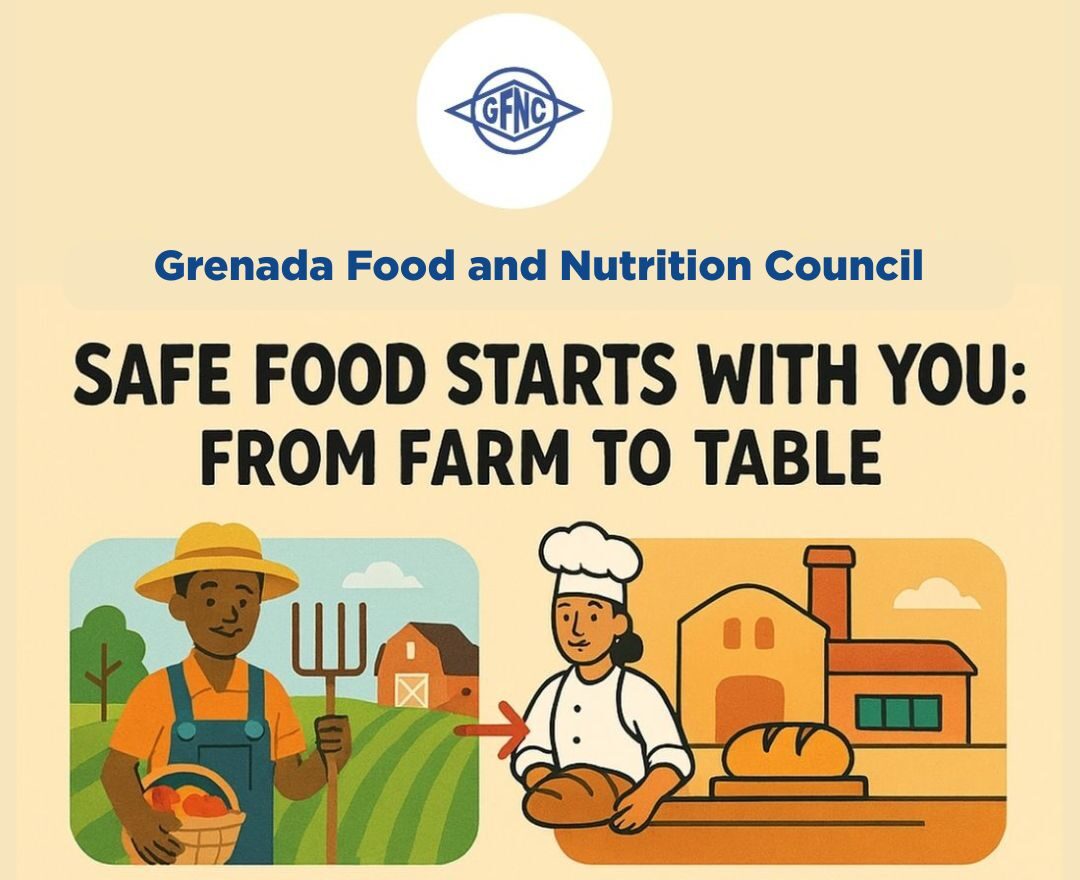
Safe food starts with you. Image: GFNC
National Benefits
If Grenada successfully integrates international food safety standards across every stage of the chain, the benefits will be wide-reaching. Public health will be better protected, reducing the burden of foodborne illness and non-communicable diseases. Local farmers, supermarkets, and small businesses will gain credibility, making Grenadian products more competitive on the export market. Most importantly, the island’s reputation as a safe and high-quality food destination will strengthen its tourism industry, one of the cornerstones of the economy. Food safety, therefore, is not only a health measure but also an investment in national growth and international prestige.
Summary
Grenada cannot afford to treat food safety as optional. From primary production to processing, distribution, and consumer handling, each stage requires discipline, cooperation, and accountability. By adopting proven frameworks such as Regulation (EC) 852/2004 and HACCP, Grenada can safeguard public health, expand export opportunities, and preserve its standing as a tourism gem. The time to act is now. Farmers, processors, supermarkets, policymakers, and households must work together to build a food chain that is transparent, trustworthy, and resilient. A safer plate for every Grenadian is within reach, but only if we make food safety, our shared urgent priority.
To learn more about the GFNC, visit https://gfnc.gov.gd/about-us/, and to follow us on social media, visit https://linktr.ee/473GFNC. To schedule a nutrition counselling session, call 473-440-2126 or email [email protected]. Eat Local: Strengthen Food and Nutrition Security in Grenada.
GFNC
NOW Grenada is not responsible for the opinions, statements or media content presented by contributors. In case of abuse, click here to report.