by Yadirys Echenique Paz, Ambassador of Cuba to Grenada
On 7 July, at Cuba’s request, the United Nations General Assembly held a debate on the economic, commercial, and financial blockade imposed by the United States against the island, despite Washington’s attempts to prevent it.
With 136 votes in favour, the majority of UN member states supported the Cuban initiative, reaffirming the political isolation of the United States and the legitimacy of Havana’s denunciations.
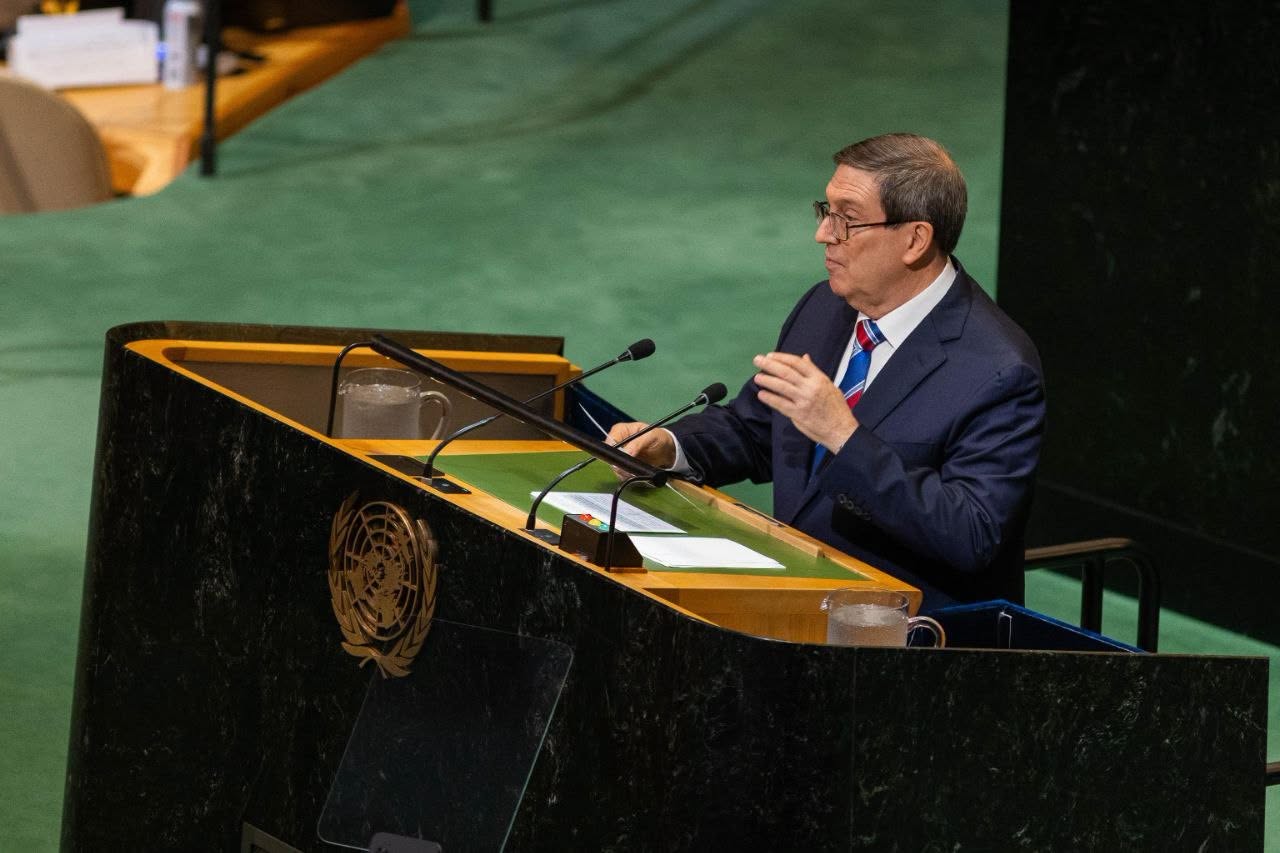
Foreign Minister Bruno Rodríguez denounced that the blockade imposed by the United States against Cuba constitutes a multidimensional war that has intensified with an energy siege equivalent to a naval blockade. He stressed that the coercive measures aim to strangle the Cuban economy and inflict suffering on the population, while Washington seeks to conceal the true nature of these sanctions.
Rodríguez emphasised that the blockade not only directly affects the Cuban people but also imposes extraterritorial sanctions on third countries, forcing them to abandon their commercial relations with the island. In his remarks, he highlighted that this policy violates international law and the principles of the UN Charter, while constituting an act of genocide and collective punishment.
Finally, the Foreign Minister expressed gratitude for the overwhelming support of UN Member States, who voted in favour of opening the debate despite United States pressure. He concluded by affirming that Cuba poses no threat to anyone, while the blockade is indeed a threat to the life and well-being of millions of people, reiterating his call to the international community to defend sovereignty and social justice.
The session was marked by speeches of support from various countries and regional organisations. The representative of Russia stressed: “The supply of fuel to Cuba is no longer a commercial matter, it is a humanitarian issue.” Uganda, speaking on behalf of the Non-Aligned Movement, declared that the General Assembly must mobilise to prevent military aggression against Cuba.
Mexico’s representative defended that it is up to the Cuban people, and only them, to decide their destiny, free from external pressure and impositions. The African Group, China, the Association of Southeast Asian Nations, Pakistan, and other countries warned of the risk of a humanitarian crisis and condemned the impact of the sanctions on essential sectors such as health, education, and energy.
The debate reflected the growing international solidarity in the face of the consequences of the United States siege. References were made to prolonged blackouts affecting millions of Cubans, the paralysis of public transportation, and difficulties in preserving food. Hospitals and health centres have been forced to operate with emergency generators amid a severe shortage of medicines and medical supplies.
The vote in the General Assembly represents a diplomatic triumph for Cuba, which succeeded in opening the discussion despite United States pressure. The outcome confirms that the international community supports the right of peoples to live free from unilateral coercive measures. As Cuban Foreign Minister Bruno Rodríguez declared: “Cuba is not a threat; the blockade is.”
NOW Grenada is not responsible for the opinions, statements or media content presented by contributors. In case of abuse, click here to report.