Prison and probation officials from across the Caribbean recently came together to strengthen how people are assessed when they first enter the prison system, helping to improve rehabilitation and successful reintegration into society.
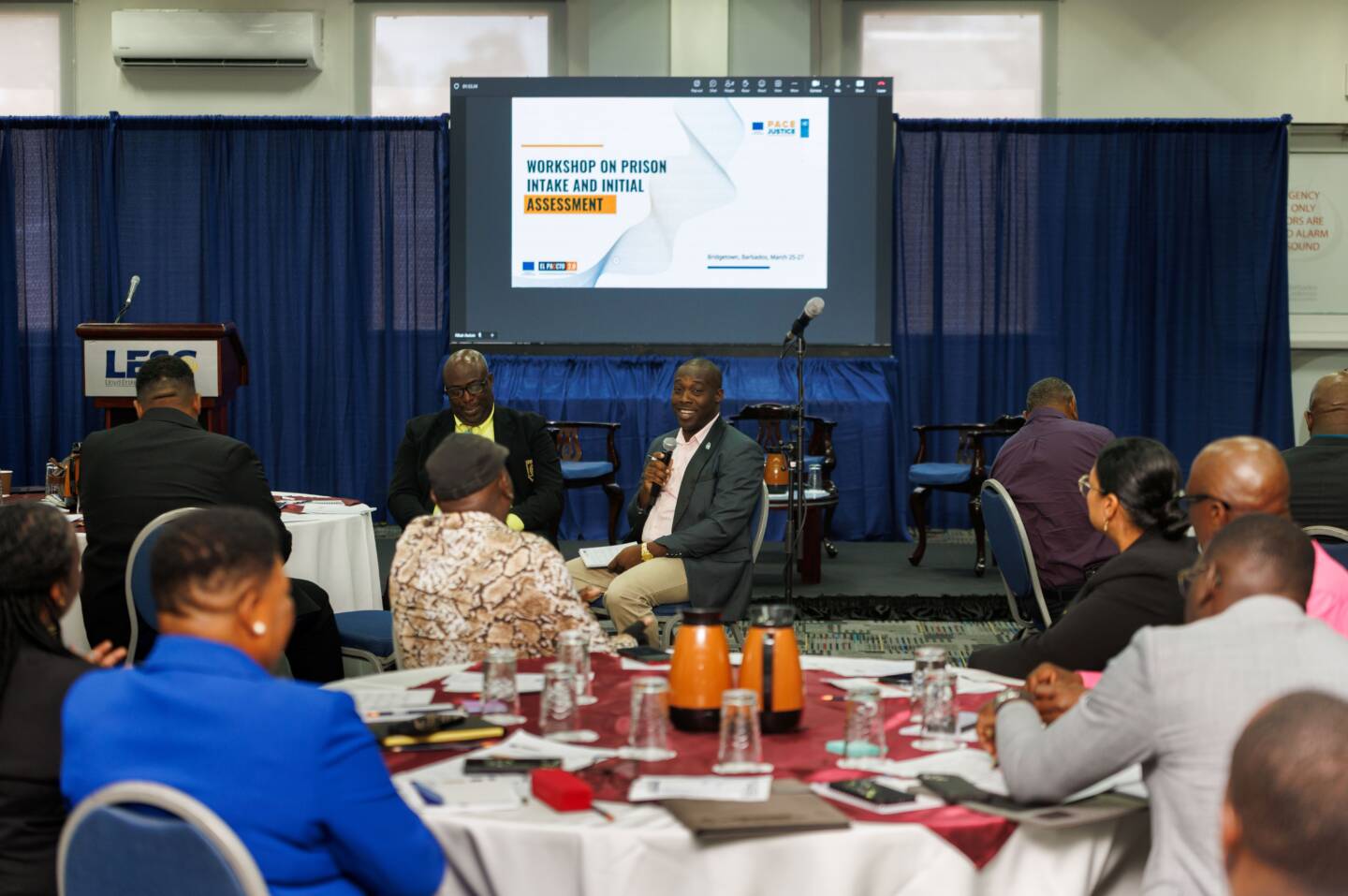
Through a partnership between the UNDP Partnership of the Caribbean and Europe on Justice (PACE Justice) project and EL PACCTO 2.0 — the European Union’s cooperation programme on justice and security – officials from thirteen Caribbean countries met in Bridgetown from 25–27 March 2026 for three days of hands-on training. The workshop was held at the Lloyd Erskine Sandiford Centre and brought together representatives from Antigua and Barbuda, Barbados, Belize, Dominica, Guyana, St Kitts and Nevis, St Lucia, Trinidad and Tobago, The Bahamas, Grenada, St Vincent and the Grenadines, Jamaica and Suriname.
UNDP-EU PACE Justice Project prison intake training. Photo: UNDP
The focus of the training was improving prison intake and assessment processes — the first steps taken when a person enters custody. Getting these steps right helps authorities understand an individual’s risks and needs early, make better decisions about detention or alternatives, reduce administrative delays, and support pathways to rehabilitation from the start. Strong intake systems also help reduce overcrowding and unnecessary pre-trial detention.
“A proper intake assessment process can significantly improve a prisoner’s experience within the facility and, ultimately, their reintegration into society. In short, it can help break the cycle of crime,” said Vanessa Untiedt, PACE Justice Project Specialist, UNDP.
Director of the Barbados Probation Service and President of the Caribbean Association of Probation and Parole Angela Dixon highlighted the importance of probation services, noting that probation plays a key role in understanding individuals’ backgrounds, risks and community connections, which is essential for informed decision-making. noting, “Probation’s defining value is continuity of knowledge about the individual. No other service carries the same depth of pre-existing relationship, community intelligence, and risk history.”
EL PACCTO 2.0’s Field Officer for the Caribbean, Luuk Bruijn, emphasised the value of regional cooperation: “The development of a standard procedure for intake assessment in prisons allows for local adaptations to a regionally agreed framework, taking into account best practices and expertise from across the Caribbean, ultimately strengthening the overall management of penitentiary systems.”
By the end of the workshop, participants agreed on a shared regional framework for prison intake and assessment, supported by country-specific approaches. This marks an important step toward more consistent, fair and effective practices across the region.
The next phase will focus on turning this framework into practical Standard Operating Procedures (SOPs) that can be used by prison and probation staff. Work is also planned to explore a simple digital tool to support intake processes, improve record-keeping, and strengthen information sharing. Special emphasis will be placed on improving coordination with probation and parole services to support evidence-based decisions.
With this activity, the PACE Justice project continues to support fair, effective and human rights–based correctional systems across the Caribbean, recognising that safer prisons help build safer communities.
UNDP
NOW Grenada is not responsible for the opinions, statements or media content presented by contributors. In case of abuse, click here to report.