
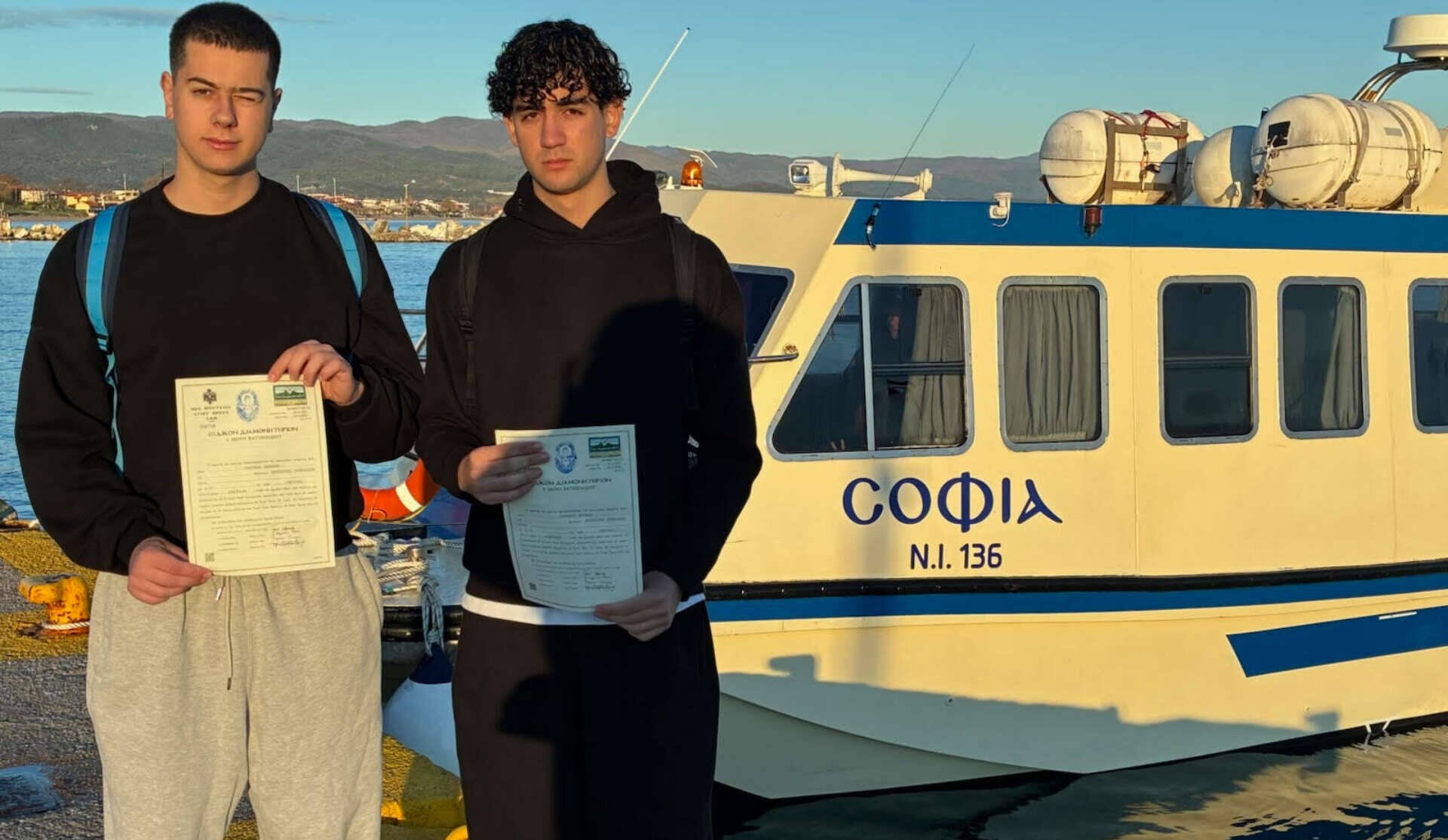
We are two brothers from Melbourne, Greeks of this generation, one eighteen and one seventeen, visiting Mount Athos for the first time. Our parents had always said that one day we would be gifted a visit to Mount Athos as a rite of passage. We imagined it as a place of meaning and history.
Only days earlier, Sotiri and I had been sitting at our desks studying for VCE. I had just completed Year 12, and he had finished Year 11. We were not raised in a household defined by strict church attendance. Our parents always said that faith is something you carry quietly. What mattered more than rules were honesty, respect, and gratitude. Most nights ended with giving thanks, often with a short prayer in front of the icons in our bedrooms.
We grew up in an environment where different faiths and backgrounds were treated with the same respect. Orthodoxy was simply part of everyday life.
That grounding shaped us both, but not in the same way. I find stillness difficult, while Sotiri is comfortable with it. I am drawn to movement; he is content to observe first. That difference followed us all the way to Mount Athos.
The afternoon before entering the Holy Mountain, we travelled to Ierissos, the last stop before Athos. A local man drove us to the port and told us his father had worked on Mount Athos. He raised his family while working there, and when he reached retirement age, he left his wife and children and became a monk. He said it had always been his quiet dream.
Early the next morning, we collected our diamonitiria and boarded the boat Sofia. As we moved along the coast, the mountains came into view, the noise faded, and daily life began to feel further away.
When we stepped onto the grounds of Vatopedi Monastery, it felt familiar. Not because we had been there before, but because so much of it resembled what we had grown up with: the monks in black, the incense, the crosses, the Greek flag, the Aegean water, the icons we had kissed. The chanting and the rhythm of prayer felt familiar, even in a new place.
We realised we did not know how to greet the monks properly. Should we bow, kiss a hand, or say nothing at all? We watched others, followed quietly, and learned as we went. What we heard again and again were the greetings, «Την ευχή σας» and «Την ευλογία της Παναγίας».
What surprised us most were the monks themselves. Many were young. They did not look so different from us, just older, with beards. They were busy, but calm.
We were looked after by a Greek Australian monk who had lived a professional life before coming to the Holy Mountain. He told us he had always felt something was missing. One monk was covered in tattoos, a quiet reminder of the life he had left behind.
For me, the silence was difficult at first. My life is usually filled with sound. I shower, eat, and study with music playing. Sometimes the music is loud or unrefined, not because I agree with it, but because it fills the space.
At Vatopedi, even time felt different. The monastery follows Byzantine time, and very quickly, watches stopped feeling important.
At one meal, sitting with a group of monks, Sotiri pointed to the jug of wine and, in what he thought was a whisper, joked that I should not get drunk and start dancing on the tables. Before I could laugh, a monk quietly reminded us that talking during meals is not permitted.
Later, one of the monks took us on a long walk through the monastery grounds. The distance alone gave a sense of its scale.
He showed us the greenhouse where the vegetables and fruit we ate were grown, part of the monastery’s quiet self-sufficiency.
As we walked, we talked. Sotiri asked whether the monks vote. The monk explained that most do not, choosing prayer over political engagement. Sotiri wondered whether, as people who pray for humanity, their voices might still matter in shaping a more just world.
It struck us that the Holy Mountain had remained largely unchanged for more than ten centuries. Another monk explained that Mount Athos was spared during the Second World War, largely for strategic reasons, and that some believe Hitler chose not to interfere in order to preserve—and possibly claim—the religious and cultural significance of what existed there, including Panagia’s Belt.
Listening to this, I became aware that time behaves differently on the Holy Mountain. Empires had risen and fallen, wars had come and gone, yet the daily rhythm of prayer remained unchanged. History felt present, but it did not dominate conversation. It simply existed, quietly, in the background.
I asked who the monks pray for all day, and what struggles they could possibly face living away from the distractions of the world. The answer surprised me. Their struggle, he said, is different, but no less real. Each day, they work on humility. They pray for themselves, asking forgiveness, and for all humanity.
I also asked whether he misses his family. He answered simply that he is where he is meant to be. His parents miss him, and he misses them, but this is his path.
We asked how we might live well in a world shaped by busyness and urgency. He told us to look inward, to seek moments of silence, and to resist the urge to always be in a hurry. Not to chase perfection, but συγχώρεση. Forgiveness, he explained, is about leaving space inside yourself so bitterness does not take hold.
We were woken sometime after midnight by the wooden call to prayer for the early morning service, which flowed into the Divine Liturgy. We were tired when we rose, but we were also glad to get up. The chant, «Κύριε ἐλέησον», repeated again and again. We had heard those words our whole lives. Here, they felt different.
Twenty-four hours is not enough time to understand a place like Mount Athos. It asks for patience, reading, and repetition. We did not leave with answers. We left with questions, content to sit with them.


