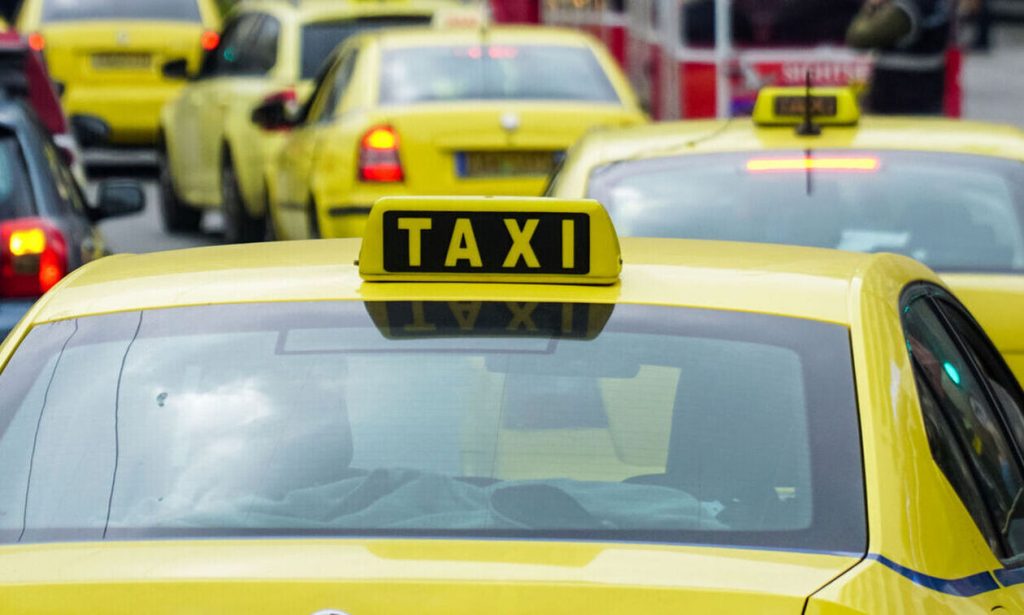
Taxi owners in Greece will launch a 48-hour nationwide strike on Tuesday and Wednesday, December 2-3, 202.
The main reason for the strike announced by the Panhellenic Federation of Taxi Owners (POIATA) for next week is the imminent mandatory transition to electric mobility from January 1, 2026.
The entire country will be without taxis for two days next week as motorists form a united front against the Ministry of Infrastructure and Transport after months of confrontations between the Federation and the Attica Taxi union.
The mandatory transition to electric vehicles has caused an explosive climate of uncertainty and reaction in the sector.
The Federation POEITA denounced the government inaction on a number of other issues that affect the sustainability of the sector. As the president of the Federation, Lefteris Petrakis, noted to daily ethnos.gr, professionals in the sector are facing an impasse that leaves no room for delays, and even warned of a long-term strike after the holidays.
The central point of the conflict is the implementation of law 4710/2020, which provides that from the new year all taxis in Athens and Thessaloniki that reach their age limit should be replaced exclusively with electric vehicles.
However, according to data from the Attica Taxi Drivers’ Union (SATA), today there are only 75 electric taxis in the capital out of a total of 14,000 – a percentage that makes, according to motorists, the transition practically impossible. The Federation and SATA are calling for an extension of the mandatory period until 2035, with the government appearing unmoved so far.
Motorists point out that electric mobility in the sector still faces serious infrastructure deficiencies.
The number of chargers remains limited, apartment buildings often cannot support the installation of charging points without time-consuming electrical interventions, and the number of specialized workshops is small.
At the same time, the cost of purchasing an electric taxi, which reaches 30,000 – 35,000 euros, is an even greater burden on professionals, while operating costs – such as the full charge fee that ranges from 12 to 24 euros – are considered significant for vehicles that are used intensively, such as taxis.
SATA has launched several 48-hour strikes in the last six months of 2025.