The Greek National Robotics Team is currently in Australia, competing in the 27th International Robotics Olympiad (IROC 2025), being held on the Gold Coast in Queensland. However, as journalist Tasos Voyatzis reports, almost a year after the team’s greatest success to date and the Prime Minister’s public congratulations, the delegation travelled without any state funding, with costs covered entirely by families.
“The Greek National Robotics Team is now in Australia to participate in the 27th International Robotics Olympiad (IROC 2025, 17–21 December), one of the oldest and most demanding international institutions in educational robotics,” Voyatzis wrote, among other things.
“The journey took place. Participation was secured. But not through any state planning or institutional support — instead, through the families of the students and their instructors. A cost that, at an institutional level, was never covered. And that is the real issue.”
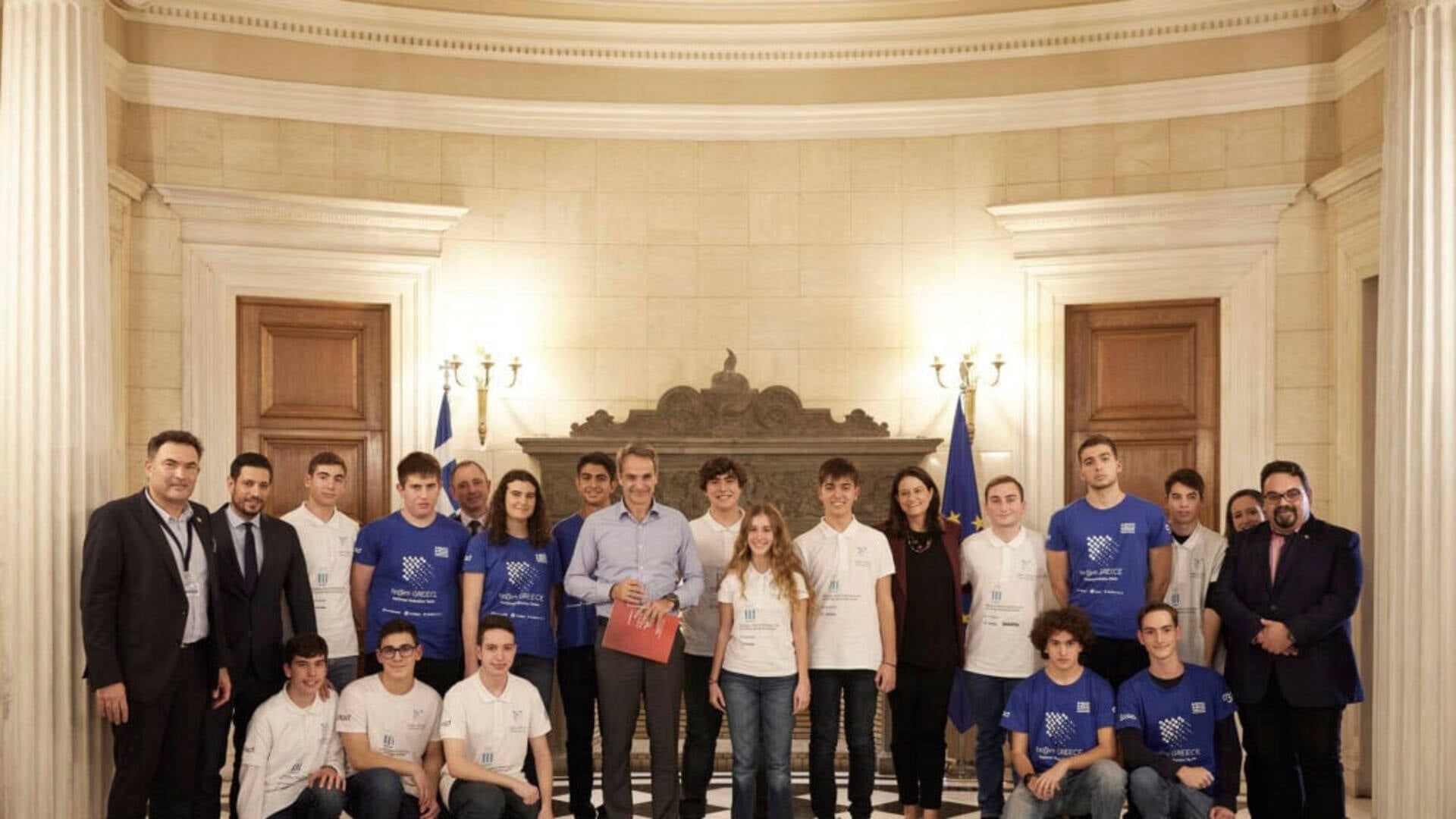
A year ago, Greece was celebrating. At the 26th International Robotics Olympiad (IROC 2024) in South Korea, the Greek delegation won eight medals and ranked first among all European countries. It was the greatest success in the history of Greece’s participation in the competition.
“The students were described as ‘little heroes’. They received public, named congratulations from the Prime Minister himself. They were presented as proof that ‘Greece has brains’ and that the future can be built on knowledge and innovation,” Voyatzis added.
It was a rare moment of collective pride. One year later, however, the applause was not followed by continuity. For this year’s Robotics Olympiad in Australia, the state provided not a single euro. No provision, no institutional guarantee of participation, no organised support for a National Team officially representing the country.”
Only the students whose families were able to cover the costs could travel with the delegation. Other students, with the same level of preparation and effort, were left behind.
“And yet we are talking about students who work for months after school, devote afternoons and weekends, solve complex problems in engineering, programming and automation, and compete against teams from countries where robotics is a core subject from primary school. Many of these students work without laboratories, without equipment provided by schools — often in kitchens and living rooms — using materials purchased by their families. This is not the exception. It is the rule,” Voyatzis emphasised adding that “When the state is entirely absent, this cost effectively functions as a filter of exclusion.”
The cost of participating in a Robotics Olympiad outside Europe is far from negligible. It includes long-haul flights, transportation of equipment, accommodation, participation fees and operational expenses over many days.
According to estimates from families and organisers, the total cost per student can reach or exceed €3,500 that is a prohibitive amount for the average Greek family.