ATLANTA — Georgia’s election board adopted two rules Wednesday aimed at bolstering confidence in the state’s election system.
One of the rules will have no immediate impact since it bans a method of counting votes that will not be used anytime soon. The other could land the State Election Board in court after Georgia Attorney General Chris Carr warned that it was a constitutional overreach.
A third measure that would have banned the use of digital barcodes when tabulating votes failed over concerns that it conflicted with the will of the General Assembly. Lawmakers two years ago adopted a ban on QR codes that was to take effect at the start of this month. But they delayed implementation until 2028 during their recent special session.
Their new law also established a study committee that must recommend a replacement voting system based on hand-marked paper ballots.
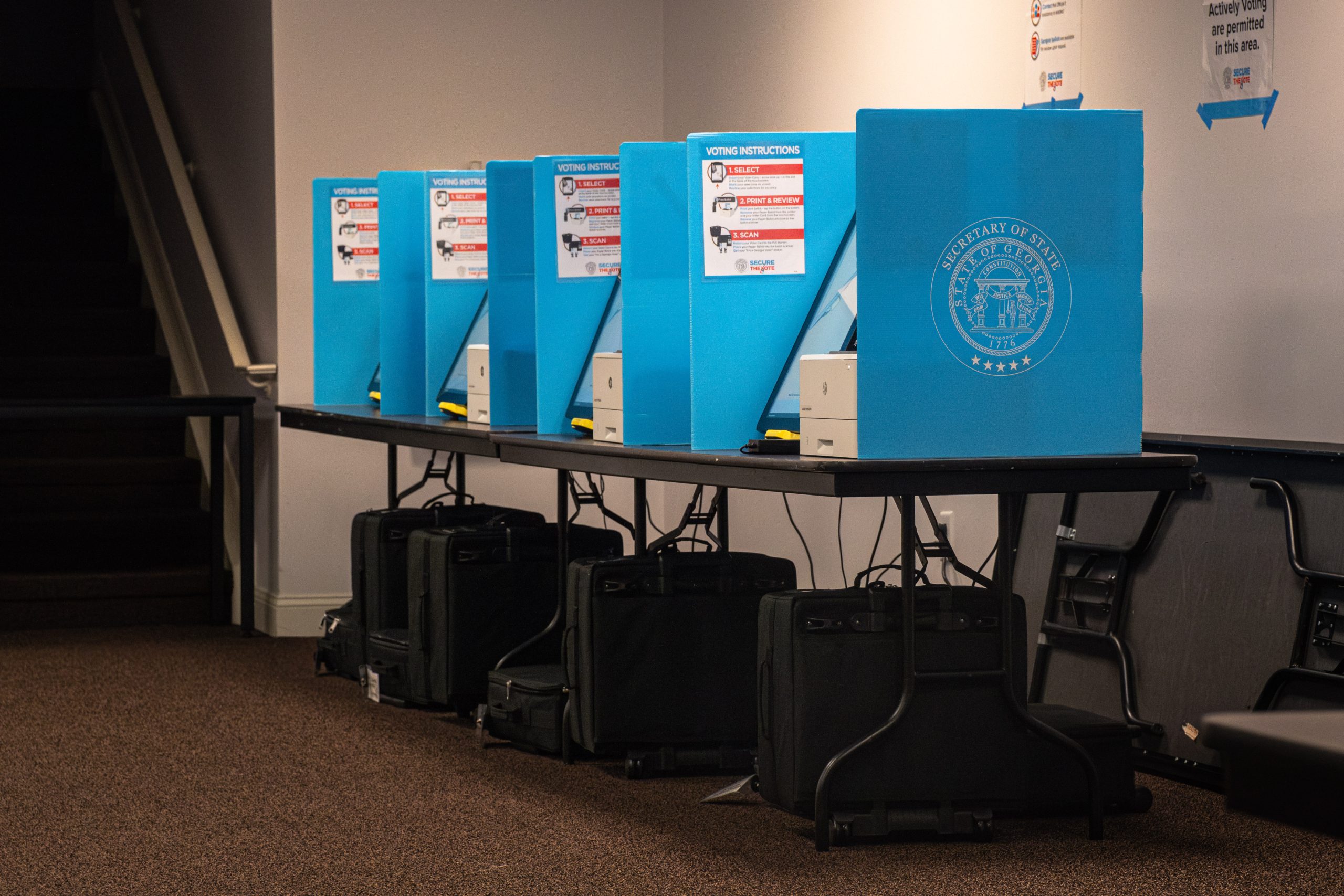
The rules adopted by the election board are supported by people who lack confidence in Georgia’s current digital system. Voters tap their selections on a digital screen, and the system then prints out their choices on a sheet of paper that they deliver to a scanner that records the ballot.
The sheet of paper bears the names of their chosen candidates, along with a QR code with data that is supposed to match those selections. The scanners tabulate votes based on the QR code data, leaving skeptics to question whether the printed text and the QR code match.
Had lawmakers not delayed the QR code ban, the Georgia secretary of state’s office was prepared to use optical character recognition technology, or OCR, to tally votes, using the QR codes only as a check.
The first rule to pass the election board Wednesday would prohibit that. The new rule, adopted 3-1, would require that tabulation occur directly from a paper ballot and not an electronic copy.
Critics have pointed out that OCR technology uses digital images of ballots.
“The point is that the vote is contained on the paper ballot, not a copy of the vote,” said board member Salleigh Grubbs, who proposed the rule.
The next rule to pass would require that all vote tabulations and consolidations occur in public.
Results are tabulated at the precinct level. State law mandates election observers be allowed to monitor the process.
The secretary of state’s office receives those numbers and aggregates them into totals for each race.
Grubbs and other critics of Secretary of State Brad Raffensperger have complained that he has refused to allow most election board members access to his “bunker” on election nights, calling it a violation of the law.
So the second rule would pry open Raffensperger’s doors.
Grubbs was appointed by Lt. Gov. Burt Jones, a Republican.
Sara Tindall Ghazal, the only Democratic appointee on the board, objected, saying she supported more transparency but that the board lacked authority to give instructions to Raffensperger, who was elected by voters.
Board Chairman John Fervier, appointed by Gov. Brian Kemp, a Republican, pointed to a May 12 letter from Carr that said the election board lacked authority under state law to adopt this rule. He voted with Ghazal against it, saying it could trigger a lawsuit.
It still passed 3-2.
Grubbs lost support from another Republican on another vote.
Janelle King, an appointee of the Republican-controlled state House, said Grubbs’ proposed rule banning the use of barcodes conflicted with the new law delaying the QR code ban.
The proposal to initiate rule-making failed 2-3, as Fervier and King sided with Ghazal against adoption. That left Grubbs with just one ally in new Republican Party appointee Carolyn Roddy, who had supported her other measures.
Grubbs said the rule was needed to give voters confidence that the names printed on their ballots controlled the tabulation results, since voters cannot read the QR codes printed on their ballots.
Fervier said he trusted that the text matched the data in the QR code on his ballots.
“I don’t have the level of skepticism of some others on that,” he said.
The board also voted to begin a public comment process on a rule aimed at enhancing voter privacy. Ballot secrecy is a legal requirement, Grubbs said,
This story is available through a news partnership with Capitol Beat, an initiative of the Georgia Press Educational Foundation.
Related
Type of Story: News
Based on facts, either observed and verified firsthand by the reporter, or reported and verified from knowledgeable sources.