The contested northern territory exposes the limits of Ethiopia’s federal design
The recent armed clash between the Ethiopian federal government and Tigrayan forces has once again exposed the fragility of the Pretoria Cessation of Hostilities Agreement, which ended a brutal two-year civil war.
The National Election Board’s decision to designate the contested areas as separate electoral constituencies further heightened tensions. That decision has since been suspended by an injunction issued by the Federal High Court.
More importantly, it underscores the need to address the real source of the conflict. While the dispute between the Tigray and Amhara regions extends beyond Welkait to other border areas, Welkait remains the main sticking point, not only for its historical and political importance but also for its economic significance to both regions.
The Welkait issue is exceptionally complex because it extends beyond identity. Longstanding claims rooted in identity are deeply sensitive, but they are only part of the forces shaping the dispute. Welkait’s strategic location at the intersection of Ethiopia’s borders with Sudan and Eritrea gives it weight that complicates any settlement based solely on administrative or cultural considerations.
Economic factors are equally central. Without downplaying identity claims, economic considerations rank as high as, if not higher than, identity issues. If the problem were purely about language, culture, or ethnicity, it should, at least in theory, be possible to negotiate arrangements that protect those rights regardless of which region administers the area.
Ethiopia itself offers examples: special zones protecting Oromo or Agew rights within the Amhara region, and the self-administration of the Irob people within Tigray. The entrenchment of the Welkait issue suggests that control over land, resources, and economic opportunity is as central to the dispute as identity.
Constitutional Dead End
Unfortunately, the Ethiopian Constitution offers no workable solution. More accurately, the solution it envisages is unlikely to bring lasting peace. The constitution does not specify regional borders and, in territorial disputes, points to one option: a referendum to enforce the will of nations, nationalities, and peoples and realize their right to self-determination.
The Welkait issue cannot be resolved through either a binary referendum or force. A referendum, regardless of how it is organized or who participates, would not address the core problem.
The situation closely resembles the case of Western Sahara, where Morocco and the Polisario Front have never agreed on a UN-mandated vote because of disputes over voter eligibility. Likewise, the Amhara and Tigray regional governments are unlikely to agree on who should vote in a referendum meant to allocate exclusive ‘ownership’ of Welkait to either of them.
Even if such an agreement were somehow reached, neither side appears willing to accept an outcome placing any disputed territory under the other’s administration. Simply put, Amharas are unlikely to accept a result assigning Welkait to Tigray, just as Tigray is unlikely to accept a result placing it within Amhara.
Security Dilemma
Trying to settle the issue through force is equally short-sighted. The experience of the past three decades shows that attempts to control Welkait and the other areas by military means only ossify resentment, harden hostilities, and trap both regions in a destructive security dilemma, while keeping the country at risk of fragmentation. Force may change control on the ground temporarily, but it does nothing to resolve the underlying conflict.
At the same time, any recourse to historical claims of occupation, first presence, or ownership of land is equally unhelpful. There is no agreed cut-off point for how far back history should count, nor evidence that these areas were divinely allocated to either Amharas or Tigrayans.
Even if such claims were advanced, neither side would accept them. In Ethiopia today, historical arguments produce truths convincing only to those who already believe them, and when asserted, they only deepen mistrust.
If neither force nor referendum offers a sustainable solution, where can one be found? It begins with a sober assessment of the available options, what might work and what will not.
Five broad scenarios present themselves: the Status Quo Amhara Option, the Tigray Option, the Joint Administration Option, the Federal Option, and the Self-Administration Option.
Status Quo
This option would leave Welkait under Amhara administration. It is understandably preferred among Amharas and may appear logical to those who believe the Tigray regional government, particularly under the TPLF, failed—or at times responded brutally—to the identity and constitutional rights of Amharas born and raised in Welkait for more than three decades. That failure created deep mistrust and a desire to correct what is seen as historical injustice.
From this perspective, the status quo is justified by past failures, lack of confidence in Tigray regional authorities, and a strong desire to prevent renewed subjugation. However, for obvious reasons, this option is not tenable. Tigrayans would rather engage in prolonged and destructive conflict rather than accept the permanent loss of Welkait.
This resistance also appears to be driven by some Tigrayan elites who have abandoned the idea of a shared Ethiopian future and instead envision an independent Tigrayan state. For them, Welkait represents a strategic and economic lifeline, an outlet that could ensure the viability of such a state and potentially serve as a corridor to weaken and destabilize Ethiopia.
Some former TPLF leaders appear to have drawn lessons from Eritrea’s experience, where independence followed by hostility with the former parent state failed to deliver peace or security.
For these actors, control over Welkait is essential to avoiding a similar fate. As a result, even many Tigrayans who favor a shared future within Ethiopia are unlikely to accept the status quo, making peaceful coexistence extremely difficult.
For this reason alone, the status quo is not viable, regardless of the legitimate grievances endured by Amharas. It also raises legal concerns: maintaining it could set a dangerous precedent for future territorial disputes, ultimately harming the Amhara community itself.
In view of all this, any belief that the status quo could serve as a permanent solution is misguided and self-defeating.
Tigray Option
The absolute opposite of the status quo is the Tigray option, which would place Welkait back under Tigray’s administration. This option is often justified by the displacement and suffering of Tigrayans during the recent war.
The argument, which is understandable, is that many Tigrayans born and raised in Welkait but uprooted by the conflict would be unlikely to feel safe unless the area returned to Tigray. From this perspective, the move is seen as compensation for recent injustices.
It may also align with a strict reading of the constitution, particularly its emphasis on self-determination, which is not necessarily tied to the regional administration in which the people concerned reside. However, the constitutional mechanism for resolving such disputes, including claims to self-determination, is a referendum, an option that is deeply flawed and unlikely to work in practice.
Amharas aver that their grievance predates the constitution, which they believe was crafted under TPLF dominance. They therefore reject resolving their claims through a framework whose legitimacy they question, especially when the injustice they cite predates it. Moreover, this option would require overlooking Amhara suffering, an unacceptable outcome for a community that has endured much.
Compounding this is Tigray’s failure to address the issue for more than thirty years—a blatant disregard for constitutional responsibility. Amharas have little reason to believe their grievances will suddenly be resolved now, after decades of neglect. As a result, Amharas are likely to resist this option, even at great cost.
Joint Administration
This approach would have Amhara and Tigray jointly administer the disputed territories. In principle, it could be ideal, if the parties were not culturally predisposed to zero-sum politics. It would prioritize development and shared prosperity over dominance.
Given Welkait’s resources, the area could become a development corridor and cultural bridge for both regions.
Under current conditions, however, this option is unlikely to succeed. Political elites on both sides prioritize ego, self-interest, and historical grievance over compromise and long-term development. Ethnic outbidding compounds the problem; even moderates fear being labeled traitors.
Leaders appear more willing to engage in costly conflict than invest in peace that could generate shared benefits. Hence, prospects for joint administration remain slim.
Federal Oversight
This option would place the disputed territories under direct federal administration. Addis Ababa and Dire Dawa offer partial precedents. The advantage is a supposedly neutral arbiter managing a dispute the regions have failed to resolve. The federal government could help bridge the political and cultural rift between the two regions and reduce mutual distrust.
The drawback is perception: neither side sees the federal government as neutral. Many elites view it as part of the problem. Legally, the constitution does not explicitly recognize special administrative territories outside the full-fledged regional structure, a status reserved to “nations, nationalities, and peoples.”
Even Dire Dawa required separate federal legislation to manage a situation the constitution had not anticipated. Moreover, applying this model risks adding another layer of complexity to an already complicated problem.
Addis Ababa and Dire Dawa remain contested due to similar perceptions of federal bias and the failure to ensure inclusiveness and equal treatment of different ethnic groups in the city. Extending this model to Welkait could invite additional actors with competing interests, further complicating the situation.
In a country where perception can outweigh reality, the federal option is unlikely to provide a lasting solution.
Self-rule
The final, and perhaps most realistic, option is a self-administered territory. This could take the form of a special autonomous zone or even an additional regional state. Under this arrangement, the disputed territories would be administered by those genuinely rooted in the area: people born, raised, or with demonstrable historical ties to Welkait, regardless of ethnicity.
Over generations, the Welkait people (ወልቃይቴዎች) have developed a distinct, locally rooted identity shaped by shared history, language, and lived experience, one that does not fit neatly into the binary frameworks imposed by regional politics.
In practical terms, Welkait would be governed by the Welkait people, whether Amhara, Tigrayan, or of mixed identity.
Questions of legality may arise, as with the federal model. What makes this option compelling is the layered linguistic and cultural identity of the Welkait people. Contrary to elite narratives, identities here are fluid: residents speak Amharic, Tigrigna, and even Arabic.
A typical member of the Welkait people may have a Tigrigna name but speak with an Amhara accent, or vice versa. For the most part, it would be difficult to find a purely Amhara or purely Tigrayan identity, if such a thing exists at all, in these areas or elsewhere in the country.
This option requires the return of displaced persons, sustained community dialogue, and a genuinely representative local administration. The federal government would facilitate; Amhara and Tigray regions would have minimal oversight.
This approach avoids a referendum on whether Welkait should join Amhara or Tigray and instead focuses on creating an inclusive, democratic governance designed and run by the Welkait people themselves.
An ideal arrangement would involve bilingual administration, with Amharic and Tigrinya used equally in education and public administration. Political, security, and social leadership positions would be shared equally, with rotational arrangements to ensure balance.
For example, under this system, if the zonal administrator is of Amhara descent, the deputy shall be Tigraway, and vice versa, with roles alternating every term as agreed upon by the Welkait people.
The cabinet will also mirror this parity-based balance to create equal representation from both groups and dedicated seats for individuals of mixed heritage to ensure total inclusivity. Cultural and linguistic rights of all communities in the area would be actively promoted.
While this administration would remain autonomous from both neighboring regions, the presence of the Ethiopian National Defense Force or the Federal Police is a practical necessity. Given the strategic location of Welkait near the borders of Sudan and Eritrea, federal oversight is essential to safeguard against broader national security threats while local leaders focus on governance.
Identifying who qualifies as being from Welkait may present some challenges, but these are not insurmountable. Criteria such as birth, long-term residence, and historical ties can be applied. The more democratic and inclusive the administration, the less central identity becomes.
Identity conflicts tend to thrive where oppression replaces dialogue and participation. To formalize this, a referendum under Article 47(3) of the constitution offers the best path forward. This would not be a vote to ‘give’ Welkait to the Amhara or Tigray region, but a chance for the Welkait people to decide if they wish to chart their own course as a self-administered territory or a distinct regional state.
Ultimately, if this option is properly pursued, Welkait and the surrounding areas will not only act as a bridge between the two currently hostile regions and, over time, reduce animosity, but also become a powerful example of how to manage diversity, both for the rest of Ethiopia and beyond.
The Welkait model has the potential to be the guiding reference for a future, inclusive, and democratic Ethiopia; it is both a dream to be aspired to and a vision to be fulfilled.
Shared Sovereignty
No Ethiopian territory, whether in Tigray, Amhara, Afar, Oromia, Somali, or Benishangul-Gumuz, belongs exclusively to one people or region.
The constitution is clear: land is the common property of all nations, nationalities, and peoples of Ethiopia. Welkait is no different, just as Addis Abeba, Bahir Dar, Mekelle, or Kebri Dehar belong to all Ethiopians.
Otherwise, why would an Amhara or an Oromo sacrifice his life to defend a border in the Somali Region from foreign invasion? Why would a Somali, Tigrayan, or any other Ethiopian do the same when sovereignty is threatened beyond his or her home region? Because the land defended is part of a shared country belonging to all.
Only this understanding can make Ethiopia strong, united, and prosperous. Anything less, as our history has shown again and again, will condemn us to endless cycles of conflict, suffering, and poverty. The choice is ours, and the perfect time to choose is now.
Query or correction? Email us
While this commentary contains the author’s opinions, Ethiopia Insight will correct factual errors.
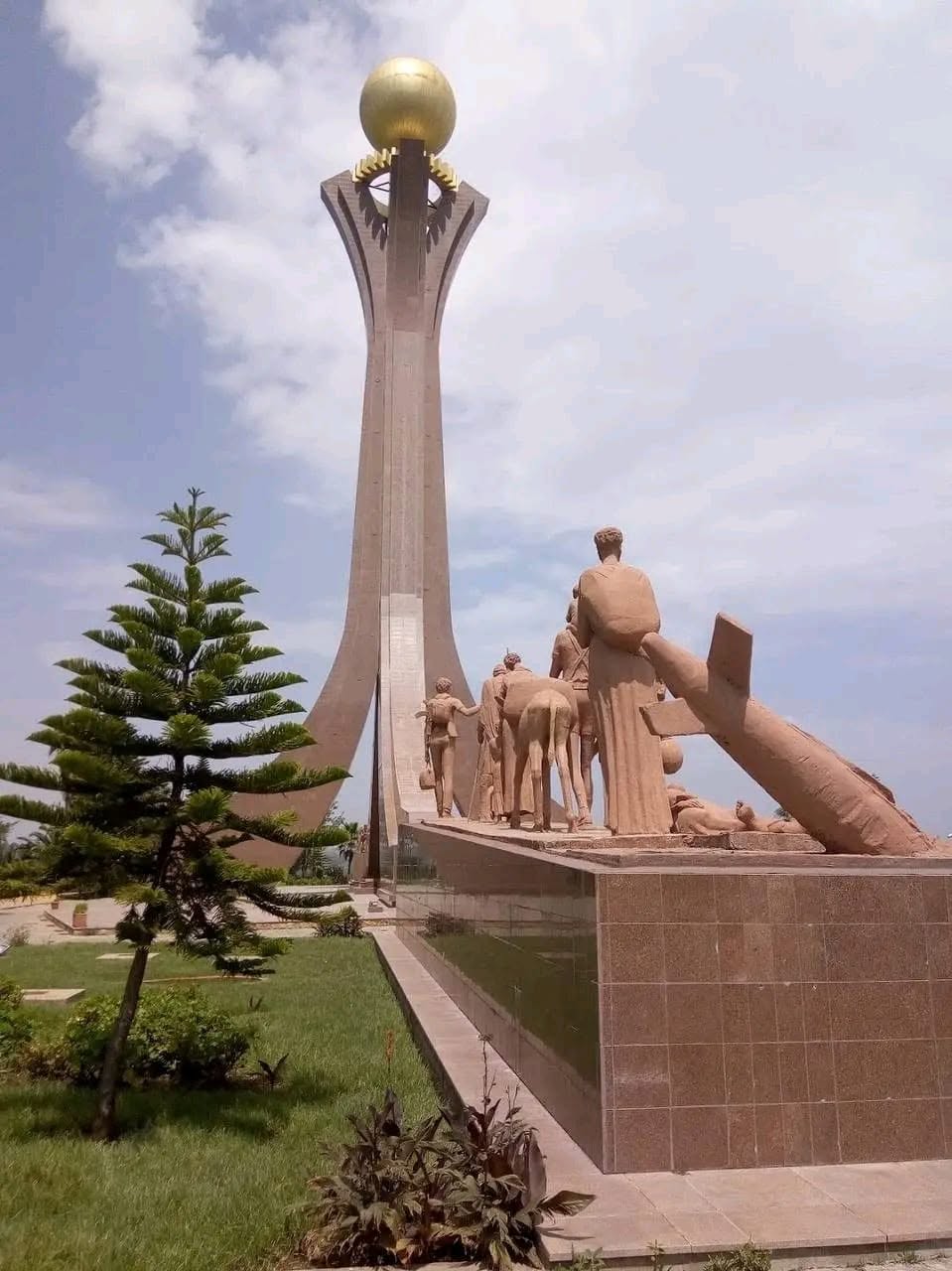
Main photo: Humera city, Kafta Humera Woreda, Ethiopia. Source: Social media.
Published under Creative Commons Attribution-NonCommercial 4.0 International licence. You may not use the material for commercial purposes.