
Why the U.S. operation undermines sovereignty, immunity, and the UN order
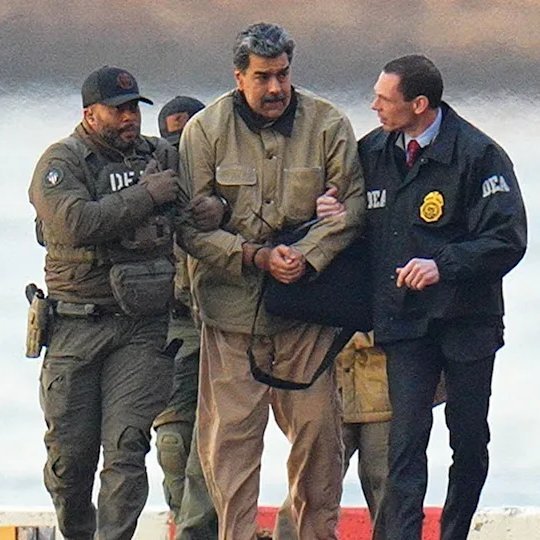
The United States military operation in Caracas on 3 January, culminating in the forcible capture and extraterritorial transfer of Venezuelan President Nicolás Maduro, marks a pivotal moment in the evolution of the post-Charter international legal order.
Beyond its immediate political and strategic ramifications, the operation raises critical questions about the continued vitality of fundamental principles of international law, including state sovereignty, the prohibition on the use of force, and the immunity of incumbent heads of state.
Although domestically framed in the United States as a law-enforcement action against an indicted individual, this characterization cannot reconcile the operation with the jus cogens obligations of the UN Charter.
Left unexamined, this episode risks establishing a permissive precedent in which powerful states assert unilateral enforcement jurisdiction through military means, eroding the universality and reciprocity on which the international legal system depends.
International responses were swift and pointed. Senior United Nations officials, including the Secretary-General, publicly questioned the operation’s compliance with the Charter’s core prohibitions and stressed the primacy of peaceful, multilateral mechanisms for resolving interstate disputes.
Regional organizations—from the African Union to Latin American and Caribbean bodies—denounced the use of force as an infringement on Venezuela’s territorial integrity and sovereign equality. Even among U.S. allies, calls for strict adherence to legal norms and peaceful dispute resolution underscored that sovereign equality and the rule of law remain central to the multilateral order.
This global discourse reflects not merely political disagreement, but a deeper normative contest over the limits of unilateral action, the role of collective security institutions, and the resilience of the post-1945 legal regime.
Manufactured Legality
Maduro’s capture followed years of U.S. policy portraying his government as a “narco-state,” accompanied by criminal indictments, economic sanctions, and public bounties. In the aftermath of the operation, U.S. officials presented the action as a necessary intervention against transnational organized crime and as a contribution to regional security.
From an international legal perspective, this narrative is deeply problematic. The appearance of a sitting head of state before a foreign criminal court—portrayed as voluntary while the transfer itself amounted to abduction—exposes the gap between domestic criminal claims and the constraints of international law.
The gravity of alleged crimes does not confer extraterritorial enforcement jurisdiction through military force. Preliminary reports of civilian harm further underscore the humanitarian risks of conflating law enforcement with military action.
Charter Breach
At its core, the operation constitutes a prima facie violation of Article 2 of the UN Charter, which prohibits the use of force against the territorial integrity or political independence of any state.
The International Court of Justice (ICJ) has repeatedly affirmed that this prohibition is a peremptory (jus cogens) norm of both treaty and customary international law, binding on all states.
The Charter allows only two narrowly circumscribed exceptions: force authorized by the UN Security Council under Chapter VII, or the inherent right of self-defense under Article 51 in response to an armed attack, subject to necessity and proportionality.
Neither exception applies in this instance. Venezuela did not launch, nor was it credibly alleged to have launched, an armed attack against the United States, and no Security Council authorization was granted.
ICJ jurisprudence in Nicaragua v. United States and Oil Platforms rejects expansive doctrines of self-defense grounded in political hostility, speculative threats, or preventive logic. Absent an armed attack or collective security authorization, the unilateral deployment of military force on Venezuelan territory cannot be reconciled with the Charter framework.
Accordingly, the operation squarely falls within the definition of an act of aggression articulated in UN General Assembly Resolution 3314, particularly the invasion or attack by the armed forces of one state against the territory of another.
Historical precedent reinforces this conclusion. The 1989 U.S. intervention in Panama to capture Manuel Noriega, often invoked as an analogue, was met with widespread international condemnation and General Assembly censure.
Repetition of such conduct only signifies the erosion of international law. To treat these episodes as precedent mistakes power for legality and normalizes a regressive model in which coercion substitutes for law and unilateral force displaces collective security.
Selective Justice
Equally significant are the implications of this operation for the doctrine of head-of-state immunity.
Customary international law, affirmed by the ICJ in the Arrest Warrant case, recognizes that incumbent heads of state enjoy absolute immunity from foreign criminal jurisdiction during their term. This immunity is not a personal privilege but a functional necessity grounded in sovereign equality.
The forcible transfer of President Maduro bypassed established mechanisms of international cooperation, including extradition and mutual legal assistance, designed to balance accountability with due process. While exceptional cases, such as the Eichmann abduction, are often cited in defense of irregular renditions, these episodes have not crystallized into a general rule permitting extraterritorial seizure.
The selective application of criminal jurisdiction further exposes structural inequalities in the international legal system. Leaders from the Global South are increasingly subjected to unilateral enforcement actions, while officials from powerful states accused of international crimes frequently evade accountability.
This asymmetry undermines the principle of sovereign equality under Article 2 of the UN Charter and reinforces perceptions of a hierarchized legal order. It also raises broader concerns regarding the politicization of international criminal law and erodes confidence in multilateral legal institutions, particularly where enforcement is contingent on geopolitical power rather than consistent legal principles.
Systemic Consequences
Proponents of the operation may invoke arguments grounded in moral necessity or exceptional circumstances, including claims that sovereignty cannot shield perpetrators of serious crimes.
Yet international law has not recognized a unilateral right of humanitarian intervention or extraterritorial criminal enforcement absent Security Council authorization.
As the ICJ has consistently emphasized, political or moral claims cannot override clear legal prohibitions.
For many states, particularly within the African Union and the broader Global South, the implications are profound. Normalizing such conduct signals that sovereignty is contingent and legal protection uneven. This undermines multilateral institutions, incentivizes reciprocal violations, and accelerates fragmentation of the international legal order.
The capture of Nicolás Maduro is therefore more than a discrete geopolitical episode; it is a stress test for the contemporary international legal system. By contravening the prohibition on the use of force and eroding the doctrine of head-of-state immunity, the operation challenges principles that have governed interstate relations since 1945.
The international community faces a choice: reaffirm a universal legal order grounded in equality and restraint, or acquiesce in a system where law yields to power. The long-term credibility of international law depends on resisting the normalization of unilateral extraterritorial force and reaffirming the binding nature of the UN Charter for all states, irrespective of influence or power.
Query or correction? Email us
While this commentary contains the author’s opinions, Ethiopia Insight will correct factual errors.
Main photo: Venezuelan President Nicolás Maduro in U.S. military custody following his capture in Caracas, January 3, 2026. Venezuela. Source: social media.
Published under Creative Commons Attribution-NonCommercial 4.0 International licence. You may not use the material for commercial purposes.


