BY SIFISO NHLABATSI
MBABANE- The Judicial Commission of Inquiry which conducted a probe into the affairs of the office of the Master of the High Court has recommended that estate property left unclaimed for 25 years should revert to the State.
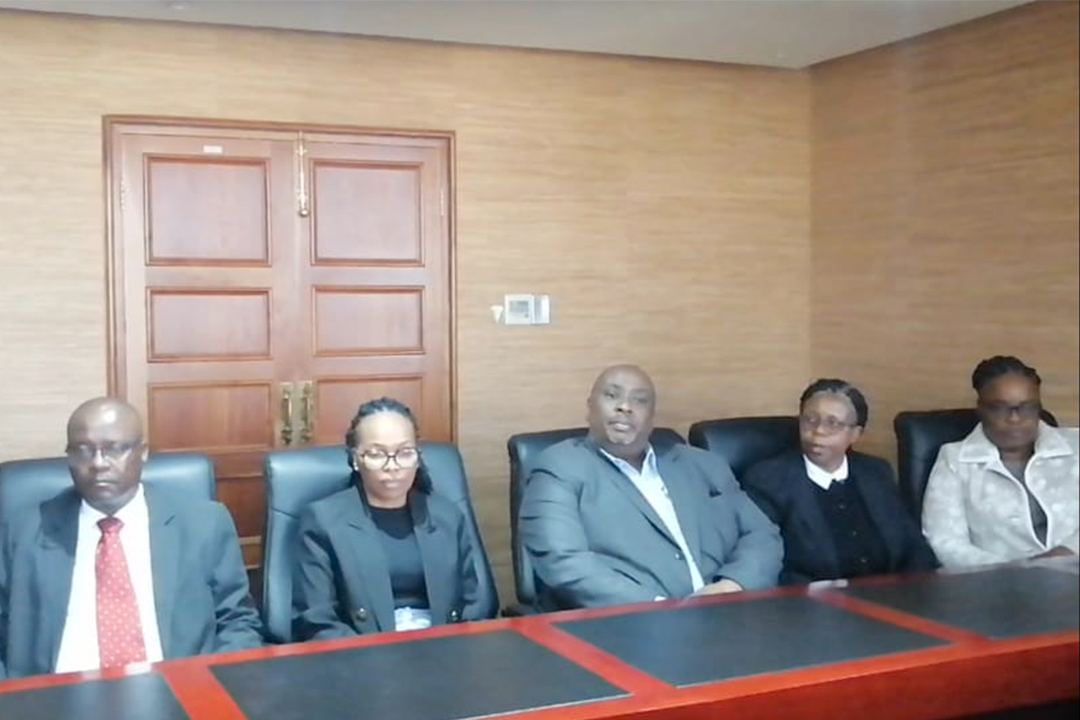
The recommendation is contained in the report of the Judicial Commission of Inquiry into allegations of impropriety, maladministration and abuse of power at the Office of the Master of the High Court, which was established under Section 139(5) of the Constitution.
The Commission recommended that “estate property unclaimed by anyone under the common law or in the Guardian Fund should revert to the State after 25 years.”
The proposal forms part of 42 recommendations made by the Commission after its inquiry into complaints involving the administration of estates and the operations of the Master’s Office.
The Commission’s recommendations seek to address what it identified as structural, administrative and operational shortcomings affecting the administration of estates, including delays in winding up estates, management of estate property and funds, protection of documents and inadequate oversight.
The Commission said the recommendation on unclaimed property should form part of a broader overhaul of the legal and administrative framework governing estates.
It noted that the Master’s Office currently operates under several pieces of legislation, including the Administration of Estates Act of 1902, the Recognition of External Trustees and Liquidators Act of 1932, the Intestate Succession Act of 1953, the Insolvency Act, the Companies Act and the Wills Act of 1955.
The Commission recommended that these laws be reviewed and amended, noting that they were largely enacted during the colonial and pre-constitutional eras and did not adequately address some matters relevant to present-day estate administration.
“There is need to review and amend the current legislation relating to the Master’s office,” the Commission said.
It recommended the introduction of legislation and administrative systems that would enable the Master’s Office to operate with greater efficiency, effectiveness and transparency while strengthening checks and balances.
Among the proposed reforms is the establishment of an independent oversight Board or Ombudsman for the Master’s Office to investigate complaints and allegations of maladministration.
The proposed body would receive complaints from beneficiaries, executors and other stakeholders dealing with the Master’s Office, review decisions and advise on appropriate action.
The Commission also recommended increasing the number of points from which Master’s Office services can be accessed, including designated service points at magistrates’ courts and traditional authorities.
It further recommended that beneficiaries should be given a choice to report an estate either directly to the Master or through an authorised service point.
The proposed reforms also extend to the management of executors.
The Commission recommended improving the appointment and management of executors, including expanding the category of professionals who may administer estates.
It said professionals such as accountants who possess the requisite qualifications and belong to regulated professional bodies could be considered, provided mechanisms such as fidelity funds are put in place to protect estates against abuse or mismanagement.
Financial management was another major area identified for reform.
The Commission recommended better management of estate finances and the introduction of improved payment systems, including the exploration of electronic funds transfers.
It also called for stronger checks and balances concerning estate late accounts to safeguard the interests of beneficiaries.
The Commission further recommended that the Master should ensure executors provide periodic reports before submitting the final Liquidation and Distribution Account.
On estate property, the Commission recommended an additional layer of oversight for the sale of property belonging to an estate.
It proposed that, instead of the Master alone giving consent for the sale of estate property to settle debts, such consent should be obtained through an application to the High Court.
The Commission also proposed protection for surviving spouses by recommending that the matrimonial home should not be sold, disposed of or distributed without the consent of the surviving spouse.
“The home must be kept for the use by the surviving spouse while still alive,” the Commission recommended.
#Eswatini #MastersOffice #JudicialCommission #HighCourt #EstateAdministration #Justice #Accountability #GoodGovernance #RuleOfLaw #AntiCorruption #Maladministration #EstateManagement #LegalReforms
(Courtesy Pic)
Post Views: 62