BY SIFISO NHLABATSI
MBABANE – Matsapha Lifestyle Centre has been found to be safe from significant flood risk, with an Environmental Audit concluding that the commercial complex is adequately protected against flooding even during extreme weather events.
The findings are contained in the Environmental Audit and Comprehensive Mitigation Plan (CMP) prepared for HIS Investments (Pty) Ltd in line with Section 52 of the Environment Management Act, 2002. The audit assessed the centre’s environmental and socio-economic performance, compliance with environmental laws and measures needed to address any identified shortcomings.
According to the report, hydrological investigations showed that the Lusushwana River poses only a minimal flood threat to the development. Modelling using the Hydrologic Engineering Center River Analysis System (HEC-RAS) found that only a one-in-100-year flood event would have any impact on the property, and even then the effect would be limited.
The audit states that during such an extreme flood, water is expected to rise by only about 0.3 metres above the natural ground level along the basement wall. It notes that the structure is protected by a solid concrete wall standing approximately 2.1 metres high, meaning the basement would remain protected from flooding, although small amounts of water could enter through sections of the wall.
“The basement will be protected from flooding,” the report states, adding that the main effect during such an event would likely be slower drainage caused by backflow where stormwater discharges into the Lusushwana River.
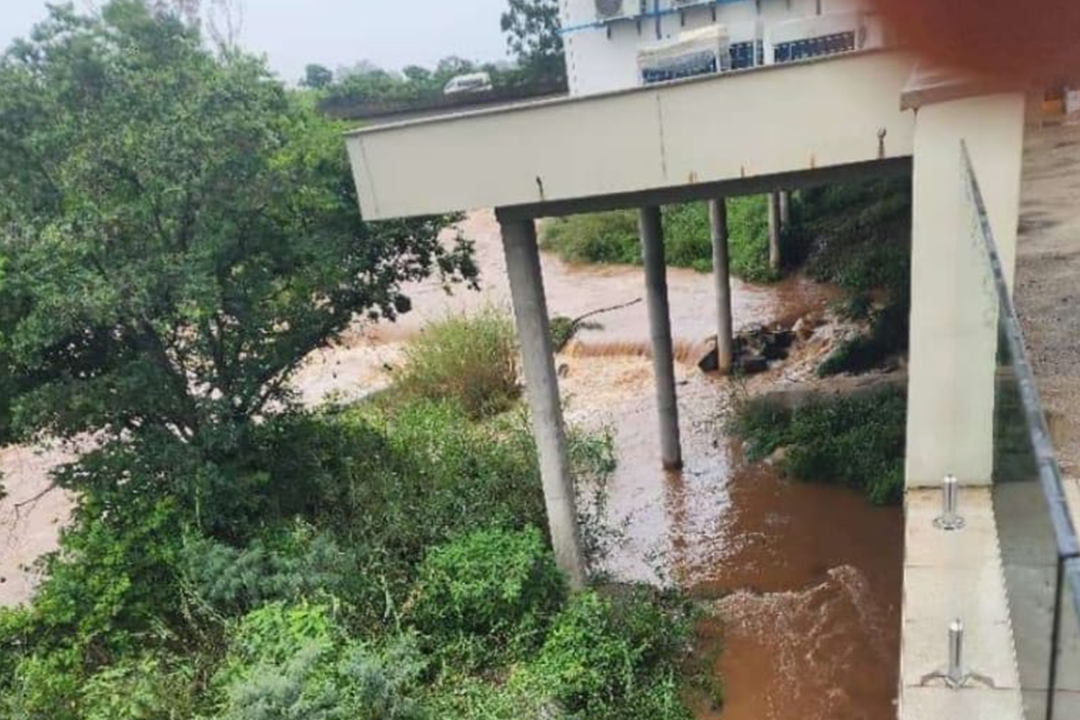
Engineers also found that the river’s natural flow is directed away from the building and that the supporting columns are positioned mainly on the riverbanks rather than within the river channel itself. This significantly reduces the likelihood of floodwaters undermining the structure.
The audit further notes that large stormwater pipes installed on the eastern side of the development are capable of diverting surface runoff away from the building and into the river. Stormwater manholes have also been constructed at all pipeline bends in accordance with engineering standards to facilitate maintenance and cleaning.
In addition, the report says the nearby Eswatini Water Services Corporation (EWSC) water canal and intake infrastructure are not expected to be submerged during a one-in-100-year flood because water flows rapidly past the site due to a steep drop in the riverbed near the MR18 bridge.
While the overall flood assessment was positive, the auditors identified several areas requiring improvement. They noted occasional seepage from the EWSC canal beneath the structure, which contributes to localized flooding underneath parts of the building. The report recommends addressing the seepage because it could pose public health concerns and affect the long-term integrity of the structure if left unresolved.
The audit also highlighted the old MR18 bridge as a potential concern during periods of heavy rainfall. It says debris could accumulate around the bridge piers, temporarily restricting river flow and increasing the possibility of localized flooding. However, this was not considered a major threat to the overall safety of the Lifestyle Centre.
Beyond flooding, the environmental audit found that the centre generally demonstrates good environmental management despite lacking formal environmental policies and procedures.
Inspectors observed good housekeeping around waste storage areas, regular waste collection and functioning emergency systems. They found that all surveyed shops had clearly marked emergency exits, while 93 percent had operational fire extinguishers that were properly maintained.
However, the report recommends improvements in waste separation, emergency evacuation drills, staff training and environmental documentation. It also calls for the appointment of a dedicated environmental compliance officer and the development of formal environmental management policies to strengthen compliance with ISO 14001 environmental management standards.
The auditors further recommended improved rehabilitation of areas affected during construction, clearing of construction rubble left beneath parts of the structure and maintenance of clogged surface drains to improve storm water flow.
Despite these recommendations, the report concludes that environmental responsibilities are generally being carried out effectively by management and that the identified shortcomings can be addressed through continuous improvement measures.
The Environmental Audit forms part of efforts by HIS Investments to comply with national environmental legislation after previous environmental clearances for the project were withdrawn by the Eswatini Environment Authority. The company is now seeking to regularise its environmental compliance through the audit process and implementation of the Comprehensive Mitigation Plan.
#MatsaphaLifestyleCentre #EnvironmentalAudit #FloodSafety #Infrastructure #SustainableDevelopment #Environment #Eswatini #PublicSafety #UrbanDevelopment #EnvironmentalCompliance #BusinessNews #EswatiniPositiveNews
Post Views: 609