BY GCWALISILE MHLABANE
MANZINI– What began as weekly lessons in coding, robotics, and digital design has ended in something far more powerful—a generation of young innovators discovering that they can build solutions for the challenges they see every day in their communities.
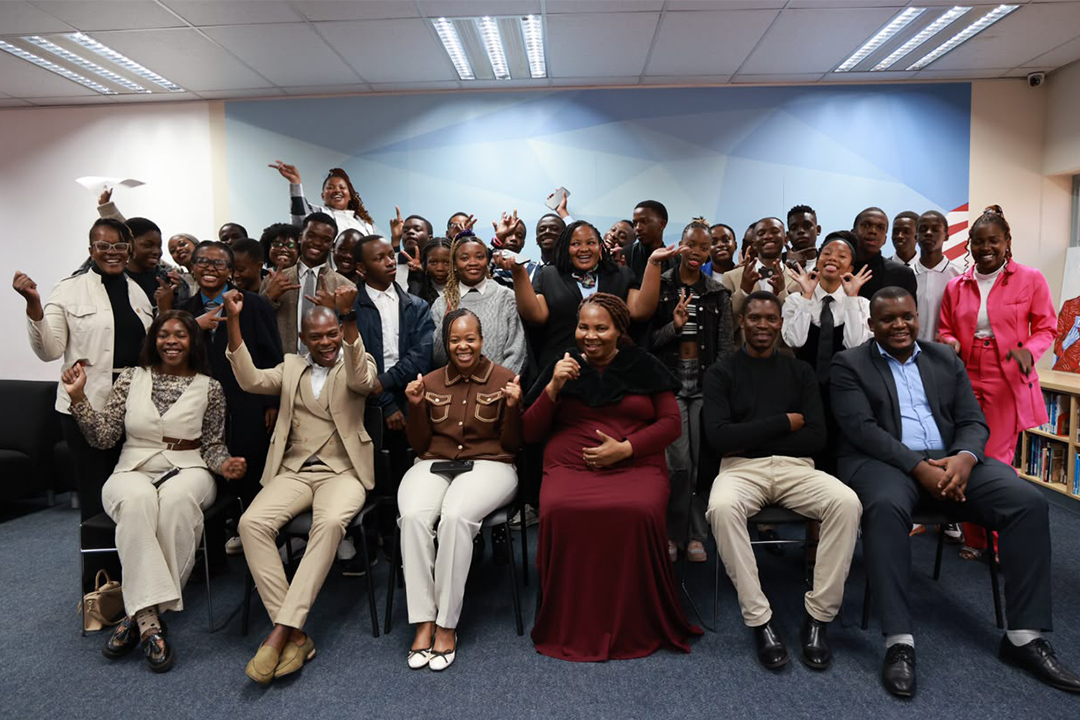
This was the defining moment at the Innovation and Prosperity Hub STEM Programme graduation and pitch competition, where 40 young learners showcased practical innovations at the American Corner Manzini on 18 June 2026.
The five-month programme, implemented under the theme “Innovating the Future: From Concept to Prototype,” focused not only on STEM education, but on transforming learners into problem-solvers capable of designing real-world solutions for community challenges.
The initiative forms part of the Innovation and Prosperity Hub, a grant-funded programme supported by the U.S. Embassy Eswatini and implemented by the U.S. Exchange Programs Alumni Association of Eswatini, aimed at expanding access to STEM education, innovation, and entrepreneurship opportunities for young people.
A total of 40 learners took part in the programme, running from 29 January 2026 every Thursday morning. The group was split between American Corner Mbabane and American Corner Manzini, where classrooms gradually became innovation labs filled with coding exercises, robotics experiments, and prototype development.
At the centre of the programme was Mandela Washington Fellowship alumnus Mr. Goodman Groening, supported by Ms. Nomfundo Ngcamphalala and Ms. Mayenziwe Mpila, who brought international exchange experience into local mentorship. Together, they guided learners through coding, robotics, drone technology, and design thinking.
For many participants, the experience reshaped how they see their future.
Student representative Bandzile Ndlovu said the programme helped learners connect their abilities to real opportunities.
“The Self-Directed Search helped us understand what we are capable of,” he said. “We are not just choosing careers—we are discovering who we are becoming.”
He also cited support from the University of Eswatini, Botho University, Limkokwing University, and EducationUSA, alongside mentorship from STEM professionals.
Quoting Steve Jobs, he added: “Let’s go and invent tomorrow instead of worrying about what happened yesterday.”
Throughout the programme, learners interacted with professionals from the Eswatini Electricity Company, the Forensic Science and Knowledge Institute, Botho University, Junior Achievement Eswatini, and robotics trainers, gaining practical exposure to how STEM is applied in real industries.
The final pitch competition brought the programme to life.
Six teams presented solutions including Clean Stream Eswatini, Emanti Farm Grid, Uni-Assist Application, Commune Bridge App, Animal Link Platform, and LearnifyX AI Platform—each addressing real challenges ranging from environmental protection to digital access and agriculture.
When the Clean Stream Eswatini team was announced as winners, the room erupted in applause. Their solution earned them equipment worth E1,000 and an additional E1,000 sponsorship from the Royal Science and Technology Park (RSTP), marking recognition of both innovation and practicality.
Dr. Rejoice Maseko of RSTP and the Ministry of ICT praised the learners for proving that innovation is not defined by age, but by action.
Certificates were jointly awarded by Ms. Carly Van Orman of the U.S. Embassy Eswatini and Dr Maseko, formally closing the programme.
In closing remarks, Mr. Goodman Groening reflected that the programme had gone beyond teaching STEM—it had created a space where young people could turn ideas into impact.
As the ceremony ended, one message remained clear: Eswatini’s future innovators are not waiting for opportunity—they are already building it.
(Courtesy Pic)
Post Views: 68