Two Estonian children’s books exploring Soviet-era memories and life without school have been selected for The White Ravens 2026, an international catalogue of outstanding children’s and young adult literature.
The annual catalogue, compiled by the International Youth Library in Munich, features 216 books in 46 languages from 62 countries and territories. Its experts select works for their literary and artistic quality, the subjects they address and their potential to appeal to readers beyond their country of origin.
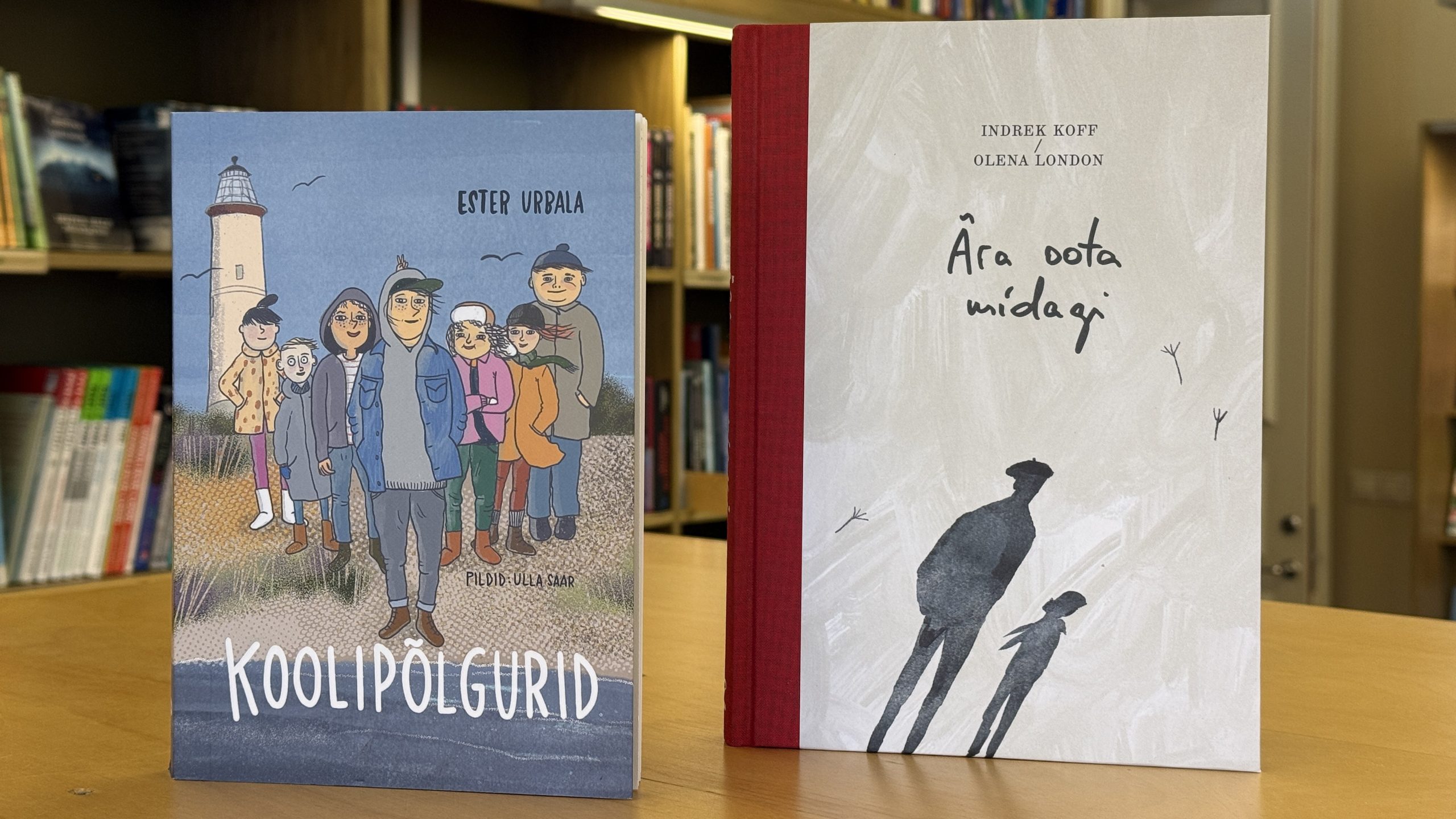
The Estonian titles chosen this year are Indrek Koff and Olena London’s Ära oota midagi (Don’t Expect Anything), published by Varrak in 2025, and Ester Urbala and Ulla Saar’s Koolipõlgurid, published by Puänt in the same year.
Koff’s multilayered graphic novel looks back at his childhood in Soviet-occupied Estonia. Memories of his grandfather are interwoven with episodes from the author’s schooldays, his time as a Young Pioneer and his adolescence. The fragmentary narrative evokes a life shaped by restrictions, control and repression, while London’s forceful illustrations add another dimension to the story.
“Being named a white raven is, of course, a great joy – much more so than appearing on a list of black sheep,” Koff said. “In English, ‘white raven’ is entirely positive: it means something special and rare.”
He said the recognition offered hope that the book would be noticed outside Estonia. Koff and London have already begun discussing another project together.
Urbala’s debut children’s novel follows seven schoolchildren sent to an island as part of a six-month experiment. Freed from compulsory schooling, they must learn to survive and establish their own miniature society, deciding who will cook, clean and where everyone will sleep. The briskly told story combines adventure with mischievous humour, accompanied by Saar’s distinctive illustrations.
“I feel happy and proud, especially because this is my first children’s novel,” Urbala said. “Being selected means that a story born in Estonia has touched people beyond our linguistic and cultural space.”
The White Ravens catalogue is widely used by publishers, translators, librarians and children’s literature specialists, helping selected books attract international attention and potentially find new readers through foreign-language editions.