KESKfEST is bringing hundreds of singers, dancers, designers and artists to Toronto for a four-day celebration as the C$56 million Keskus International Estonian Centre enters the final stretch of construction.
Toronto’s Annex neighbourhood is becoming a showcase for Estonian culture as a four-day festival fills venues along the city’s Bloor Street Culture Corridor with music, dance, fashion, film, theatre and public debate.
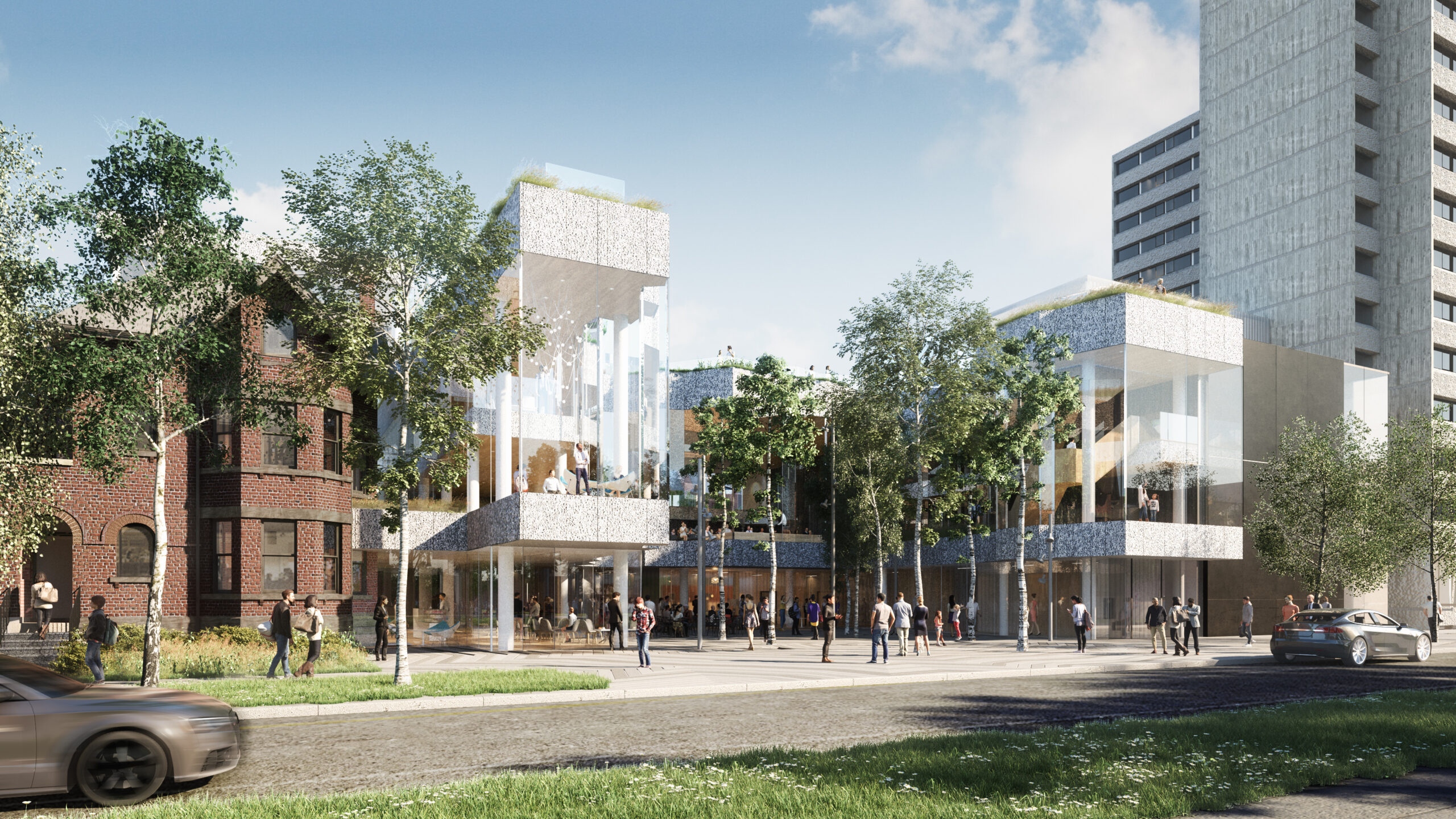
KESKfEST, running from 20 to 23 August, comes as work nears completion on the Keskus International Estonian Centre, a 36,000-square-foot cultural complex being built at 9 Madison Avenue. A festival tent across the road will serve as one of the event’s main gathering points.
Organisers have described the festival as the final countdown to the centre’s opening, using the Estonian phrase veidi veel, or “just a little more”. The centre had previously been expected to open fully by June 2026. The latest festival announcement says interior work is nearing completion but does not give a revised opening date.
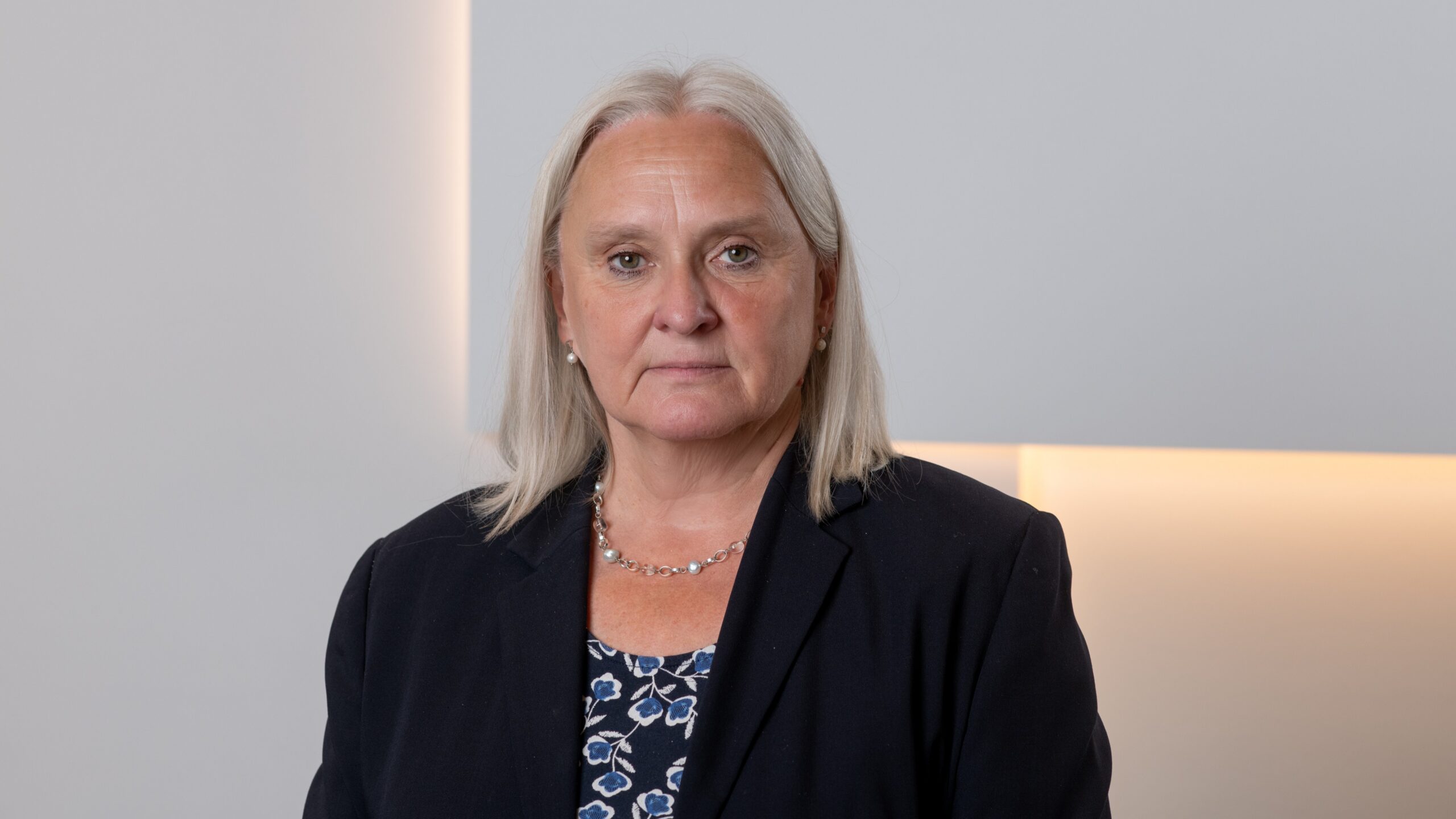
Keskus project lead Ellen Valter addresses the crowd during the opening of KESKfEST outside the unfinished centre. Photo by Sten Hankewitz.
“We are standing on the threshold of something historic, but we’re not waiting for the doors to open to share our culture,” said Ellen Valter, the project lead for the centre. “This building is a gift to the city, and so is this festival.”
A 600-performer celebration
At the centre of the programme is Valguspidu, or the “Celebration of Light”, a 600-performer arena production at the Mattamy Athletic Centre on 20 and 22 August. It brings together massed choirs, folk dancers and gymnasts in one of the largest Estonian cultural performances staged in Canada.
The production is accompanied by smaller choral events at Trinity-St Paul’s Centre, featuring the Tallinn Chamber Choir, the Estonian National Opera Boys’ Choir and the Mägi Ensemble, as well as an outdoor preview at Taddle Creek Park.
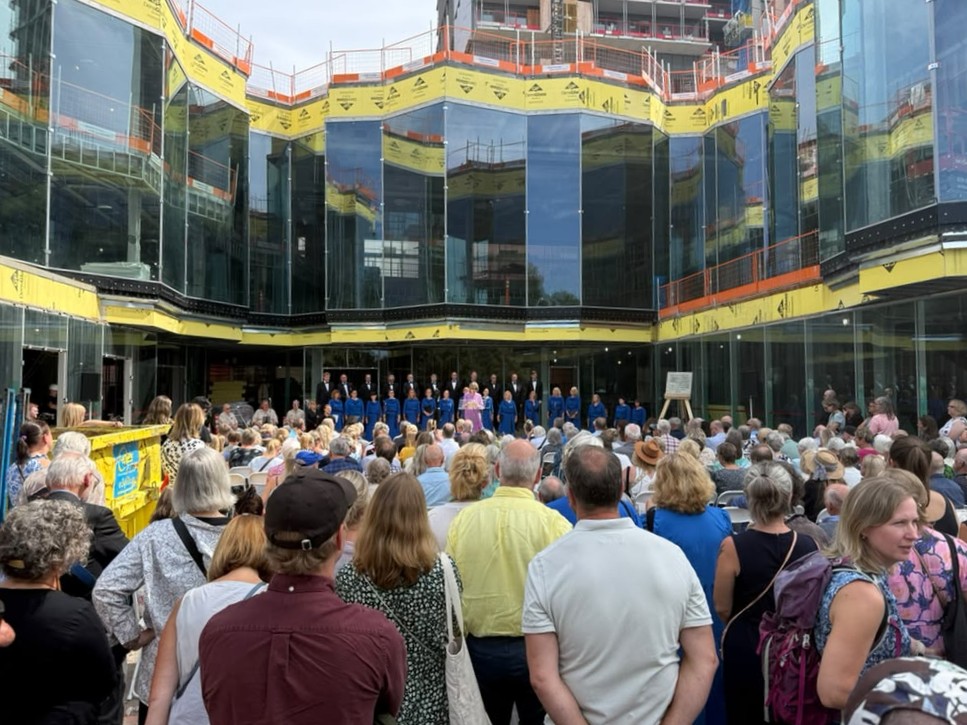
The Tallinn Chamber Choir performs at the KESKfEST opening gathering in Toronto. Photo by Sten Hankewitz.
The festival’s night-time programme ranges from pop-funk and 1980s rock to folk dancing, jam sessions and Salakõrts, a series of late-night speakeasy-style pop-ups. Performers include Arg Part, Kalevipogues, Atomic Heeringas, Le Brünk, Roland Campbell and the folk ensemble Ukulele.
The Estonian folk band Ukulele performs at the opening of KESKfEST, 35 years after its members were visiting Canada when Estonia restored its independence in August 1991. Photo by Sten Hankewitz.
Performers sweep blue, black and white ribbons through the air during an outdoor preview of Valguspidu at Taddle Creek Park in Toronto. Photo by Sten Hankewitz.
Film and theatre will revisit the wartime experiences that shaped the Estonian diaspora in Canada.
On 21 August, the festival will host the North American premiere of Mis värvi on paradiis? (What Colour Is Paradise?), a documentary about Elmar, who was forced into war at 16, escaped to Sweden and was later extradited to Soviet-controlled Estonia. Drawing on testimony, historical records and his diaries, the film examines how Sweden’s extradition of seven young Estonian men helped drive further migration to North America. Written and produced by Mare Kallas and directed by Sören Tali, it will be shown in Estonian with English subtitles, followed by a discussion with Kallas.
On 20 August, Klarissa Kirjad (Klarissa’s Letters) tells the true story of a couple divided by war: Elmar is sent to a Siberian gulag while Klarissa escapes to Canada with their young son. Based on surviving letters and diaries, Tiit Palu’s production follows their efforts to sustain their relationship across the Iron Curtain and years of silence.
From discarded denim to urban belonging
Sustainability runs through the design programme. The Estonian designer and industrial upcycling pioneer Reet Aus will join Annika Lautens, the style director of the Canadian publication The Kit, and the Toronto designer Sarah Jay for a live fashion shoot, runway show and discussion on 22 August.
Aus and the designer Eva-Karlotta Tatar will also lead workshops in which participants turn old denim into tote bags. Elsewhere in the city, the Canadian premiere of the exhibition UPMADE IN. EE brings together work by nearly 40 Estonian designers using biomaterials, 3D printing and zero-waste techniques.
The Estonian designers Reet Aus (left) and Eva-Karlotta Tatar outside the Keskus International Estonian Centre in Toronto. The pair will lead KESKfEST workshops on turning discarded denim into upcycled tote bags. Photo by Ilona Gurjanova.
The relationship between architecture and identity will be explored at an “Urban Belonging” discussion moderated by Elsa Lam, the editor-in-chief of Canadian Architect. Its speakers include Alar Kongats, the Estonian-Canadian architect who designed Keskus, and Tõnis Arjus, Estonia’s first state architect.
Walking tours will examine the contrasting architecture of the Annex, from its Victorian streets to the sculptural apartment towers designed by Uno Prii, one of the most distinctive Estonian-Canadian modernists.
Estonia’s minister of education and research, Kristina Kallas, speaks at the opening of KESKfEST outside the unfinished centre. Photo by Sten Hankewitz.
The programme also reaches beyond culture in the narrow sense. Estonia’s education minister, Kristina Kallas, will join the Canadian broadcaster Steve Paikin for a live recording of The Paikin Podcast, examining the idea of “education as defence” and the role of schools in Estonia’s digital society.
A new home for an old community
Keskus is intended to be both a home for the Estonian diaspora and a public cultural venue for Toronto. Designed by Kongats Architects, the C$56 million complex combines a restored 19th-century building with contemporary sustainable architecture. Its features include an 8,000-square-foot public green roof and a courtyard shaped as a map of Estonia.
The project grew out of efforts by four Estonian-Canadian organisations to replace the old Toronto Estonian House, which was sold in 2020 after it could no longer operate sustainably. The new centre is the first Estonian community hub of its kind to be built abroad in more than half a century.
Hundreds gather outside Keskus for the launch of KESKfEST and the 35th anniversary of Estonia’s restoration of independence. Photo by Sten Hankewitz.
It has been financed largely by donors from the global Estonian community, with public support from both Canada and Estonia. The Canadian government has invested C$1.75 million in the green roof and courtyard infrastructure, while Estonia’s foreign ministry has contributed €1.37 million towards the centre’s main hall.
Danielle Martin, the Canadian MP for University–Rosedale, said the federal investment was helping create a place where Estonians could celebrate their shared heritage and culture.
The new Estonia Square plaque recognises funding from the Estonian Foundation of Canada, Estonian House in Toronto, Northern Birch Credit Union and Tartu College. Photo by Sten Hankewitz.
The community the centre will serve was shaped in large part by the upheavals of the Second World War. About 72,000 Estonians fled the Soviet occupation in 1944, and nearly 14,000 subsequently settled in Canada between 1946 and 1955. Toronto and southern Ontario remain home to the largest concentration of Estonians in North America.
The full KESKfEST programme and ticket information are available on the Keskus website.
Disclosure: Silver Tambur is a board member of the Estonian Arts Centre, the charity associated with Keskus.