
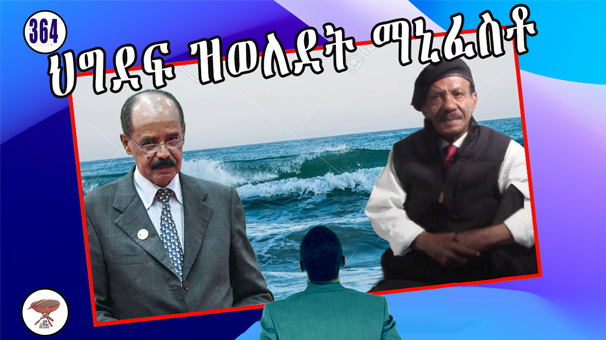
Revolutions are often undone not by enemies at the gate but by fractures from within. In Eritrea’s liberation struggle, one such fracture can be traced to a controversial document that reshaped alliances, deepened mistrust, and ultimately helped produce the political order that rules Eritrea today.
In 1970, according to several veteran combatants, handwritten copies of internal documents mysteriously found their way into the hands of Eritrean Liberation Front (ELF) security officers. The content contained sectarian allegations and rhetoric closely resembling what later emerged publicly in the Nehnan Elamanan manifesto. The accusations spread rapidly, triggering alarm within the ELF leadership and prompting a surveillance operation to identify those responsible.
Rumors, Surveillance, and Assassination
As tensions mounted, Kidane Kiflu and Welday Gidey were implicated in disseminating the controversial material. Around the same period, a Sudanese officer reportedly informed ELF security that Kidane, Welday, and others were communicating with the Ethiopian consulate in Kassala. At the time, the Ethiopian government was aggressively encouraging defections and facilitating the surrender of ELF combatants.
Soon afterward, Kidane and Welday were found dead near Haafera, an area close to Kassala in Sudan. No official claim of responsibility was ever made. However, suspicion quickly fell on overzealous elements within ELF security circles.
Veterans of the revolutionary justice environment rarely speak publicly, but many recall persistent rumors from that period. The two men were allegedly accused of treason and subversion for facilitating defections. Some believed the killings were intended as a warning to others. Others suggest the perpetrators were attempting to contain the damaging sectarian allegations threatening to destabilize the struggle.
Another version of events claims that when ELF leadership became aware of the killings and considered disciplinary action, the perpetrators leaked the documents to shift public attention. The logic was simple: while Eritreans might condemn extrajudicial killings, they would react even more strongly against accusations of surrendering to Ethiopia.
Yet the leak produced unintended consequences. Instead of restoring control, it accelerated one of the most consequential splits in Eritrean revolutionary history.
The Disappearance at Fgret
At this critical juncture, the ELF General Command assigned Isaias Afwerki and Saleh Fekak to organize the highland population. They departed ELF bases accompanied by nine combatants, carrying typewriters, duplicators, and materials needed to establish a local information unit.
Upon reaching the vicinity of the village of Fgret, Isaias requested time to visit relatives. He selected three Christian combatants to accompany him. Hours passed. He did not return.
Saleh Fekak and the remaining fighters waited another day. Still, there was no sign of Isaias. On the third day, a search party was dispatched but found no trace of him or his companions. The mission was abandoned, and Fekak returned to base to report the disappearance.
Weeks later, Isaias resurfaced in the Merrara area, informing scouts that he could no longer cooperate with the ELF General Command. The split had begun.
Propaganda and Fragmentation
Shortly thereafter, Isaias added the names of Kidane Kiflu and Welday Gidey to the Nehnan Elamanan manifesto and circulated it publicly. The result was immediate and severe fragmentation within the ELF.
This moment illustrates how revolutionary movements can be reshaped not only by battlefield victories but also by narrative warfare. The manifesto transformed internal grievances into ideological justification for organizational rupture.
From Liberation Movement to Political Monopoly
Two decades later, the consequences of those fractures would resurface dramatically. In 1991, members of the United Organization (UO)—a coalition of several liberation-era factions—entered Asmara hoping to reconcile with the emerging ruling authority and participate in Eritrea’s political future as a recognized party.
They were told instead that they were merely individuals and should abandon ambitions of organized political participation. Some were absorbed into government employment. Many returned to exile. Others remained in Eritrea, uncertain of their fate.
Soon afterward, numerous UO members were quietly detained and disappeared. Among them was Mohammed Osman Dayer, the former ELF security chief during the period when Kidane and Welday were killed. His disappearance effectively foreclosed any independent investigation into the events that had propelled Isaias’s political ascendancy.
A Long-Standing Ambition
Evidence suggests that Isaias’s ambition to establish a separate organizational structure predates these events. In 1969, weeks before the Adobha conference, he reportedly approached Mohammed Ahmed Abdu, leader of the General Command, proposing the creation of a military division composed exclusively of Christian highlanders.
Veteran writer Woldeyesus Ammar later lamented that Isaias failed to heed advice from senior leadership, describing him as a figure historically resistant to collaboration or compromise.
Strategy of Mistrust
From the late 1960s onward, critics argue that Isaias cultivated mistrust as a political instrument. His own recollection, shared with writer Dan Connell, reflects early dissatisfaction with the ELF. He described feeling ostracized upon arrival in Kassala and portrayed the organization as deeply flawed from the outset.
Such assessments raise questions about whether these grievances were observational or ideological predispositions carried from earlier student political experiences in Asmara and Addis Ababa.
Regardless of interpretation, the political trajectory that followed is undeniable. Over time, narratives of victimhood, internal betrayal, and sectarian fear became powerful tools in shaping a new organizational identity—one that would ultimately evolve into the People’s Front for Democracy and Justice (PFDJ).
Conclusion: The Legacy of Nehnan Elamanan
In November 1971, the document titled Nehnan Elamanan—commonly translated as “We and Our Objectives,” though more accurately rendered as “Our Struggle and Its Goals”—emerged as a defining ideological text.
While it may have originated as a reformist mission document, it gradually transformed into a sectarian political manifesto. It framed Eritrean liberation through the lens of communal division, appealing particularly to Christian highland anxieties while downplaying or omitting the broader complexities of internal conflict within the liberation movement.
The document exaggerated claims that 300 Christian highlanders were killed by ELF leadership over two years yet provided only two named examples. It also employed highly emotive descriptions of violence to amplify fear and mobilize support.
Despite these claims, many Christian highlanders continued to join the ELF during the mid-1970s. Some rejected the allegations; others simply never encountered them. Nevertheless, sustained propaganda campaigns by the EPLF portrayed the ELF as a sectarian organization bent on religious violence. By 1981, the ELF collapsed under combined military pressure from the EPLF, the TPLF, and regional intelligence alliances.
The ideological seeds planted by Nehnan Elamanan ultimately helped shape the political culture that emerged after independence—centralized, distrustful, and intolerant of dissent.
Looking Ahead
In the next article, “Srryet Addis: Blatant Lie?”, we will examine one of the most sensational allegations linked to Nehnan Elamanan. Future installments will include translated testimonies and a comparative analysis of the manifesto’s original text and its various translations.


