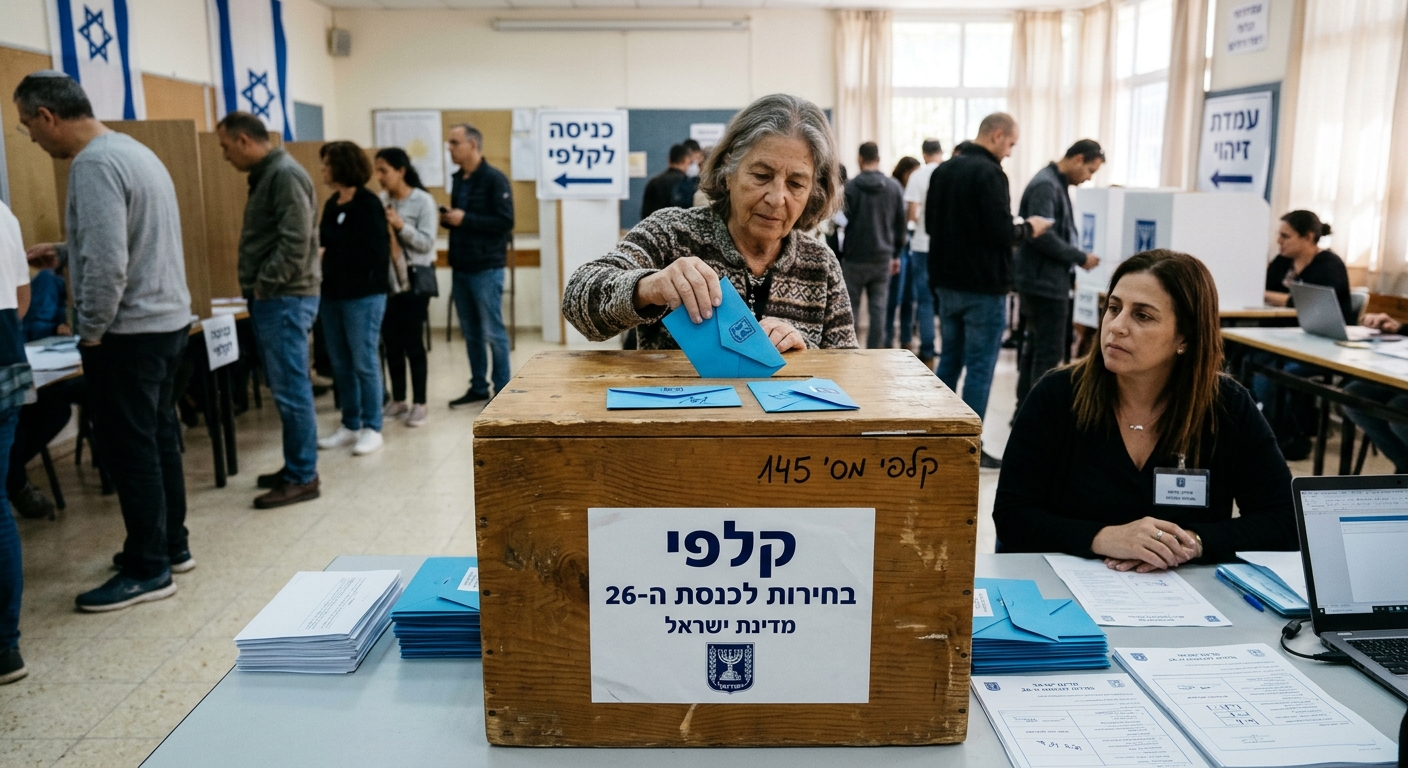
Across the Arab world, the recent Israeli elections were monitored with unusual intensity. Many tracked the returns minute by minute, almost expecting Tel Aviv’s ballot boxes to deliver what regional diplomacy and domestic governance have failed to achieve: a shift in hostile policies, the downfall of Benjamin Netanyahu’s government, or a viable opening for Palestinian statehood.
This collective fixation warrants reflection. Across the region, where civic spaces for political self-determination remain constrained to varying degrees, many found themselves placing misplaced hope on a democratic process unfolding within a hostile state—guided by voters who neither share Arab priorities nor support a just resolution for Palestinian rights.
Voter surge and the reality of power
Voter turnout reached approximately 77.7%—the highest level recorded since 1999—reflecting deep domestic polarization rather than a decisive political shift. While Netanyahu’s bloc secured a plurality, it fell short of a clear governing majority. Meanwhile, Arab-led parties scored notable gains, positioning their parliamentary bloc as a crucial factor in coalition negotiations amid the prospect of prolonged gridlock or yet another snap election.
High voter participation underscores a fundamental truth: Israeli citizens view their electoral process as a meaningful tool to shape governance, identity, and national security. For the broader region, the lesson is clear: democracy is built through institutional framework, political competition, and civic efficacy—the belief that an individual vote carries weight, even when outcomes diverge from personal preferences.
The limits of external expectations
Hopes that leadership changes in Israel will yield radical policy shifts towards Palestinians require a dose of geopolitical realism. Removing Netanyahu from office does not erase the broad internal consensus governing Israeli security and territorial policies. Even with increased parliamentary representation, Arab parties face structural barriers when attempting to leverage seats into policy influence within right-dominated coalitions.
Democracy, viewed externally, reveals its inherent limitations. While Israeli elections reflect the will of participating voters, they systematically exclude Palestinians living under occupation from exercising equal self-determination over their daily lives and political future.
Relying on external electoral outcomes is not a viable strategy. While tracking political shifts in neighboring states remains necessary, it must serve as a catalyst for internal reform rather than passive anticipation. External political shifts may open temporary diplomatic windows, but they cannot replace regional agency and institutional self-reliance.