Spain meteo service warns of another ‘long’ heatwave from Wednesday
Spanish state meteorological agency Aemet has just issued a new warning, saying the heatwave expected to start on Wednesday will be “long” and “last, at least, until Sunday,” with “the risk of fire rising to extreme levels, hindering firefighting efforts.”
Aemet’s note warns of “a significant of even extraordinary level of danger” for those involved in outdoor activities and vulnerable groups, including elderly people and people with cardiovascular conditions.
Temperatures are expected to get close to or even surpass 40C in several parts of the country.
Share
Key events
-
2h ago
Gironde fire ‘not over’ and ‘unlike anything we have ever seen in France,’ regional prefect says
-
2h ago
Spain meteo service warns of another ‘long’ heatwave from Wednesday
-
3h ago
Bordeaux region wildfires hit local economy, minister warns
-
3h ago
EU worries record-breaking wildfires could still be burning in early November
-
4h ago
EU ups the number of firefighting planes deployed to France to 11, commissioner says
-
4h ago
Macron to visit southwestern region of France ravaged by wildfires later on Monday
-
4h ago
Wildfires in Spain and France ‘some of the most extreme we have seen in Europe,’ expert says
-
4h ago
Tell us: have you been affected by wildfires in Europe?
-
5h ago
What is a ‘fire cloud’, and how have they worsened wildfires in Europe?
-
5h ago
Gironde fire ‘stabilised,’ but ‘not contained,’ minister says, as he warns wildfires seasons ‘far from over’
-
5h ago
Spain’s Sánchez warns against disinformation on wildfires as he promises help with recovery, asks for ‘extreme caution’ ahead of new heatwave
-
6h ago
France and Spain battle major blazes before another heatwave set to hit this week – in pictures
-
6h ago
Italy braces for fourth heatwave as wildfires force hundreds to be evacuated by sea from Puglia
-
6h ago
Météo-France warns of fourth heatwave of the summer with temperatures up to 40C
-
6h ago
‘Weeks or months’ before French wildfires get completely extinguished, firefighters warn
-
7h ago
Monday and Tuesday ‘decisive’ for Spain’s fight against wildfires, minister says
-
7h ago
170,000 hectares of forest land affected by wildfires in Spain since start of 2026
-
8h ago
Why Europe’s wildfires are proving so fierce and difficult to stop
-
8h ago
Macron chairs emergency meeting on French wildfires
-
8h ago
Europe is not prepared for consequences of climate change, senior EU commissioner warns
-
8h ago
Madrid fire ‘slowed down’ but remains ‘active and uncontrolled,’ authorities say
-
8h ago
France facing ‘a race against time’ as temperatures set to soar again
-
8h ago
‘Climate emergency kills,’ Spain’s Sánchez warns, as he says ‘full power of state’ will help affected by wildfires
-
9h ago
Firefighters battle to keep fire away from Bordeaux
-
9h ago
Wildfires in France and Spain – the latest
-
9h ago
Morning opening: France, Spain continue to battle dramatic fires
Angelique Chrisafis
Sitting in their suburban apartment in Mérignac on the outskirts of Bordeaux, Krishma, an interpreter, and her husband, Nassir, first felt a sense of dread when a strange black cloud turned the sky dark in the middle of the day. Then a bitter burning smell filled the air outside.
“The sky changed colour. It seemed like a cloud but it was smoke covering the sun – it wasn’t a natural phenomenon. It didn’t seem real,” said Nassir, an English literature graduate from Kabul who has been living in France for seven years. “We couldn’t breathe easily; you could feel it in your lungs.”
The acrid smell, which at first seemed like burning rubber then unmistakably like wood smoke, was blowing on the wind from the massive wildfire in Gironde in south-western France. The blaze has torn through 42,000 hectares, an area four times the size of Paris, causing one of the biggest devastations of land in France since the second world war. The government on Monday said that although the fire had stopped growing, it was still blazing and a new heatwave this week could make it harder to fight.
As authorities carried out one of the biggest evacuations in modern French history, Krishma and Nassir were among 220,000 people ordered to flee their homes in Gironde. Many people were evacuated from wooded areas directly hit by fire, where at least 240 homes were destroyed. But in an unprecedented move, tens of thousands more were ordered by police to evacuate from more built-up, urban streets as the fire reached 9 miles (15km) from the outer edge of Bordeaux’s vast suburban area.
Share
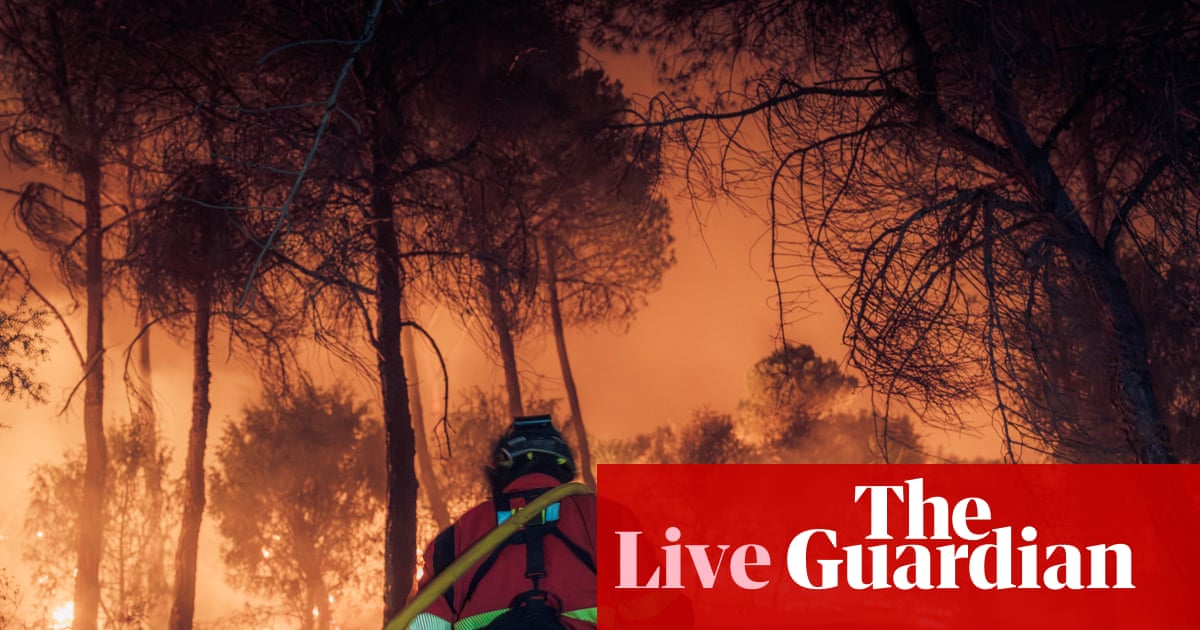
Firefighters in France and Spain are facing another day battling wildfires that have resulted in hundreds of thousands of people being evacuated, with another heatwave expected to hit this week.
French authorities have said this year’s wildfires, particularly the Gironde fire near the south-western city of Bordeaux, are ‘completely exceptional’, with more than 116,000 hectares of forest and vegetation burned since the beginning of the year, compared with 70,000 in total last year.
Lucy Hough speaks to Europe environment correspondent Ajit Niranjan…
ShareDamian Carrington
Scientists say Europe is enduring a “firewave”, the wildfire equivalent of a heatwave, fuelled by “whiplash” weather supercharged by the climate crisis.
Guillermo Rein, professor of fire science at Imperial College London:
double quotation markSo far, Europe is not experiencing an unprecedented number of wildfires. What is uncommon is the current number of destructive wildfires: fires that spread rapidly, overwhelm fire brigades and force communities to evacuate.
The connection with this summer’s repeated heatwaves is strong. Prolonged periods of hot, dry weather leave vegetation unusually dry and therefore much more flammable. When an ignition occurs under these conditions, a wildfire can escalate rapidly. This is precisely why we coined the term ‘firewave’. This is the wildfire equivalent of a heatwave: a period of exceptionally high wildfire activity that overwhelms the emergency response of a city, region or nation.
Firefighters cannot stop every wildfire, Rein said:
double quotation markAs Europe adapts to even warmer summers, we need to move beyond reacting to disasters and start building wildfire protection before the next firewave arrives.
Matthew Jones, at the University of East Anglia:
double quotation markA major factor behind these latest fires appears to be a ‘whiplash’ effect. Large stocks of dense vegetation built up during the unusually wet winter and spring and have since been parched by extreme heat, creating a tinderbox of fuels ready to burn.
We are seeing this fingerprint of climate change around the world, but especially in Mediterranean and seasonally dry climates. The risks are rising, and the result has been a succession of deadly events, from southeast Australia, Chile and South Africa to the western US, and southern Europe.
Climate scientists have been warning about these risks for decades: this is just one cost of inaction on climate. The impacts of climate change are already here, and Europe is once again experiencing them through loss of life, evacuations and severe economic disruption.
Vikki Thompson, climate scientist at the University of Edinburgh:
double quotation markClimate change increases the risk of wildfires as an increase in hot and dry conditions lead to exceptional fire danger [and] Europe is the fastest warming continent, heating at roughly double the global average. We know this is caused by fossil fuel burning – and so a rapid phase-out of fossil fuels is critical to avoid even higher temperatures and their consequences.
This week parts of the UK will experience the ‘perfect’ weather conditions for wildfires: hot, dry, and windy. This leads to the exceptional fire danger.
Share
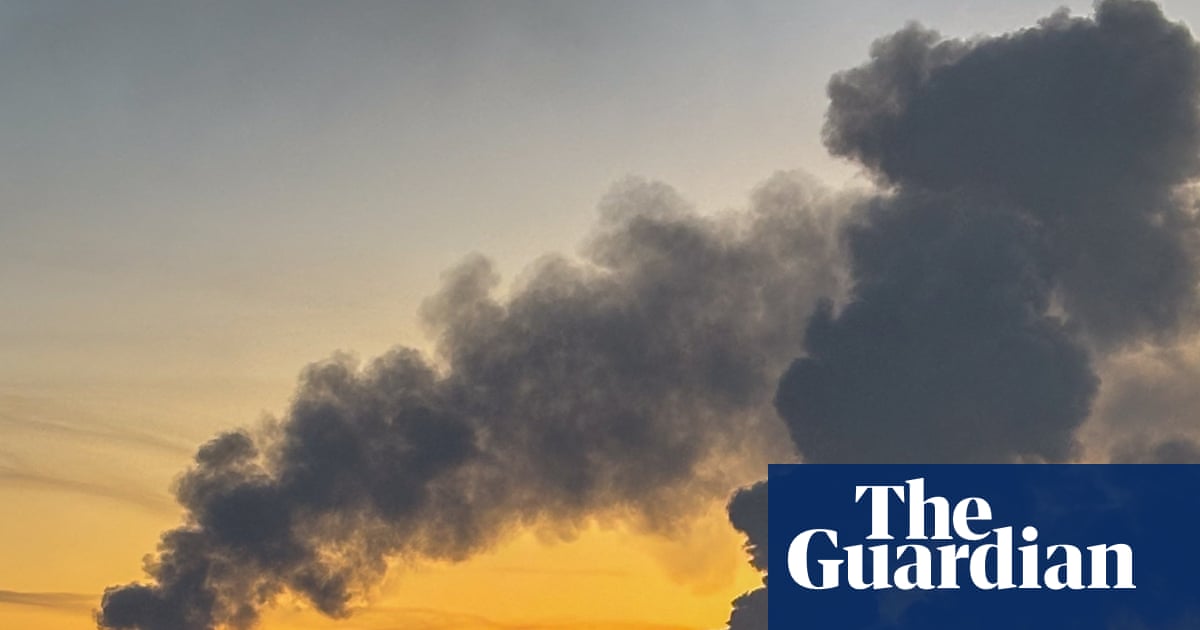
Firefighters battling devastating fires in France have had to contend with a new threat: immense fire clouds that create their own wind and even lightning that can spark fresh blazes.
Known as “fire clouds” or pyrocumulonimbus clouds, these ominous-looking thunderstorms are created by extreme wildfires and can exacerbate already extremely dangerous conditions.
This phenomenon, which is new to France, is yet another consequence of human-caused climate change, according to French researcher Jean-Baptiste Filippi, who studies wildfires.
He said:
double quotation markIt is a common phenomenon in Portugal, California and Australia, where firefighters are more used to them. In Portugal, they had been rare until the deadly 2017 fires in Pedrogao Grande changed things.
In France, pyrocumulonimbus clouds are quite new. There were some in Landiras south of Bordeaux in 2022, but not for long.
Therefore, we need to learn how to manage fires that creates their own wind – this is something relatively new.
Share
Gironde fire ‘not over’ and ‘unlike anything we have ever seen in France,’ regional prefect says
The wildfire in Gironde is “unlike any we have ever seen in France” as it “follows its own logic rather than any known pattern,” the Nouvelle-Aquitaine region’s prefect Sophie Brocas warned.
Updating the media on the fight against the blaze, she said the constantly evolving nature of the fire forced firefighters to “constantly adapt” to the circumstances.
She warned that the fire is “not over,” and remains “extremely dangerous.”
“Our absolute priority is saving lives,” she said.
Share
Spain meteo service warns of another ‘long’ heatwave from Wednesday
Spanish state meteorological agency Aemet has just issued a new warning, saying the heatwave expected to start on Wednesday will be “long” and “last, at least, until Sunday,” with “the risk of fire rising to extreme levels, hindering firefighting efforts.”
Aemet’s note warns of “a significant of even extraordinary level of danger” for those involved in outdoor activities and vulnerable groups, including elderly people and people with cardiovascular conditions.
Temperatures are expected to get close to or even surpass 40C in several parts of the country.
Share
As part of their efforts to stop the spread of blaze, French firefighters are sometimes force to cut some trees down to create a natural firebreak and deprive the fire of further fuel – as we can see in these pictures from Gironde.
Opening of a firebreak at Claouey, at the entrance to the Cap-Ferret peninsula, in Gironde, France. Photograph: Clement Viala/infobassin.com/ABACA/ShutterstockAn excavator tears out trees to construct a firebreak in a forest near Cestas, some 17km from Bordeaux, France. Photograph: Romain Perrocheau/AFP/Getty ImagesShare
Bordeaux region wildfires hit local economy, minister warns
The wildfires around Bordeaux in southwestern France have delivered a shock to the regional economy, finance minister Roland Lescure said.
The region is one of the centres of French wine production and a major centre for tourism, Reuters noted.
“It’s like a clap of thunder for an area which could have done without this,” Lescure told reporters.
Share
EU worries record-breaking wildfires could still be burning in early November
Jennifer Rankin
in Brussels
EU officials have warned that wildfires could still be burning as late as early November in what threatens to be a record-breaking year for the area of land consumed by flames.
A firefighting plane makes a drop during a wildfire in Betxi, Spain. Photograph: Eva Manez/Reuters
A European Commission official said the wildfire season had begun in April and could last until early November. The European commissioner for crisis response Hadja Lahbib has said it is likely the damage from wildfires will exceed previous records.
The EU executive has coordinated the dispatch of seven planes and four helicopters to France, as well as six planes and three forest firefighting teams to Spain, after both countries triggered the bloc’s emergency assistance mechanism.
EU officials have also been dispatched to the Bordeaux region to assist local authorities, who are grappling with the mega fire in the Gironde region that has burned an area four times the size of Paris.
Map of fires in France
Officials stressed the unprecedented nature of the fires, which spread rapidly over large areas.
A recent fire in southern Spain that killed 13 people tore threw land at speeds of six km an hour, whereas fire fighters on the ground can respond to fires moving at 300m an hour.
Share
EU ups the number of firefighting planes deployed to France to 11, commissioner says
The European Union is ramping up the number of firefighting planes and helicopters sent to help tackle blazes raging in southwest France, the bloc’s crisis management chief told AFP.
“We currently have nine aerial assets deployed on site, and tomorrow we will have 11, drawn from our European strategic reserve,” EU commissioner Hadja Lahbib said.
Share
Macron to visit southwestern region of France ravaged by wildfires later on Monday
Looks like president Emmanuel Macron will on Monday go to an area ravaged by a forest fire in southwest France to show support to firefighters and local officials.
That’s what the Élysée Palace says, AFP is reporting.
I will keep an eye on this for you.
Share
Wildfires in Spain and France ‘some of the most extreme we have seen in Europe,’ expert says
Damian Carrington
Environment editor
Dr Theodore Keeping, an expert on the analysis of extreme weather and wildfires at Imperial College London, offered this take on the wildfires in Europe:
“These fires in Spain and France are some of the most extreme we have seen in Europe, in their size, in rapidity of spread, and in the pyrocumulonimbus storms they have created.
Whilst wildfires are affected by people, and need vegetation, the hot and dry summer weather we have seen is the key driver of this extreme behaviour. Consecutive windy, and very hot days mean that a fire will continue to grow faster and larger until it runs out of vegetation, and when this intensity increases to a very high level, we see the formation of pyrocumulonimbus systems which often strengthen and continue the winds driving the fire.
Climate change is causing these conditions to become much more likely and more intense, which is why we are seeing much more extreme wildfires across Europe.
“The impacts of these fires go beyond evacuations and destroyed property. From the science, we would expect major economic impacts due to the disruption, and wildfire smoke from major events is deadly. Estimates are for well over 100,000 excess deaths globally due to smoke exposure from wildfires.”
Spain’s Military Emergencies Unit (UME)personnel fighting a wildfire near Navas del Rey, 55 kilometers southwest of Madrid. Photograph: UME/AFP/Getty ImagesShare
Tell us: have you been affected by wildfires in Europe?
Wildfires are once again affecting communities in France and Spain, with people forced to evacuate their homes, travel disrupted and smoke affecting air quality in many areas.
Inhabitants of the La Vall d’Uixo’s region who have been forced to evacuate their homes rest at the pavilion of Nules, Castellón, Spain. Photograph: Manuel Bruque/EPA
We would like to hear from people who have been affected. Have you had to evacuate your home? How are you coping? Are you living with smoke, poor air quality or the threat of evacuation?
Let us know.
Share