By Guru Rajesh Ananda
Edited and Adapted by Constandinos Tsindas
Editor’s Foreword
We welcomed another member in our family a few weeks ago. Pixel, as his name should suggest, was initially smaller than the palm of our hand.
The highly intelligent Maltese, bred by the Romans as a companion animal and dominating households with their charisma ever since, virtually changed the complexion, sensitivities and consciousness of our lives ever since.
And I am not just talking about the logistics or time sensitive chores and routines of a home, such as they are-waking up and feeding times, potty training, play and reward methods and strategies, much like a baby sweeping everything in its wake, as the parents struggle to get a decent night’s sleep.
I am referring to the psyche lift off, the pure joy, the love and the intrinsic awakening of the colourful positives buried underneath all the rubble of the daily pressures and toxicities one strives to swerve through.
Once again, Guru Rajesh Ananda, takes the thought process on a long and arduous journey toward true awareness and connectivity.
Dogs and cats, he declares, are elements and reflections of our own unique characteristics, they choose to enter and stay in our world.
And in doing so, they move into a realm of family connections, perhaps even more pure and authentic than our own biology.
Beyond that, the argument holds, in doing so they perhaps develop their own human consciousness (the good one that is) and evolve through time.
That’s why the Guru takes a close look at the broader picture of evolution itself as a ‘progressive unfolding of life, intelligence and consciousness’, before venturing into the realm of ‘pets’.
A word I personally dislike, for lack of a more proper word, as it does little to accurately describe the relationships and bonds forged between us.
Evolution
For centuries, humanity has asked profound questions:
Where did we come from?
Why does life evolve?
And perhaps more intriguingly:
Does evolution ever truly end?
Modern science has given us extraordinary insights into the mechanics of evolution through genetics, natural selection, anatomy, neuroscience, and fossil evidence.
Yet despite these remarkable advances, vast mysteries remain surrounding the origins of life, consciousness, and the deeper purpose behind evolution itself.
Science still investigates:
- precise evolutionary pathways
- rates of biological change
- mechanisms of speciation
- origins of consciousness
- origins of life itself
The Human Animal
Humans are not separate from the animal world. We are mammals, primates, biological organisms sharing almost 98% of our DNA with chimpanzees.
We are human animals. What do we mean?
Much of what we experience emotionally and psychologically still reflects our animal inheritance. Fear, territorial behaviour, aggression, competition, survival instincts, sexual drives, dominance hierarchies — these are not defects in humanity. They are remnants of our evolutionary journey.
At the lower rungs of human development, these instincts dominate consciousness. We see it everywhere in the modern world: violence, greed, conflict, insecurity, tribalism, and destruction.
Yet unlike animals, humans possess something extraordinary.
Self-awareness.
The evolution of the human brain, more so the expansion of the frontal lobes and prefrontal cortex, has given humanity capacities far beyond instinctive survival:
- self-reflection
- abstract reasoning
- moral evaluation
- imagination
- future planning
- philosophical thought
- spiritual inquiry
Animals largely flow with nature.
Humans can consciously direct nature within themselves.
And this changes everything.
The Birth of Free Will
When evolution crossed the threshold from an advanced ape to a self-aware human being, something magnificent occurred.
Nature produced a creature capable of consciously participating in its own evolution.
This is why I often refer to humanity as entering what we may term the “Human Kingdom.” Physically, we remain animals, but psychologically and spiritually, we have entered a new dimension of existence.
Animals are largely governed by instinct and environmental programming. Their evolution unfolds naturally through the slow movement of nature itself.
But humanity gained something both beautiful and dangerous:
Free will.
We are no longer entirely bound by instinct.
We can choose.
We can accelerate our growth — or delay it. We can create beauty or destruction. Compassion or cruelty. Wisdom or ignorance.
This is why the human condition is simultaneously glorious and tragic.
We stand between animal and divine.
Evolution Is Still Happening
Evolution has and will never stop. It ebbs and flows constantly through existence.
Even our bodies reveal evidence of unfinished adaptation.
The Human Spine
The human spine beautifully demonstrates both evolutionary brilliance and imperfection.
Humans evolved from four-legged ancestors into upright walkers, yet our spine still carries evidence of that earlier structure. This partially explains why humans commonly suffer:
- lower back pain
- spinal compression
- disc problems
- posture-related injuries
The spine was adapted for upright posture rather than originally designed for it.
Evolution leaves footprints behind.
The Human Hand
The human hand represents another extraordinary example.
Opposable thumbs gave humanity:
- precision grip
- advanced tool use
- artistic expression
- technological development
Yet the same fundamental bone structure can still be observed across primates, mammals, and ancient vertebrates.
Comparative anatomy strongly supports gradual modification across immense timescales.
The Evolution of the Eye
The eye is often discussed because of its extraordinary complexity.
Evolutionary biology proposes gradual development through stages:
- light-sensitive cells
- shallow light-detecting pits
- pinhole-style structures
- primitive lenses
- increasingly refined visual systems
Even today, living organisms display different levels of visual sophistication:
- flatworms possess primitive light detection
- molluscs possess pinhole eyes
- vertebrates possess lens-based eyes
If evolution is progressive, consciousness also evolves progressively.
The Great Ladder of Life
Long before science existed, mystics and spiritual philosophers across multiple traditions sensed that life unfolds through ascending stages of awareness.
This idea appears throughout what is sometimes called the “Great Chain of Being” or “Ladder of Life.”
Perhaps the most beautiful expression comes from the great Sufi mystic and poet Jalal al-Din Rumi, who wrote:
“I died as a mineral and became a plant,
I died as a plant and rose to animal,
I died as an animal, and I was a man.”
This simple passage contains immense spiritual depth.
My Guru, Gururaj Ananda Yogi, taught, “The purpose of life is evolution through experience.”
Perhaps this applies not only to humanity, but to all living beings journeying slowly toward greater awareness, love, and self-realisation.
Consciousness itself evolves through experience.
Theosophy and Spiritual Evolution
The philosophy of Helena Blavatsky proposes that consciousness gradually unfolds through the kingdoms of nature over immense cosmic cycles.
In this view:
- Mineral consciousness is an expression of structure.
- Plant consciousness sensitivity and growth.
- Animal consciousness instinct and emotion.
- Human consciousness individuality and self-awareness.
Humanity, therefore, becomes a bridge between nature and higher spiritual evolution.
Anthroposophy and Human Consciousness
Meanwhile, Rudolf Steiner viewed humanity as a fundamentally spiritual being gradually expressing itself through matter.
Whether abstract or literal, these teachings attempt to explain something science still struggles to fully understand:
The origin and evolution of consciousness itself.
Science and the Missing Piece
Science is extraordinarily effective at explaining mechanisms.
But mechanisms alone do not necessarily explain meaning.
How does consciousness and subjective awareness arise from matter?
How does a universe composed of atoms suddenly begin experiencing itself?
No scientific theory has fully resolved this mystery.
And perhaps this is where spirituality attempts to fill the gap.
In my own understanding as a Guru, one missing element in mainstream scientific thinking is the concept of reincarnation.
If consciousness survives physical death and continues to evolve across multiple lifetimes, then evolution no longer becomes a brief biological event spanning merely eighty years.
It becomes an immense journey of unfoldment across vast cycles of experience.
Without reincarnation, existence can appear strangely incomplete:
A brief life.
A few decades of struggle and learning.
Then extinction.
This feels contradictory to the immense intelligence and continuity we observe throughout nature.
Everything in existence appears progressive.
Why would consciousness alone suddenly terminate?
So Could Your Dog or Cat Become Human?
I believe so.
Not instantly. Not physically overnight. But gradually, through the progressive evolution of consciousness itself.
Humans have lived alongside animals for thousands of years.
We have worked with them:
- in farming
- transportation
- protection
- hunting
- construction
- companionship
- emotional support
But something especially profound occurred with domesticated animals such as dogs and cats.
They entered intimate proximity with human consciousness.
The concept of a “pet” is evolutionarily fascinating.
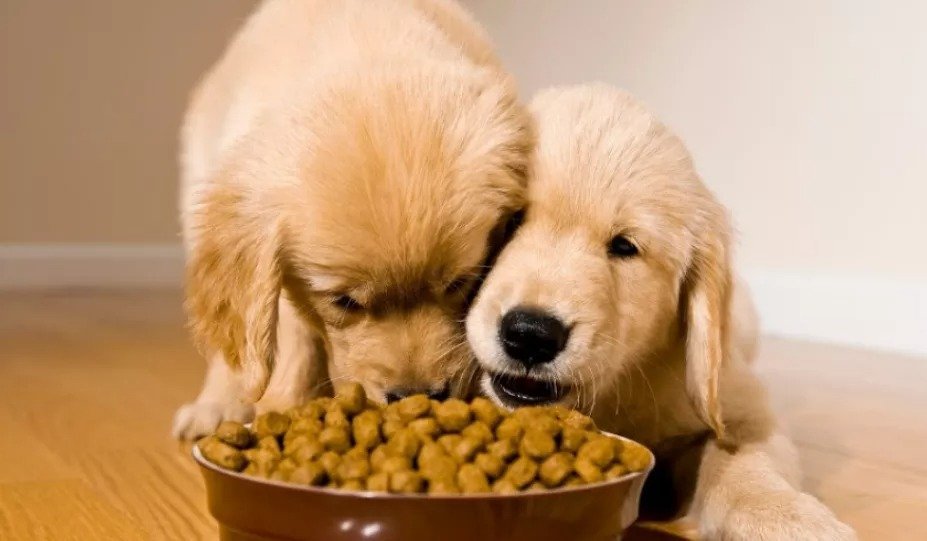
A pet is not merely an animal nearby. It’s an emotional companion. Family.
They learn our behaviour, routines, emotional states, and communication patterns.
And anyone who has deeply loved an animal knows something extraordinary happens over time.
The animal begins reflecting human qualities.
The human in animal mind
What do we truly give our pets besides food and shelter?
Human seeds.
This interaction between humans and animals carries profound evolutionary significance.
Animals living closely with humans constantly absorb:
- emotional energy
- behavioural patterns
- communication signals
- affection
- social interaction
- empathy
- routine structures
- higher environmental stimulation
A dog learns emotional nuance.
A cat develops forms of communication unique to human interaction.
Many pet owners genuinely feel their animals understand them emotionally beyond simple conditioning.
Animals remain largely governed by instinct and nature, yet, through intimate contact with humanity, they begin to develop qualities beyond pure instinctive behaviour.
We often jokingly say:
“My dog is almost human.”
But perhaps this intuition contains more truth than we realise.
Love as an Evolutionary Force
One of the most mysterious aspects of pets is unconditional love.
Animals can display extraordinary loyalty, sacrifice, emotional sensitivity, and devotion.
They comfort us during grief.
Sense our emotional pain.
Remain loyal without manipulation.
Offer companionship free from psychological games or ego.
Their vulnerability awakens compassion within us.
And perhaps compassion itself becomes part of evolution.
Through loving animals, humans reconnect with softer dimensions of consciousness often lost in modern society.
Animals humanise us emotionally.
And perhaps we humanise them mentally.
This becomes a sacred exchange.
The Bridge Created by Humanity
When humanity evolved into self-aware consciousness, a bridge was created.
A doorway through which consciousness could move beyond instinctive animal existence into reflective self-awareness.
Apes transitioning into humans may therefore represent more than mere anatomical adaptation.
It may represent the birth of a new kingdom of consciousness.
And through interaction with humanity, animals may gradually approach that threshold themselves.
Not necessarily as the same species physically transforming into humans, but through progressive reincarnational evolution over time.
An animal consciousness may eventually outgrow purely instinctive existence and eventually arrive at the earliest levels of human awareness.
The Lower and Higher Rungs of Humanity
The human kingdom itself contains vast levels of development.
At lower levels, humanity remains dominated by fear, violence, greed, and animal instincts.
At higher levels, humanity evolves toward compassion, wisdom, selflessness, creativity, and spiritual awareness.
And at the highest levels emerge what many traditions call enlightened beings.
The trajectory of evolution, therefore, does not stop at becoming human.
Humanity itself appears transitional.
We are unfinished beings.
Evolution Beyond Biology
Modern neuroscience increasingly reveals that the human brain possesses remarkable neuroplasticity — the ability to rewire itself through experience, thought, meditation, learning, and behaviour.
This means even within a single lifetime, consciousness can evolve.
Meditation, compassion, emotional regulation, and spiritual practices physically alter neural pathways and emotional processing within the brain.
Evolution is therefore experiential.
A Beautiful Responsibility
If this perspective is true, then our relationship with animals is profoundly significant.
Your pet may be a consciousness journeying through its own evolutionary unfolding.
Every act of kindness matters. Every moment of love matters.
Every interaction becomes part of that journey.
Your care, affection, emotional bonding, and companionship may plant the very seeds that help elevate consciousness further toward human self-awareness.
In return for the unconditional love animals offer humanity, we may help guide their evolutionary progression forward.
The Mystery Continues
Of course, none of this can currently be proven conclusively by mainstream science.
And perhaps some mysteries are not meant to be fully reduced to laboratory measurements.
Yet when we observe life deeply, evolution appears everywhere:
- matter becoming life
- life becoming awareness
- awareness becoming self-awareness
- self-awareness seeking transcendence
The universe itself appears to be unfolding toward increasing complexity, intelligence, sensitivity, and consciousness.
And perhaps love itself is one of the great hidden forces guiding that unfoldment.
So could your dog or cat one day become human?
Perhaps not tomorrow or in a lifetime.
But through consciousness, love, experience, and evolution?
I believe it is entirely possible.
And perhaps that is why the bond between humans and animals feels so sacred.
Because somewhere within their eyes, we recognise not something lesser than ourselves — but something becoming.
English: www.fisumeditation.org
Further English Philosophy: www.fisumeditation.org/Philosophy
Greek: www.dialogismos-fisu.org
Rajesh’s Author Site: www.rajeshananda.guru