—–
By Kamil Kenders
HAVANA TIMES – For a very long time now—years, perhaps—waiting at a bus stop has been an ordeal. The buses (route buses, public buses), in other words, public transportation, has been woefully inadequate.
I can’t remember whether I wrote about transportation some time ago, but it’s very possible, because it is undoubtedly one of the many problems Cubans continue to carry with us.
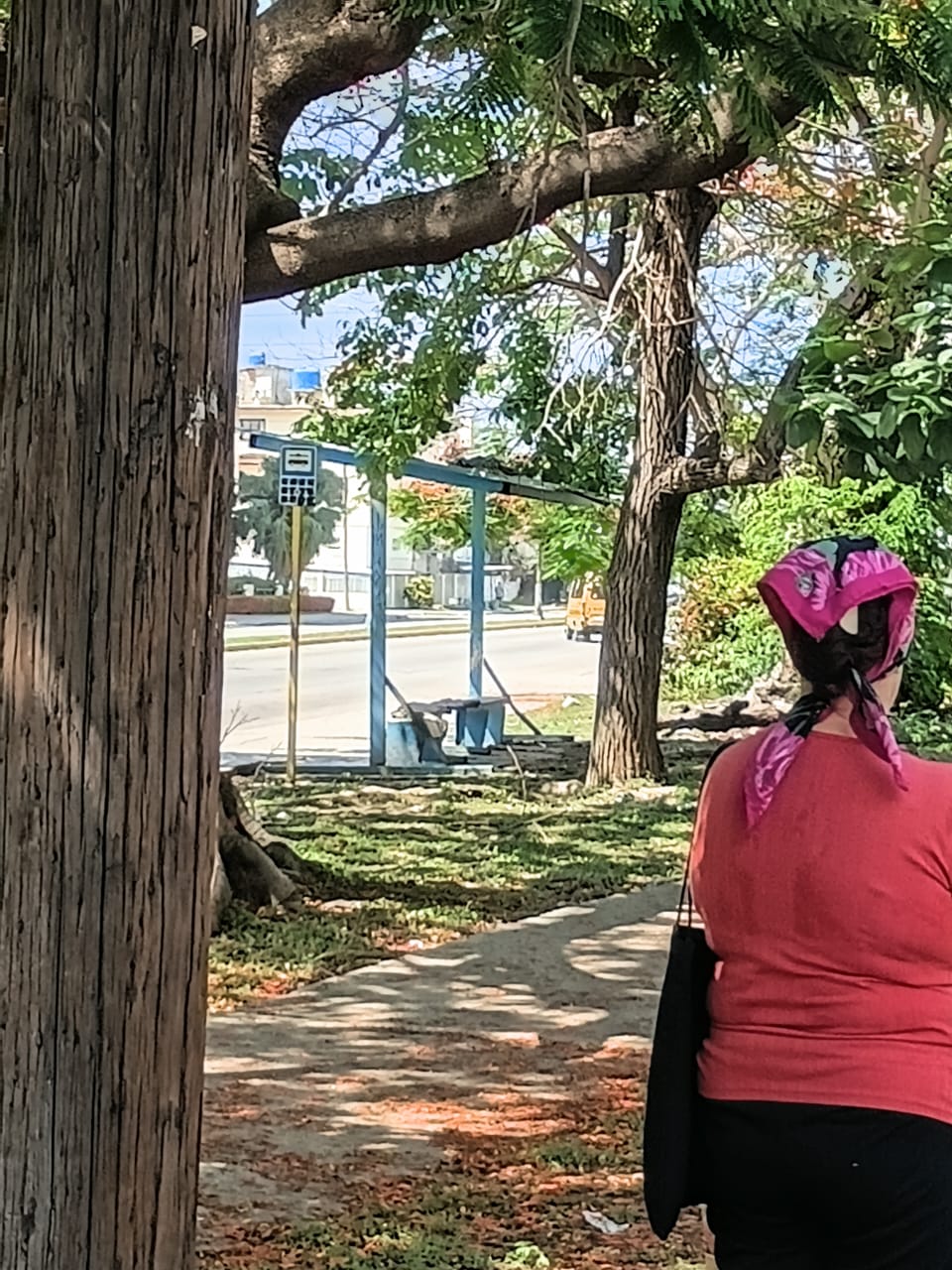
The difference is that now we can truly say that bus stops have become little more than decorative fixtures in many parts of the city. They serve as murals for graffiti artists, shelters for the homeless, or simply resting places for people forced to walk from one end of Havana to the other.
I remember, years ago, riding the P5, the P9, or the 222 bus route. I could hardly ever get a seat, sometimes I was squeezed so tightly that the mix of unpleasant odors made me want to get off long before reaching my destination. But I endured it because, unfortunately, I almost never had enough money to pay for a shared taxi. Even so, at least there was always the option of taking the bus. Not anymore. That possibility is now gone.
Today’s public transportation is provided by electric tricycles. We are all forced to ride them—from the youngest to the oldest, those who still can. Sometimes we look like Tetris pieces, trying to fit together, each of us attempting to make the ride as comfortable as possible.
“It’s what we’ve got,” some people say. “The driver of the shared taxi on the corner was asking me for 800 pesos. What a rip-off,” we complain. Because 800 pesos is more than half of many people’s monthly pension. With no buses, we are now forced to travel by tricycle. It’s all that’s left for us ordinary Cubans.
I pass by on a tricycle and look at the bus stop, so empty, perhaps still waiting for some form of public transportation to return and give it back a little of its history, a little of its life.
Read more on Kamil Kender’s diary here on Havana Times.