After the powerful earthquakes in Venezuela
—
Residents say rescue teams didn’t arrive until five hours after the earthquake.
By Reynaldo Mozo Zambrano (Efecto Cocuyo)
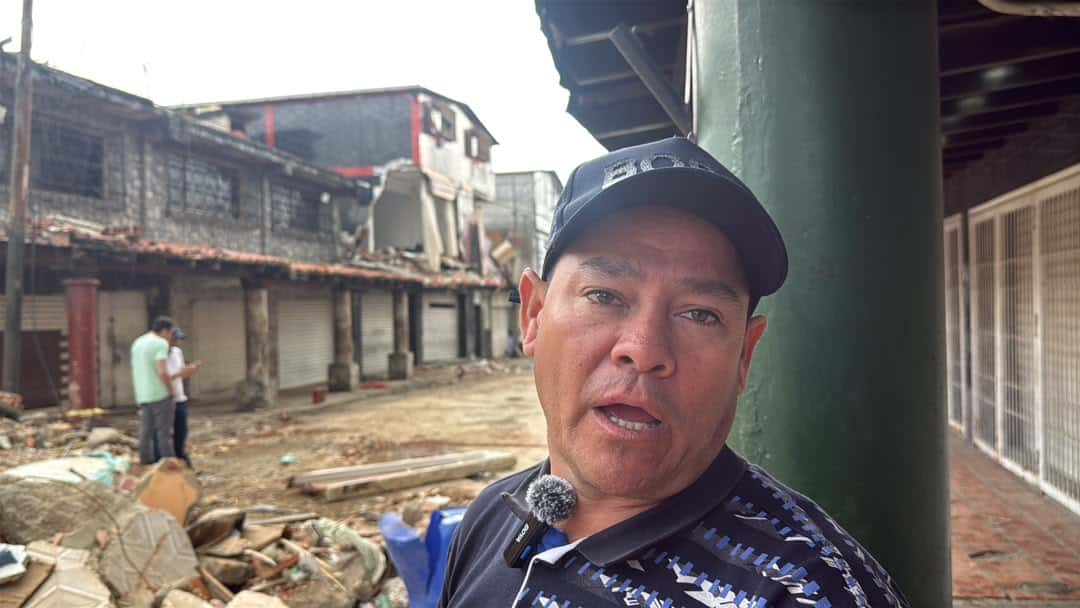
HAVANA TIMES — Jose Javier Quintero was at work, just a block from his home on Calle Real in El Junquito, Caracas, when he heard the deafening crash of his house collapsing during the twin earthquakes that struck Venezuela on June 24th.
The man, who works at a restaurant in the Caracas mountain town popular with tourists, was with his daughter when the earthquakes hit. After seeing his home collapse, he immediately left her in the care of a niece and ran back to the destroyed building.
His wife and son, Yosmer Quintero, were trapped beneath beams and concrete blocks in the stairwell area of the building.
The first response to the disaster came not from emergency services but from local residents, who began removing debris with their bare hands.
“With our hands we pulled out both the survivors and our dead. It was the united community that responded,” he said.
—
Official rescue teams did not arrive at the disaster site for hours, forcing the community to handle the emergency on its own.
“The authorities showed up about five hours later, but all of us working together managed to get them out,” Quintero said.
During that wait, neighbors confirmed the deaths of one resident of the building and a woman who had been fleeing the earthquake from another part of town. Both were trapped, along with a young girl, beneath the ruins of the Junko Pan bakery.
Quintero, who worked at a restaurant specializing in fried pork and cachapas for tourists, temporarily relocated to the town of Carayaca, in the mountains of Vargas State, to stay with relatives after the collapse of the building where he had lived with 12 other people.
“I suffered bruises and scratches. We lost everything, but the important thing is that we’re alive,” he said, while reporting that about ten homes on Calle Real had collapsed and that firefighters and Civil Protection officials had yet to conduct structural inspections of the homes still standing.
—
Calls for Structural Inspections
Isabel Mujica, 55, who lives on La Colina Street at Kilometer 23 in El Junquito, watched as the earthquakes brought down several homes in the La Toma neighborhood and damaged buildings throughout the town, forcing residents to evacuate.
With no official transportation or evacuation plan available in the area, she and her family had to find their own way to safety.
—
Mujica is now homeless and staying in a public park with about 15 other people from her neighborhood, sleeping in tents.
Those displaced are living outdoors, surviving thanks to volunteers who have brought them food, clothing, tents, and other supplies. But uncertainty over the fate of their homes continues to weigh heavily on them.
“No one brought us here; we came on our own. What we’re asking is for someone to inspect our homes so we’ll know whether we can continue living in them. People have brought us food, but nobody has told us anything except that we can’t go back,” Mujica said.
—
The lack of action by local authorities during the critical hours after the disaster deepened the anger of those who lost their homes on Calle Real and in La Toma.
Survivors said police officers who arrived at the scene largely stood by, leaving the physically demanding rescue work entirely to local residents.
“All they did was watch and eat ice cream they had looted from the bakery that collapsed,” residents told the Efecto Cocuyo reporting team.
During a tour of the devastated neighborhood, the contrast between the community’s efforts and the passivity of state security forces was striking. Municipal sanitation workers from the Caracas Mayor’s Office were the only people manually removing rubble and dirt from around the collapsed buildings. Just a few yards away, about eight officers from the Bolivarian National Police and five members of the National Guard sat watching without taking part.
Removal of Private Equipment Halts Cleanup in La Toma
William Briceño, 37, who also lives at Kilometer 23, described how cleanup operations in the La Toma neighborhood had come to a standstill.
The heavy equipment that initially began clearing debris belonged to a private company, but the lack of logistical support from the government brought operations on the area’s main roads to a halt.
—
“The machinery belonged to a private company. The government was taking credit for work that wasn’t theirs, so the company packed up its equipment and left—they were simply donating their help. Once they left, nobody else came. They also ran out of fuel, and the government wouldn’t help them with thateither,” Briceño said.
Residents of the community also said they have received neither assistance nor structural safety inspections from local emergency agencies.
“The government hasn’t come to inspect anything, nothing at all. At least the people staying here in this shelter haven’t had anyone come to look at their homes. They haven’t even bothered to take a look. The only help we’ve received has come from the community itself,” he said.
The death toll in El Junquito included four people: two elderly adults, one woman, and one young girl.
Briceño said the rubble remains untouched, with no indication that authorities intend to address the problems facing the people from damaged buildings.
“The debris is still lying there, waiting to see whether someone from the government ever shows up to start clearing it away or decide what will happen to those buildings,” he concluded.
Restrictions at Official Shelters
Mauri Crusco, a resident of the Gran Hotel community at Kilometer 23 in El Junquito, is one of 20 families who have spent the past 16 years waiting to be assigned decent housing.
The twin earthquakes severely damaged the foundations of the old building where they had been living, forcing them to establish a makeshift camp nearby.
Fearing a complete collapse, residents decided to stay in tents until the situation stabilizes.
—
“Twenty families are taking shelter here. Because of the condition of the hotel’s structure, which is many years old, and out of fear, we’re staying in tents while this tragedy unfolds,” Crusco said.
Unlike residents in other parts of the parish, this group reported that authorities had visited them and provided basic assistance, enabling them to share supplies with nearby farming communities that were also affected.
—
Even so, Crusco said they still need additional tarps and rechargeable lamps to sustain the makeshift camp.
“We’re waiting for firefighters to inspect the structure because that hotel was built about 70 years ago. We can’t stay inside because it has developed cracks.”
A very different situation exists at the Experimental University for Security, also located in El Junquito, where 20 people displaced by the earthquakes, including nine children and their guardians, are being sheltered.
At the police training facility, an officer who declined to identify himself prevented journalists from interviewing the evacuees, saying that, under orders from Mayor Carmen Melendez, no one was allowed to speak with the people taking refuge there.
First published in Spanish by Efecto Cocuyo and translated and posted in English by Havana Times.
Read more feature articles here on Havana Times.