Still assessing the rubble, with no official figures on the missing
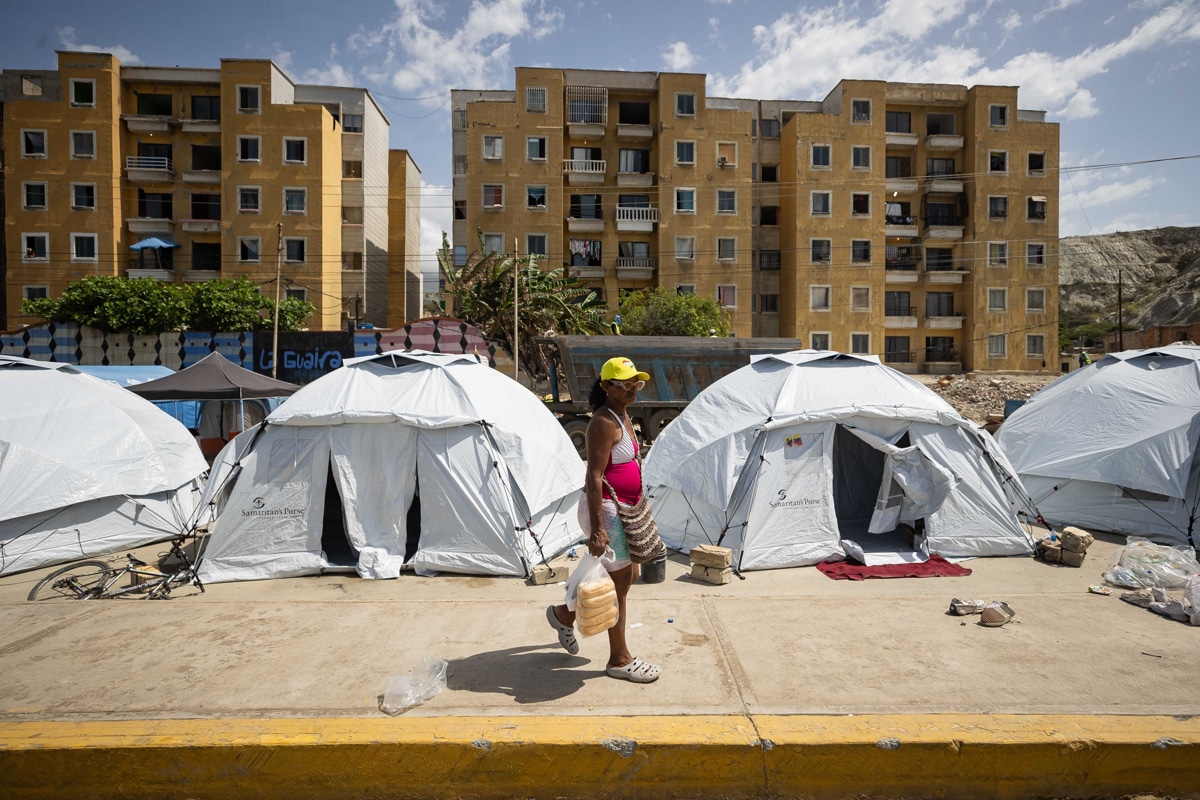
A woman walks past tents sheltering people affected by the earthquakes of June 24, in Catia La Mar, Venezuela. EFE/ Ronald Peña R
A summary of what Venezuela has experienced 30 days after the June 24, 2026 earthquakes.
By Efecto Cocuyo
HAVANA TIMES – It has been exactly 30 days since the afternoon of June 24, when the earth shook violently across Venezuela. Two consecutive earthquakes, measuring 7.2 and 7.5 in magnitude and separated by just 39 seconds, turned entire buildings into mountains of concrete and twisted steel. Today, the wound remains not only open—it seems no one has decided how to begin closing it.
One month after the tragedy, the government has yet to release updated and reliable official figures on the number of people still missing. Entire families continue posting photographs on cracked walls, sharing appeals on social media, and searching makeshift morgues in the hope of finding their loved ones.
Independent organizations and citizen-run websites speak of thousands of missing people—some unofficial reports placed the number of unaccounted-for individuals at more than 40,000 in the first days after the disaster—but the government’s lack of transparency has only fueled uncertainty and anger.
The Death Toll Continues to Rise
The number of confirmed fatalities has reached 5,398, according to data released by the interim government through July 22 (no updated tally was published on Thursday, July 23), while more than 16,740 people have been injured.
Hundreds of structures collapsed, particularly in La Guaira, Carabobo, Aragua, and parts of Caracas. Apartment buildings, homes, and businesses were reduced to rubble. Direct economic losses are estimated at more than US $20 billion, while the total cost of reconstruction could exceed US $65 billion, according to projections by organizations such as the United Nations.
During These Four Weeks
- Aftershocks—more than 1,500 recorded by Funvisis—have offered no respite. Many families are still sleeping in tents or on the streets, terrified that what remains standing could collapse.
- Thousands of people remain displaced. In La Guaira, one of the hardest-hit areas, entire neighborhoods resemble war zones, with leaning buildings, streets blocked by debris, and the lingering smell of dust and decomposing bodies.
- International aid has arrived without limitation. Organizations such as the Red Cross, Doctors Without Borders, the World Food Program, and World Vision have distributed food, water, medicine, and hygiene kits to more than 120,000 people.
Unlike other disasters in the region, Venezuela’s reconstruction phase still appears far off. There is no visible national plan for large-scale debris removal, nor a timetable for repairing critical infrastructure.
Much of the heavy machinery needed has yet to arrive, while chronic shortages of fuel and construction materials continue to hamper local recovery efforts.
Experts say that poor construction quality in recent years—combined with a lack of maintenance—greatly magnified the disaster. Relatively new buildings collapsed as though they had been made of cardboard.
Meanwhile, ordinary people are doing what they can. Organized neighbors clear debris with shovels and buckets, churches distribute food, and young volunteers care for the injured in makeshift clinics. Venezuelan solidarity, once again, is the only thing functioning when institutions fail.
Photo: EFE
A Nation Waiting for Answers
One month later, Venezuela is facing more than physical devastation. It is confronting the pain of not knowing, the frustration of a slow response, and the fear that this tragedy will simply become another entry in the long list of crises that have marked the country over the past several decades.
The survivors are not asking for miracles. They are asking for clear information, machinery to remove the rubble, a safe roof over their heads, and, above all, not to be forgotten. Because beneath those piles of concrete lie not only bodies, but lives, stories, and the right to bring mourning to a close.
First published in Spanish by Efecto Cocuyo and translated and posted in English by Havana Times.
Read more news here on Havana Times.