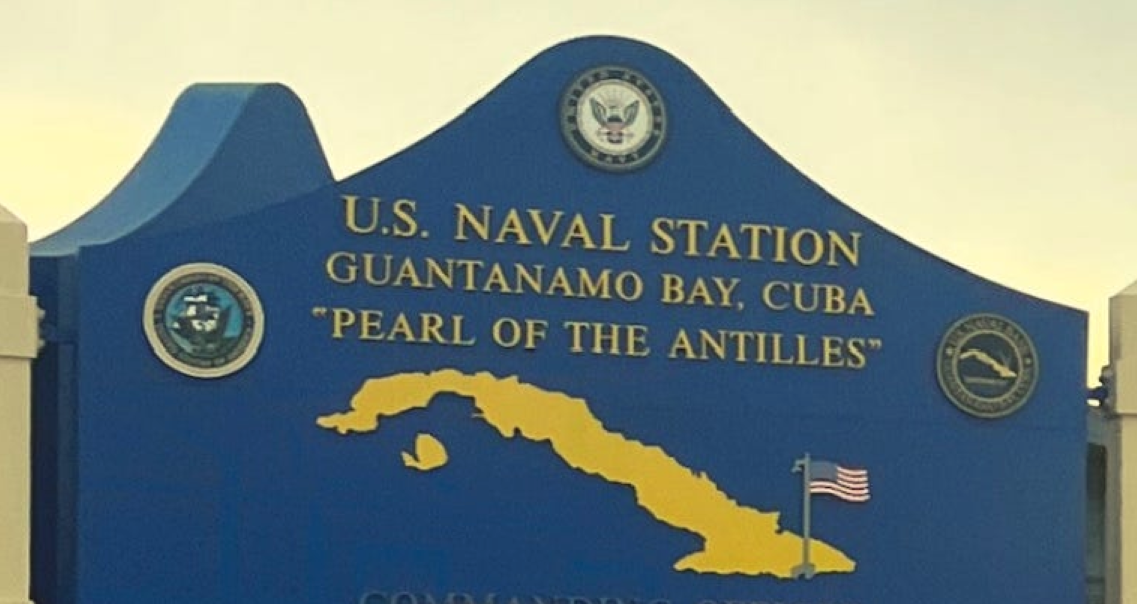
to meet with troops stationed at the US naval base
Caribbean governments strengthen contacts with the USS Nimitz amid speculation about the vessel’s role in a possible military action against Cuba.
By Diario de Cuba
HAVANA TIMES — US Secretary of Defense Pete Hegseth travels to Guantanamo Bay, Cuba, on Wednesday to meet with troops stationed at the US naval base and with commanders from the United States Central Command (CENTCOM), amid rising tensions and a series of sanctions against Havana.
The trip is part of a tour to oversee military operations in the region and maintain direct contact with deployed forces, at a time when the United States is reinforcing its presence in the Caribbean and the Middle East, according to the Pentagon, as reported by EFE.
There is no indication that the Secretary of Defense has previously visited the Guantánamo naval base since taking office in 2025, according to available information.
After his visit to the base, Hegseth will travel to Florida for meetings with senior CENTCOM commanders, amid a new exchange of fire involving Iran in the Middle East and growing tensions surrounding Cuba.
Tightening sanctions against the Cuban regime
Such trips are part of his regular troop oversight agenda, which includes periodic visits to military bases inside and outside the United States to maintain direct contact with commanders and deployed personnel.
The visit comes one week after the Trump administration announced new sanctions against Cuban leader Miguel Diaz-Canel and other senior officials in the Havana government in response to the human rights situation on the island.
Since the beginning of the year, Trump has intensified his policy toward Cuba, imposing new economic and diplomatic restrictions and increasing pressure on the Havana regime, primarily through a partial oil blockade initiated after the capture of Nicolas Maduro in Caracas on January 3.
Caribbean governments strengthen ties with the USS Nimitz
Meanwhile, authorities in the Dominican Republic joined other Caribbean officials who have visited the US aircraft carrier USS Nimitz during its deployment in the region, amid speculation about the role the vessel could play regarding Cuba and Washington’s increased pressure on Havana.
According to the Dominican presidency, a delegation led by Defense Minister Lieutenant General Carlos Antonio Fernandez and Tourism Minister David Collado conducted an official visit aboard the USS Nimitz (CVN-68), coordinated by the U.S. Embassy in Santo Domingo as part of the multinational exercise Southern Seas 2026.
Also participating in the visit were Jose Manuel Cabrera, president of the National Drug Control Directorate (DNCD); Luis Soto, director of the National Investigations Department (DNI); US Ambassador Leah Francis Campos; and representatives of US Southern Command.
Dominican officials were briefed on the aircraft carrier’s operational, technological, and logistical capabilities. Considered one of the US Navy’s premier platforms, the USS Nimitz was showcased as part of what the Dominican government described as a demonstration of the cooperation and trust between the two countries. Officials highlighted the visit’s importance for strengthening regional security and interoperability among allied forces.
The visit follows similar port calls and activities carried out by the USS Nimitz in Guyana, Suriname, Trinidad and Tobago, Grenada, and Jamaica. Senior government officials in those countries also participated in tours and briefings aboard the vessel.
However, the carrier’s presence near Cuba has raised questions in some Caribbean circles. In Jamaica, the government rejected allegations that the USS Nimitz visit was linked to potential US military plans against the island, according to Caribbean Life.
Jamaican Foreign Minister Kamina Johnson-Smith defended the stopover as a scheduled visit conducted within the framework of maritime cooperation and goodwill programs between the two countries. She stated that there is no connection between the ship’s presence and Washington’s policies toward Cuba.
Nevertheless, critical voices in the region have expressed doubts about US intentions. Former CARICOM Trade Secretary Byron Blake argued that the carrier strike group’s visit was not coincidental and warned of a possible connection to the US pressure strategy against Havana.
Similarly, University of Guyana law professor Neville Bissember suggested that the carrier’s presence in waters near Jamaica could be interpreted in various ways due to Cuba’s geographic proximity. He noted that a platform of this kind could serve as a launch point for military operations and reminded observers that international law questions material support by third states for armed actions against another country.
The arrival of the USS Nimitz in the Caribbean coincided with the indictment of Raul Castro by the US Department of Justice for the 1996 shootdown of two Brothers to the Rescue aircraft, an incident that killed four people, including three US citizens.
It also comes amid an increase in US military surveillance operations near Cuba. In recent weeks, almost daily flights by US reconnaissance aircraft and drones have been recorded in the vicinity of the island.
Mark Cancian, an analyst at the Center for Strategic and International Studies and former Pentagon official, told Politico that the Nimitz deployment is “probably there primarily to intimidate,” though he added that it could also be used in a military operation if necessary.
According to Cancian, possible scenarios could include air strikes against Cuban air-defense systems or against the regime’s leadership. He stated that Raul Castro would be the primary target of such an operation.
However, the analysis also notes that the White House faces a limited time window due to the accumulated strain of prolonged US naval deployments. The USS Nimitz, originally scheduled for retirement, has had its operational life extended until 2027.
According to an analysis published by Diario de Cuba, Cuba’s military capabilities are vastly inferior to those of the United States. The island relies largely on aging Soviet-era equipment, lacks an air force capable of sustaining significant resistance, and possesses a navy insufficient to defend its coastline against a large-scale military attack.
As Washington continues to pressure Havana and the USS Nimitz proceeds with its Caribbean tour as part of Southern Seas 2026, the carrier’s presence continues to fuel questions about the true scope of US strategy in the region.
First published in Spanish by Diario de Cuba and translated and posted in English by Havana Times.
Read more from Cuba here on Havana Times.