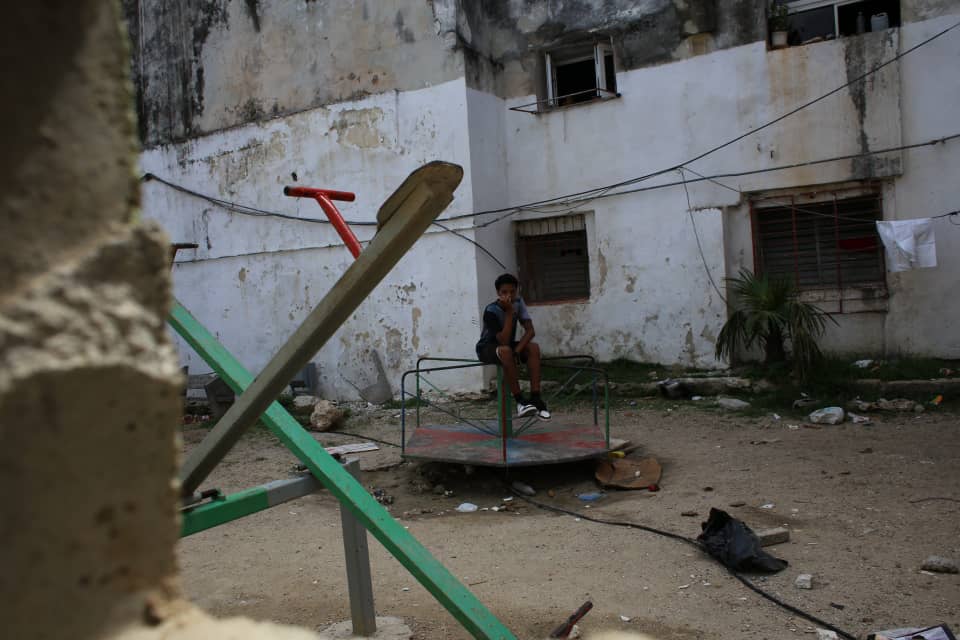
Havana photo by Juan Suarez
By Eduardo N. Cordoví Hernández
HAVANA TIMES – The issue of class differences, which these days seems to be treated as something new and has sparked outrage not only among my friends in the neighborhood but also across online forums and social media—is older than the hills. Nor is it uniquely Cuban. It is something that has always existed, exists today, and always will. It seems to be a fundamental part of the dynamics of reality and of the economy of the universe.
What is truly infuriating—what really gets under your skin—is that the rich, those who hold the power to govern, make laws, wage wars, and commit other barbarities, try to be clever by half, changing the names of things as though it weren’t enough for the poor simply to be poor. They also have to be treated as fools, made to feel like complete idiots ten or twelve times over.
It works the same way almost everywhere, but in some places, it is as though a gasket has blown and the leak of injustice has become impossible to contain. And instead of fixing it, they force you to agree with it, not only to accept that it is broken, but to agree that it should remain broken indefinitely. That is exactly what is happening today in my neighborhood, in every neighborhood of Havana, and throughout the country.
Perhaps it is not immediately clear what I mean by “changing the names of things.”
Take this example: there is a shortage of cash because state enterprises deposit workers’ salaries and retirees’ pensions into personal bank accounts accessed with debit cards. But then it becomes extraordinarily difficult to withdraw that money in cash. There are often no ATMs available.
Nor can you shop in most stores because they do not accept bank transfers. Yet if you try to pay in cash—and with prices constantly rising—vendors refuse to accept small-denomination bills, or old, torn, stained, written-on, or crumpled bills, even though those very bills were handed to you by the bank. Wonderful, isn’t it?
Here’s another example: because there is so little money, everything is expensive. But on top of that, there is very little to choose from. Add the fact that whatever you buy—especially root crops and other produce grown underground—comes caked in mud. Beans and grains are mixed with sand, pebbles, and other debris, while fruit is half-rotten and swarming with insects.
Then there is the urban landscape: streets with leaks of clean water but also overflowing sewage. Add buildings in ruins, propped up with makeshift supports, and why even mention the corner garbage dumps?
Now add to all this that the water supply is critical because of the lack of electricity. Add that the gas supply is beyond critical, making cooking extremely difficult because there is also no power. Put all of this together and the result is hunger. And hunger does not simply mean having a healthy appetite.
The shortage of everything, especially food, has given rise to the form of protest known as the cacerolazo, or pot-banging demonstration.
When cacerolazos first appeared, wherever they occurred, they were a way of rejecting the immediate structures of power, the authorities understood to be not only responsible but guilty. In their early days in Havana, they were followed by the arrival of police patrol cars and the deployment of “revolutionary defenders” called into the streets by the country’s highest leadership. Not necessarily anymore. Now, incredibly, there are also cacerolazos organized, encouraged, and driven by the official outrage over alleged foreign aggression.
A few days ago, I read that a young pro-Cuban government Spaniard by the surname Hurtado, invited by the Cuban government, was planning to stage a cacerolazo in front of the US Interests Section in Havana, on the grounds that it is the United States that oppresses the Cuban people.
You only have to live long enough to witness what once seemed unimaginable. This is what they call turning things upside down and calling it victory. And this is beginning to be what we know as the last straw.
Read more from the diary of Eduardo N. Cordoví aquí en Havana Times.