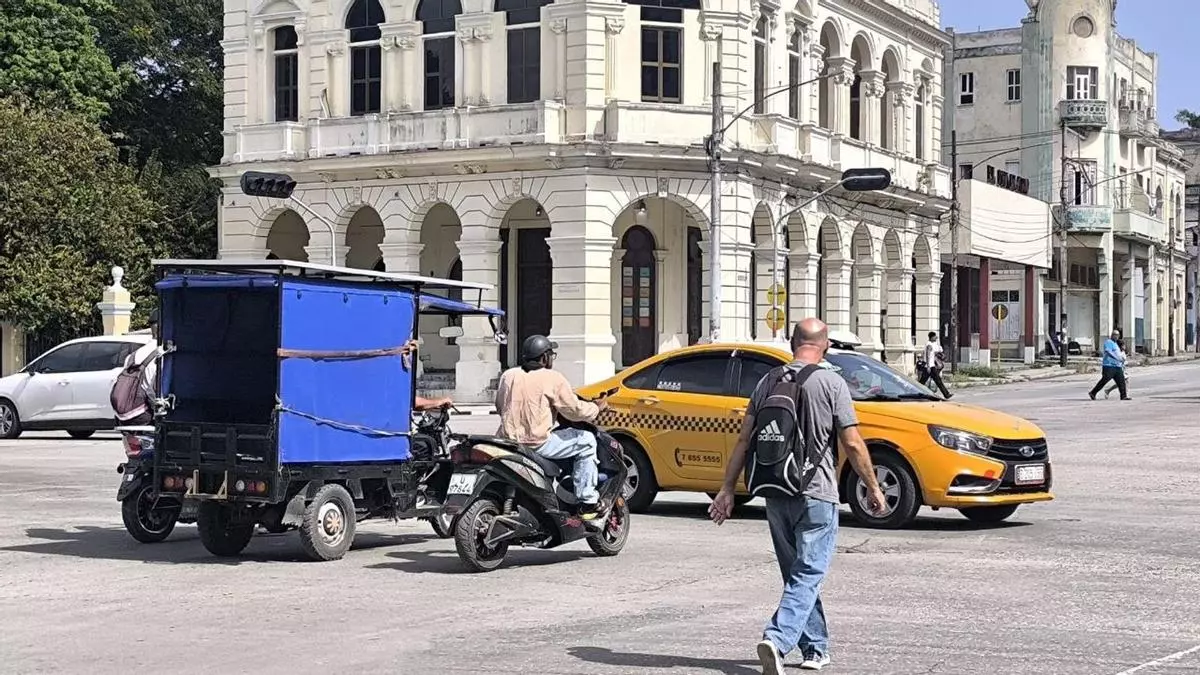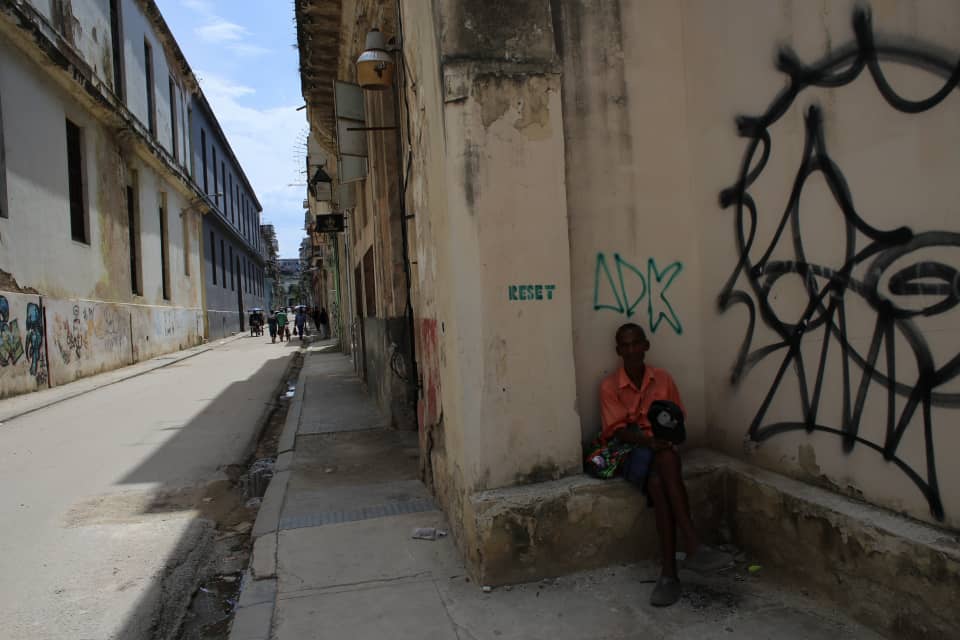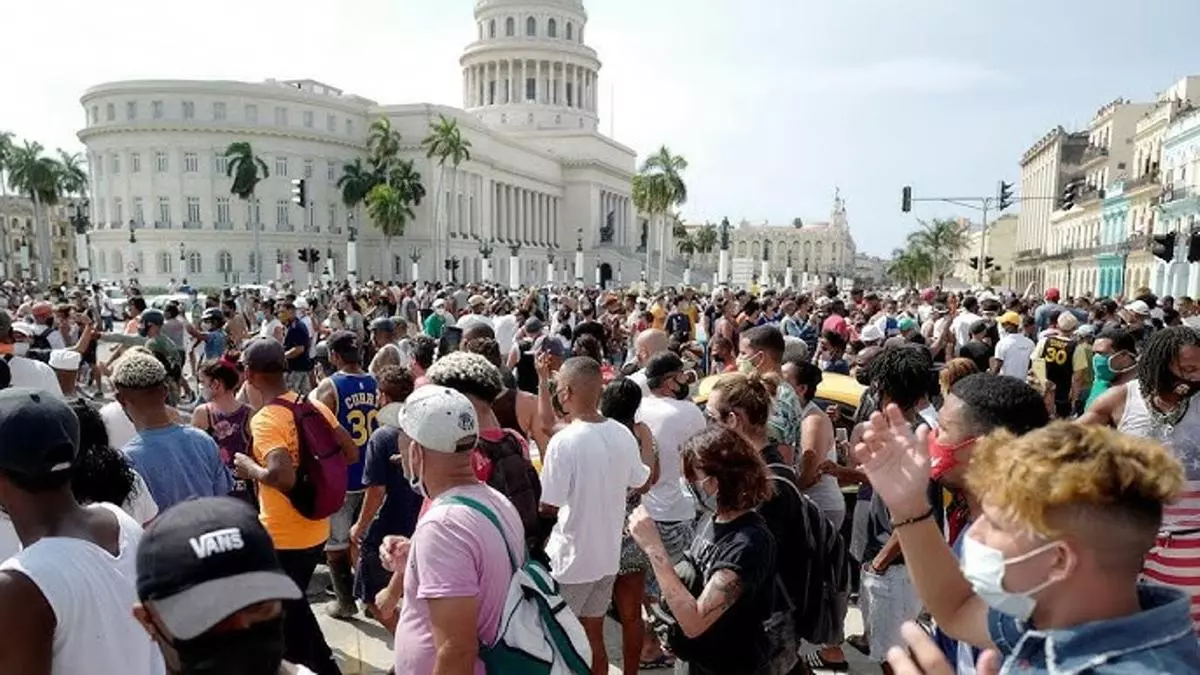
Images from the July 11, 2021 social uprising in Havana. / Screenshot
Amid political prisoners, blackouts, and palace infighting, the fifth anniversary of July 11 confirms the regime’s final exhaustion.
By Yunior García Aguilera (14ymedio)
HAVANA TIMES – Five years after July 11, 2021, the Cuban Revolution is dead. The people know it, the military knows it, the leaders know it, and even the evening news anchor who puts makeup on the corpse every night knows it. The only thing missing is the burial. And that funeral is being unbearably prolonged because those who inherited the funeral home also control the weapons, the prisons, and the keys to the cemetery.
July 11 did not bring down the regime, but it destroyed its narrative forever. That day, it was not a “minority paid by Miami,” as government propaganda claimed, that took to the streets. It was Cuba. The poor neighborhoods came out, young people with no future, exhausted mothers, Black Cubans whom the government boasts of having redeemed, and workers to whom six decades of socialism have guaranteed little more than the right to stand in line.
Five years later, Prisoners Defenders counts 1,306 political prisoners. Among them are 40 people who were arrested while still minors, and 16 of them remain incarcerated in adult facilities. The project that promised to create a “new man” has ended up imprisoning teenagers in order to keep a group of paunchy men in guayaberas in power.
Cuba reaches this anniversary in almost total darkness. In 2026, the national electrical grid has already suffered four nationwide collapses, two of them during the same week leading up to July 11. Electricity has become like an apparition of the Virgin Mary: no one knows when it will appear, how long it will last, or what sin must be atoned for to deserve it. The government blames the US embargo, fuel shortages, the heat, equipment failures, Trump—and when it runs out of scapegoats, even Thomas Edison for popularizing the light bulb.
But Cubans are no longer protesting simply to get the power back. In Central Havana, when electricity was restored, some residents stayed in the streets shouting, “We want freedom, not electricity.” That phrase reflects a decisive political evolution. For years, the regime bet on reducing every conflict to a material need. Hunger, but not rights. Misery, but never freedom. Now people are beginning to name the disease rather than just its symptoms.
The banging of pots and pans, blocked streets, and burning piles of garbage are the sounds of a society stretching the rope of fear another meter every day—and one that is on the verge of snapping it. The empty cooking pot has become the country’s most popular musical instrument. It requires no musical training, no sheet music, and no permission from the Ministry of Culture. Only exhaustion and a large spoon.
Raul Castro’s grandson Raul Guillermo’s ill-fated interview (with USA Today) did more than generate headlines. It triggered a short circuit within the ruling establishment itself. Suddenly, the guardians of orthodoxy began talking too much. The mother of Leticia Martinez—Diaz-Canel’s press secretary—posted on Facebook what her daughter likely hears every day in the palace corridors. Without intending to, she ended up airing the private conversations of the very power structure that has always demanded absolute silence from everyone else.
The contrast was even more revealing. While Prime Minister Manuel Marrero, a political creation of the military conglomerate GAESA, hurried to defend Raul Castro’s grandson and assure everyone that everything was under control, Díaz-Canel remained conspicuously silent.
It was fascinating to watch the reaction of the courtiers. Israel Rojas—the poet of the bulb and otherness—beat his chest lamenting how naïve he had been, as though he had only just discovered that hereditary privilege existed in Cuba. Michel Torres Corona, the increasingly watered-down host of Con Filo, directed his attacks at “El Cangrejo” (nickname of Raul Guillermo) and (Fidel’s grandson) Sandro Castro with a tone that reflected less moral outrage than class resentment. He did not seem scandalized that a revolutionary aristocracy existed. He seemed upset that he was not part of it.
The scene was almost Shakespearean. The court jesters hurried to bow before the Crown while despising the royal heirs. They swore loyalty to the kingdom while grumbling about the princes. In that theater of forced loyalties, the great truth that Castroism has spent decades trying to conceal was laid bare: the Revolution has become a hereditary monarchy that preserves the language of Marxism to justify the privileges of a ruling dynasty.
In 1961, Fidel Castro asked whether the Revolution’s weapons were in the hands of “the sons of the rich” the “young gentlemen.” Sixty-five years later, that question has returned like a boomerang—but this time aimed at his own family. Those who bear his surname travel on yachts and private jets. They speak in Cuba’s name without ever having received a single vote. They move through the halls of power like the natural heirs to an estate. From his grave, old Angel Castro (Raul and Fidel’s father) watches as his descendants have extended the fences of their properties to encompass the entire island, turning an entire nation into a family inheritance. No one can protest that vast estate without risking prison, exile, or being branded an enemy. It is the perfect hacienda.
A regime that must persecute and threaten young people and teenagers because it can no longer buy loyalty is not defending a cause—it is administering terror. A system whose international defenders can invoke nothing but victimhood is no longer a beacon of anything; it is a ruin shrouded in darkness. And a State whose own propaganda apparatus ends up leaking its palace quarrels on Facebook is no longer governing—it is livestreaming its own collapse.
The Revolution is dead. Its corpse still occupies government ministries, issues orders, signs prison sentences, and appears on television, made up like a zombie. But it stinks. And no matter how much ideological incense its priests burn, all of Cuba recognizes the smell. It is time to close the coffin, lower the body into the ground, and return Cuba to those who are still alive before the entire country is turned into a cemetery.
First published in Spanish by 14ymedio and translated and posted in English by Havana Times.
Read more from Cuba here at Havana Times.