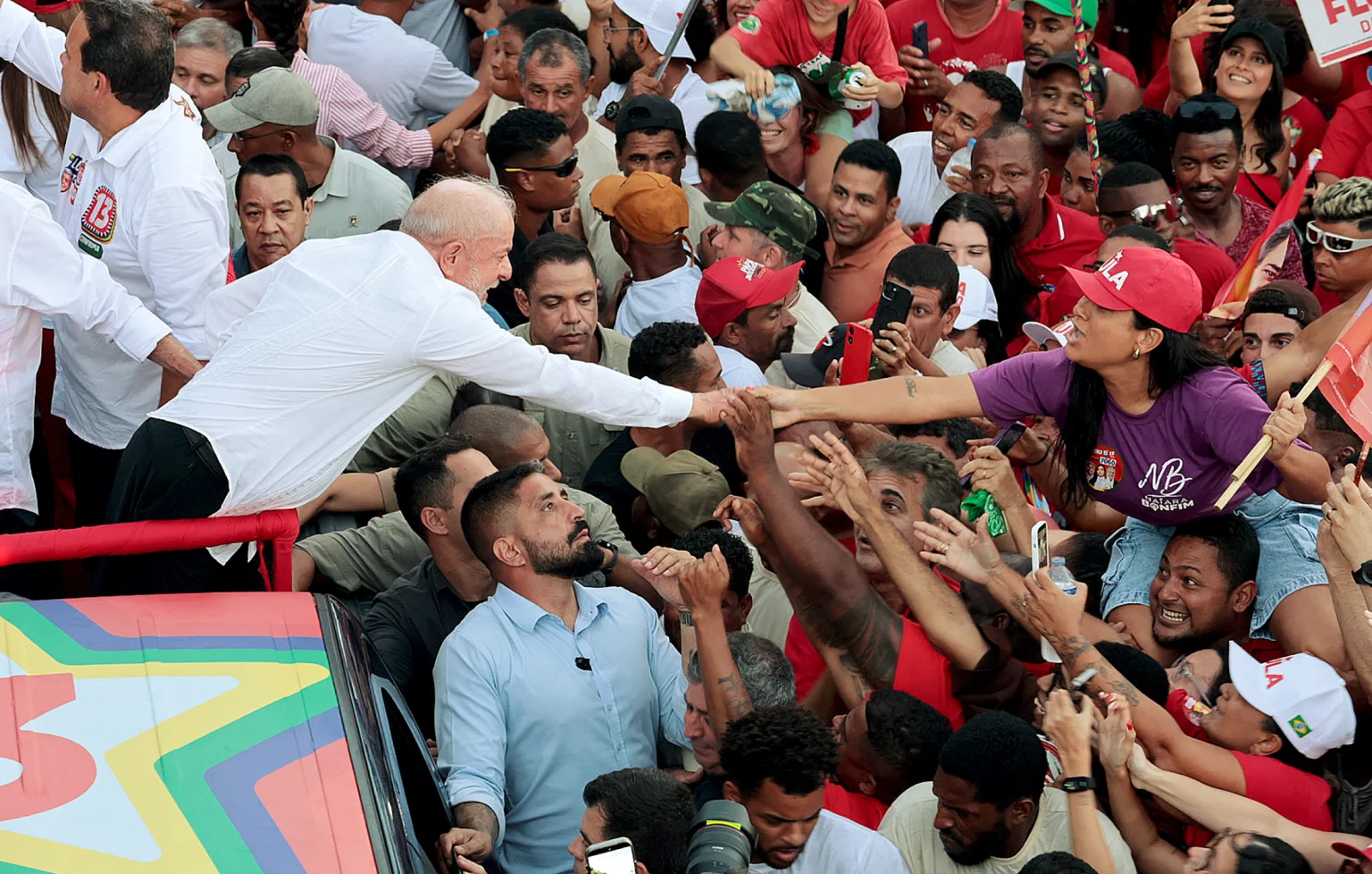
Luiz Inácio Lula da Silva greets his supporters during a campaign rally in Salvador, in the state of Bahia (Brazil). Photo: AFP
By Osmel Almaguer
HAVANA TIMES – Following Lula’s recent reelection in the presidential runoff against Flavio Bolsonaro, a wave of misinformation has intensified regarding the election results and the measures the president supposedly intends to implement.
I have already mentioned that I come from a country where the left has caused tremendous damage, and I understand the danger of a populist Latin American president entering his fourth term in office.
But the specter of another Cuba or another Venezuela here in Brazil has no real basis, because the leader of the Workers’ Party (PT) is already over eighty and has neither the time nor the energy for anything beyond governing in the present. Moreover, he has failed to prepare even a moderately competent candidate to succeed him.
I have also mentioned that, had I been eligible to vote, I probably would have supported Lula, not because I believe he will improve the economy or democracy, but for very specific reasons concerning immigrants and benefiting the most vulnerable people.
I have also said that I don’t buy the fairy tale of social justice. I understand how politics works, and I hold my nose to avoid the overwhelming stench whenever I get involved. But the truth deserves a place in all of this. The truth should be indispensable.
That is why I wanted to address a series of post-election rumors circulating on social media that have frightened many people, particularly those who find it difficult to verify information or are simply not accustomed to doing so.
1. The mathematically impossible victory: Some claim that Lula’s comeback in the second round was fraudulent and “mathematically and logically improbable.” However, the Superior Electoral Court upheld the results, explaining that the shift was due to lower abstention rates, fewer blank and invalid ballots, and increased support in Minas Gerais and strategically important northeastern states.
2. Manipulation through extended voting hours: Some suggest that extending voting hours allowed fraudulent ballots to be added. A report by the São Paulo newspaper O Estado de S. Paulo (Estadão), traditionally conservative and economically liberal in its editorial orientation, states that the measure was applied only in specific locations where voting had not yet concluded at 5:00 p.m. Data analyzed by the University of São Paulo showed that only about 34,700 votes were cast after the official closing time, a figure 128 times smaller than the final margin of more than 4.4 million votes separating the two candidates.
3. A plan to alter the electoral system: Based on a speech delivered by the Brazilian president in Chile, rumors spread that he planned to introduce changes to the electoral system to perpetuate himself in power. This claim was debunked by the country’s leading fact-checking organizations, including Estadão Verifica, Fato ou Fake from G1, and Projeto Comprova.
4. The list of extreme proposals: During the final stage of the campaign, chain messages circulated listing supposedly radical measures included in his government program. These included confiscating or controlling people’s spending, creating a Ministry of Truth, imposing absolute state control over social media, and ending the fight against drug trafficking. Agência Lupa and other fact-checking platforms debunked these rumors.
What is actually included in Lula’s program:
1. Minimum wage adjustment: The minimum wage is expected to increase from 1,662 to 1,741 reais next year.
2. Income tax exemption: For those earning less than 5,000 reais per month. This measure has already begun to be implemented and will be further strengthened in 2027.
3. Bolsa Família: The well-known financial assistance program that the Brazilian government provides to vulnerable families will not be cut. On the contrary, benefits will increase by 15%.
Lula’s reelection nevertheless brings certain risks associated with his program and traditional governing style, including a possible increase in budgetary pressures resulting from his campaign promises, rising public debt, declining credibility among foreign investors, economic slowdown, and inflation, among others.
Legally speaking, Lula is not required to fulfill every point of his government program. Although he is expected to remain faithful to his traditional governing style, there are also concerns that he may have to cede parliamentary and ministerial power to centrist parties in order to secure approval for some of his budget proposals and reforms. This could come at a high political cost for the left-wing president.
Read more from the diary of Osmel Almaguer.