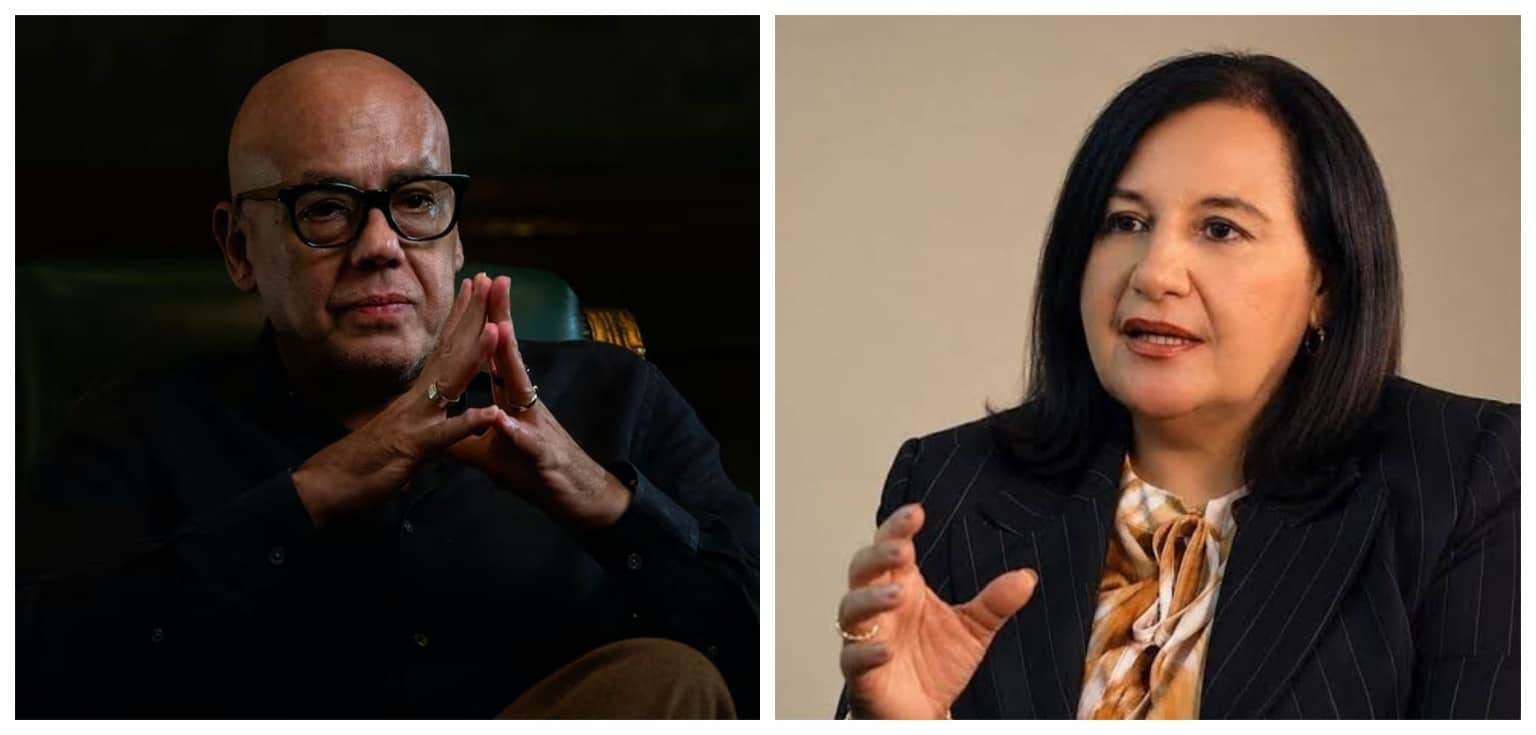
Photo: El Mostrador
Orwell reminds us that politics loses its meaning when it stops walking the streets and begins to exist exclusively in seminars, offices, ministries, or parliaments. No statistic can replace a conversation with someone who works, runs a business, pays taxes, or waits for medical care.
By Alfredo Ugarte S. (El Mostrador)
HAVANA TIMES – In light of the latest political and parliamentary discussions surrounding several bills currently under consideration in Chile, I was reminded that in January 1976, Ediciones Destino in Barcelona published the first Spanish-language edition—after several years of censorship under the Franco dictatorship—of one of George Orwell’s most lucid and least ideological works: The Road to Wigan Pier, first published in England in 1937.
Today, at a time when diagnoses, programs, and grand promises of social transformation abound, there is no doubt that it would be worthwhile—particularly for political elites—to read it again.
Although it was written almost 90 years ago, its pages contain a warning that is even more relevant today than it was in England in 1937.
Many remember this book for its moving description of the lives of miners in northern England. However, its most profound contribution is found in its second part, where Orwell turns his attention not toward poverty, but toward those who claimed to represent the poor.
His critique is striking because it is not directed primarily against capitalism, but rather against the inconsistency of a significant part of the intellectual and socialist elites of his time.
Orwell observed that many of those who spoke in the name of workers barely knew the everyday reality of the people whose cause they claimed to defend. They constructed theories about the lives of people with whom they rarely interacted, proposed solutions from within closed intellectual circles (today, not even that), and debated abstract models while concrete problems remained unresolved.
The book’s message is simple and, precisely for that reason, profound: no theory can replace firsthand knowledge of reality. True politics begins when we listen before speaking, observe before legislating, and understand before attempting to transform.
That is Orwell’s great legacy
Modern societies need technical expertise, economists, lawyers, scientists, and experts. But they also need intellectual humility. Knowledge ceases to serve the common good when it begins to assume that reality must adapt to theories rather than theories adapting to reality.
Perhaps therein lies one of the most visible problems facing many of today’s democracies, particularly our own. Those who design public policies often live in environments very different from those of the people whose lives they legislate. Polls, indicators, econometric models, statistical data, ideological narratives, and conceptual categories are debated while millions of people face much more immediate problems: making ends meet, finding a job, obtaining housing, educating their children, starting a business without an excessive regulatory burden, or receiving timely healthcare.
The distance between politics and everyday life is not always born of bad faith. Often, it is the consequence of a growing separation between political, bureaucratic, and intellectual elites and the concrete realities and experiences of ordinary citizens.
Orwell understood that this distance ultimately weakens even the best causes. When people feel that those who govern them do not understand their difficulties, they lose trust not only in particular governments, but also in the institutions themselves.
This lesson also challenges part of the contemporary left. Orwell never abandoned the pursuit of a more just (socialist) society, but he rejected the idea that justice could be built on moral superiority, dogmatism, or disconnection from people’s lived experience. His criticism was aimed precisely at those intellectuals who, convinced that they possessed the correct answers, ended up talking more among themselves than with the people they claimed to represent.
That warning remains entirely relevant today. No project of social transformation can be sustained solely by speeches, slogans, or theoretical constructs. Public reforms require an understanding of how people live, how institutions function, what the real incentives are, and what consequences the rules being enacted will produce.
When public policy is designed in the abstract, without sufficient contact with economic and social realities, the risk increases of creating regulations that are formally coherent but ineffective in practice. The quality of a law depends not only on the nobility of its aims; it also depends on the rationality of the means it employs, the soundness of its foundations, and its ability to address the real problems it is intended to solve.
This reflection is especially relevant when considering complex legislative proposals that seek to transform important areas of the economy or the tax system. Regardless of the objectives they pursue, the essential question remains the same one Orwell posed: Were they conceived on the basis of a genuine understanding of reality, or from a predominantly theoretical construct? Do they take into account the experiences of those who will have to comply with these rules and live with their effects? Have their consequences for equality, competition, legal certainty, and the functioning of institutions been adequately considered?
These questions do not constitute a rejection of change. On the contrary, they are essential if change is to be legitimate, effective, and sustainable.
True progress does not consist of imposing a theory on society, but of first understanding society and then building institutions capable of improving it.
Perhaps that is the greatest lesson of The Road to Wigan Pier. Orwell reminds us that politics loses its meaning when it stops walking the streets and begins to exist exclusively in seminars, offices, ministries, or parliaments. No statistic can replace a conversation with someone who works, runs a business, pays taxes, waits for medical care, or struggles to provide for their family.
Reality always ends up prevailing over ideas that ignore it.
And until elites—whether of the left or the right, political, economic, bureaucratic, or academic—understand that the legitimacy of their decisions depends on their ability to know and understand people’s lives, they will continue repeating the same mistake Orwell denounced almost a century ago: believing that it is possible to transform society without first listening to it.
First published in Spanish by El Mostrador and translated and posted in English by Havana Times.
Read more from Chile here on Havana Times.