When the crisis in Cuba is no longer just economic and violence becomes part of everyday life.
By Safie M. Gonzalez
HAVANA TIMES – There is a scene that repeats itself in Havana’s neighborhoods when night falls and the city plunges into yet another blackout. It is not the silence of rest, but the silence of heightened alert. The sound of an electric motorcycle coming too close, a shadow crossing a corner without streetlights, the slam of a door as a home is locked up earlier than usual. I have seen it, and I have written about it on these pages: in today’s Cuba, violence has ceased to be a statistic and has become part of the landscape.
I am not going to fill this chronicle with figures, partly because the little data that becomes public is insufficient to measure what is happening. The darkness of the blackouts conceals some of the violence, but what is known is enough to suggest that it is spiraling out of control. Violence does not always involve a knife. It can be felt in the streets, in the heavy atmosphere of these times.
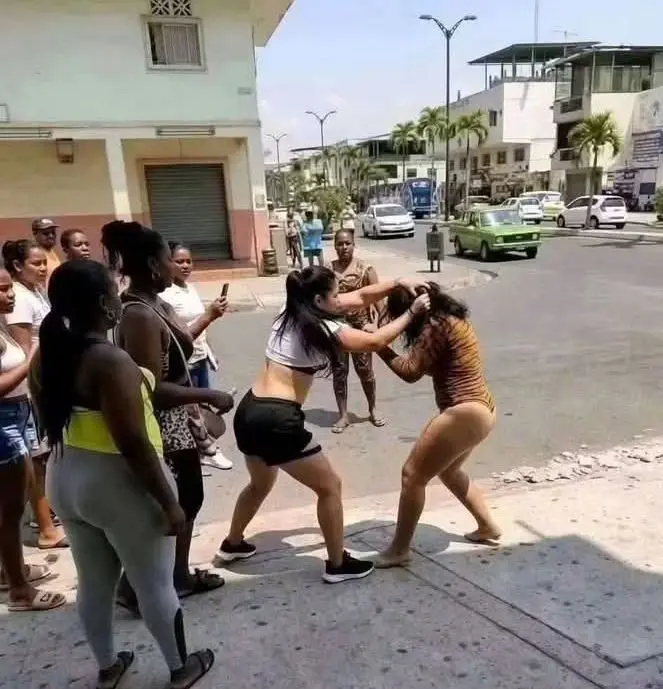
People are agitated, their nerves are frayed, and fights are becoming more frequent. All it takes is someone brushing against another person in a line, a misinterpreted glance, or one word too many for two strangers to end up shouting at each other on the sidewalk, often coming to blows. I have seen fights over a place in the bread line, over a taxi that never arrives, over someone cutting in line. Provocation has become embedded in everyday life, and patience, something that once characterized us so much, has been running out like water draining from a pond.
Violence can also be heard. It is in the shouting coming from homes, in the mistreatment people inflict on one another, in the way neighbors, strangers, and passengers crammed into overcrowded buses speak to each other. It is in the rudeness of those providing services, in the poor treatment that has become routine: the employee who responds with disdain, the official who humiliates, the person who serves others with irritation because they, too, have reached their breaking point. And above all, it is in the way we treat one another, as though the other person were always an enemy, a competitor for the little that remains.
The breakdown of the victims, when it becomes known, is chilling. The number of murdered minors nearly tripled in a single year; the number of women killed in violent incidents increased, as did the number of elderly victims. Femicides, that terrible barometer of social breakdown, are reaching grim records. One activist puts it bluntly: there are no shelters for victims, and many women at risk cannot leave their homes because they are financially dependent on their partners.
The root of the problem is no mystery. Childhood in today’s Cuba is a hostile territory that many children learn to navigate even before they learn to read. That hostility does not emerge out of nowhere. It is the result of a crisis that has ceased to be merely an economic episode and has become a systematic destruction of the social fabric. Behind the numbers are empty plates, unavailable medicines, inadequate pensions, crumbling homes, and a population that grows older as others leave.
The perverse logic underlying the rise in deadly criminal violence is easy to understand when walking through certain neighborhoods. In the past, someone attempting a robbery would retreat if the attempt failed. Now, driven by desperation to obtain something they need in order to eat, they may go so far as to kill. This is not gratuitous violence; it is violence born of survival. And I am in no way justifying violence, but the current situation is a trigger for every manifestation of it, from the most subtle and almost imperceptible to the most devastating.
The streets bear this out. In the heart of Vedado, a woman is assaulted by two men who steal her electric motorcycle in broad daylight. In Matanzas, reports of assaults and robberies have pushed the province ahead of the capital as the most dangerous in the country. The theft of dielectric oil from electrical transformers has become a practice that worsens blackouts, creating a vicious cycle in which the energy crisis fuels violence, and violence sabotages an already precarious infrastructure.
Read more from the diary of Safie M. Gonzalez.