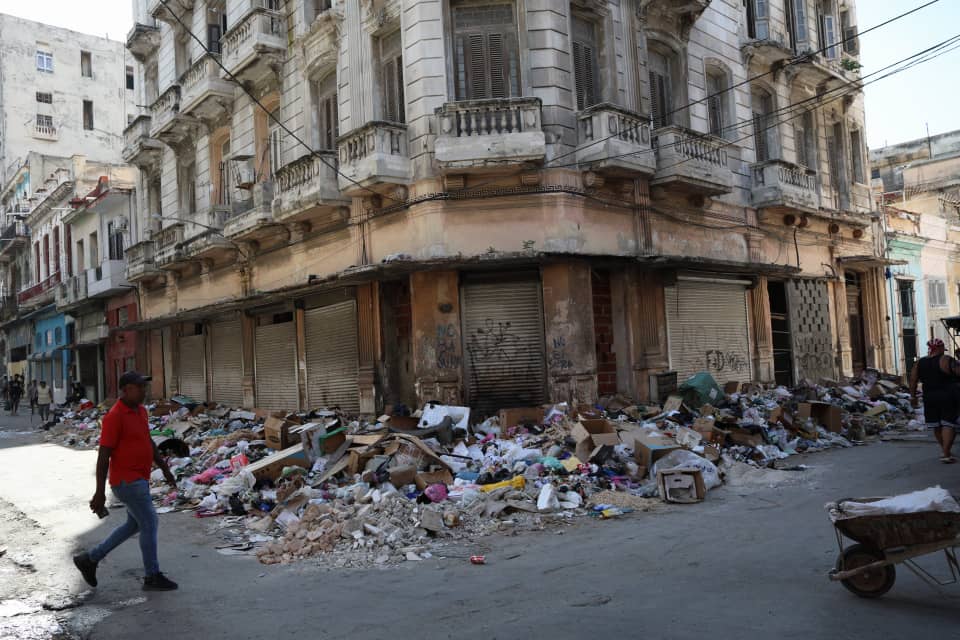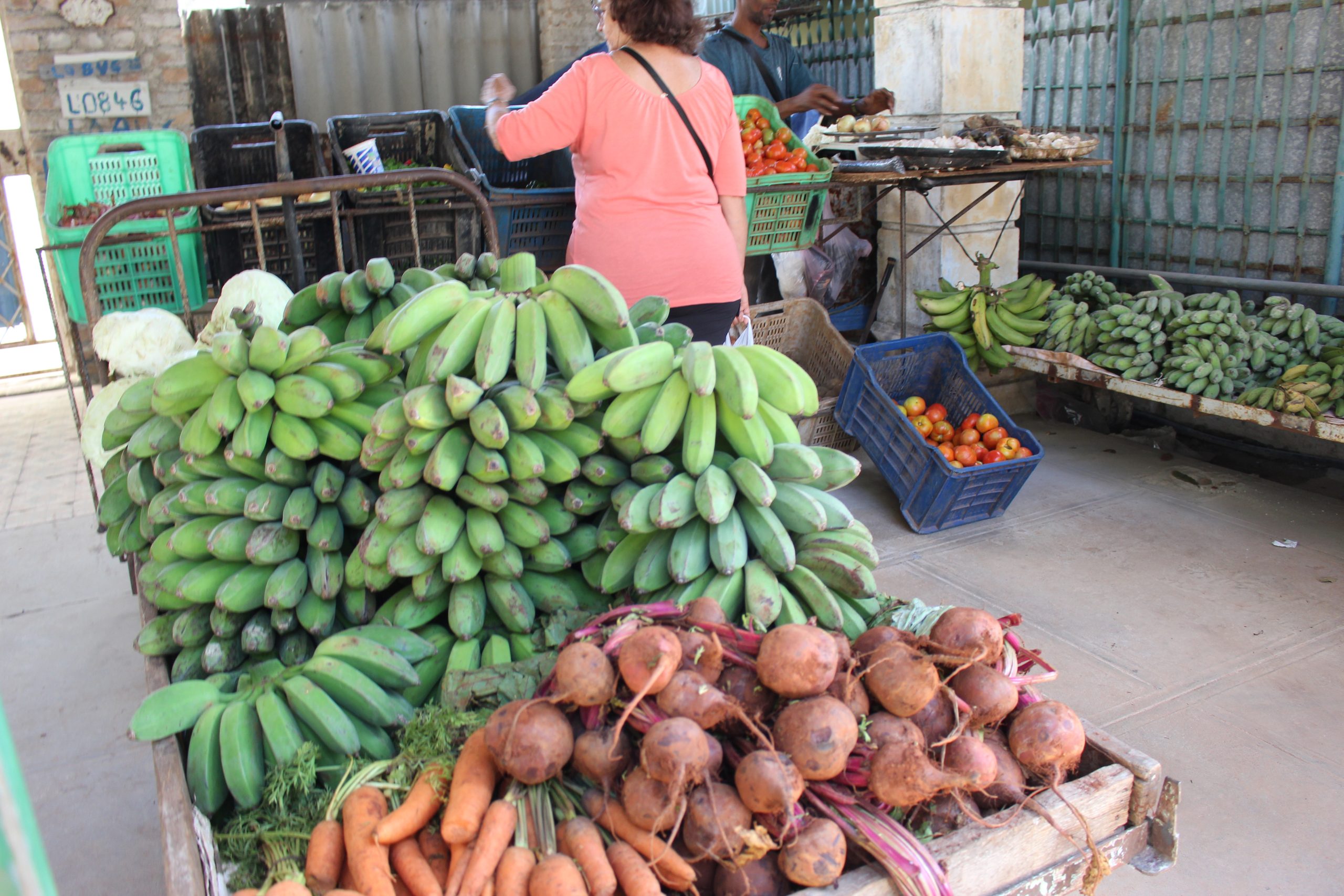
Fruit and Vegetable vender.
By Ernesto Gonzalez Diaz
HAVANA TIMES – Because of the lack of electricity, the problems of keeping food refrigerated have become more severe. It is impossible to go 20 or even 30 hours without electricity without something in the refrigerator spoiling, especially meat and frozen foods.
This situation has led most people—at least those of us who depend on electricity from the UNE (National Electric Co.) and do not have one of the so-called EcoFlows, a battery power station, or a small generator—to buy only the food we are going to eat that day, because if we buy more, we run the risk of losing it.
Practically every day, at around 10 in the morning, my mother goes around to the different small private markets, trying to find what we are going to eat for lunch and dinner. Sometimes she buys three or four hamburgers, half a pound of luncheon meat, two pieces of chicken or a pound of ground meat (they don’t sell smaller quantities), four or five eggs, a package of 20 croquettes, or a small package of hot dogs. On special occasions, she buys a small piece of pork or a can of some type of meat, because if we buy more, we run the risk of it spoiling. And wasting food in Cuba these days is practically a crime against humanity.
Unfortunately, I think all of us have lost some food lately because of the lack of refrigeration. Rice is cooked in the morning for both lunch and dinner. When we make beans, we make only a small amount as well. If we save any for the next day, by morning they have spoiled, and the only one happy about it is the dog. The same thing happens with the root vegetables and other vegetables cooked to accompany lunch and dinner.
Sometimes, for a little variety, instead of rice we make cornmeal or tamales to eat with eggs and fried ripe plantains. Another option is pasta, mainly spaghetti with hot dogs or luncheon meat, or the very popular caldosa, a typical Cuban dish that is a kind of soup made with whatever root vegetables and produce are available, such as squash, plantains, cassava, corn, and malanga, along with some type of meat, which can simply be left out if none is available.
Those who depend on electricity for cooking sometimes must prepare what they are going to eat for lunch and dinner in the middle of the night, because that is when they have power. Bread helps a lot, but it is expensive. The subsidized daily rationed bread roll, which costs barely 80 Cuban centavos, is difficult to get because at the bakery, when there is no electricity, either the flour hasn’t arrived or the baker doesn’t feel like working.
Private producers, however, generally have bread, and street vendors pass by the house as many as three or four times a day, blowing whistles like soccer referees and calling out the type of bread they are selling. But it is expensive. Prices range from 300 to 600 pesos, depending on the quantity and quality of the bread. To give you an idea, a bag of the cheapest bread may contain eight small rolls, while the higher-quality bags may contain six or eight large rolls for 600 pesos. Keep in mind that one dollar is equivalent to approximately 660 pesos, so with one dollar you can buy six of the best-quality rolls or 16 of medium quality.
This situation increases the cost of food because we cannot make the most efficient use of what we buy or ration it properly. We lose variety in what we eat, and it is practically the same thing every day. It also increases people’s stress, especially for women, whose first thought of the day is, “What am I going to make for meals today?”
Nevertheless, thanks to Cubans’ resourcefulness and creativity—which increases in times of crisis—most people manage to get by one way or another, despite all the strain and stress we are under. I do not sense hostility or pessimism among most people, but I do see a great deal of anger toward both the Cuban government and the US administration.
People see themselves as victims of a confrontation between two governments, neither of which cares about their well-being. As an African proverb says, “When elephants fight, it is the grass that suffers.” In my upcoming diary entries, I will share my impressions of people’s state of mind and how, from a psychological standpoint, we are coping with the crisis.
Read more from the diary of Ernesto González Díaz.