In the real lives of Cubans
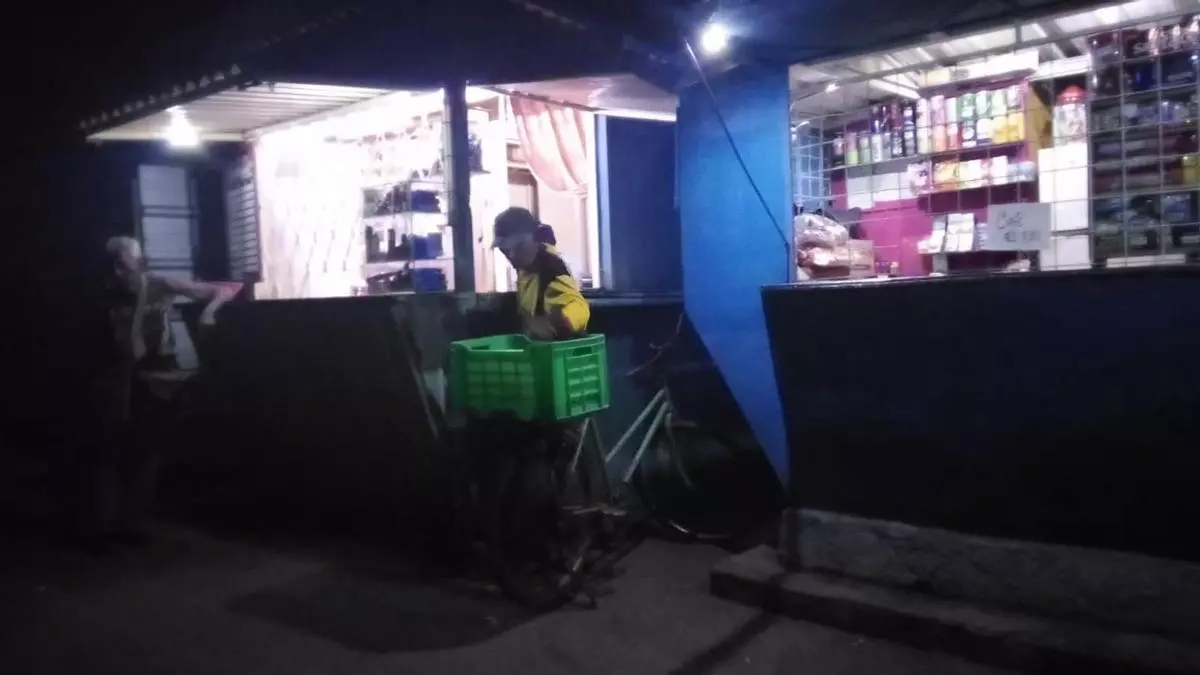
An improvised kiosk keeps a small electric generator running, roaring like an old engine. / 14ymedio
“They give us 15 minutes of electricity, like that several times over the last three days, but yesterday was too much, and everyone came out at once to bang their pots.”
By Dario Hernandez (14ymedio)
HAVANA TIMES – “Havana wakes up with dark circles under its eyes,” says a resident of Regla, though he clarifies that he means it without any poetic intention. The dark circles are not from a night of partying, nor from old age, but from that sticky darkness that falls over homes when the power goes out and turns the night into a test of endurance.
In his neighborhood, as in so many others across the Island, residents came out banging pots after 27 hours without electricity. The noise of the banging is a way to raise their voices for those who no longer know what to do about the heat, the mosquitoes, the spoiled food, the sleepless children, and the anger.
“The pots were sounding on every block,” the resident tells this newspaper. According to other residents in the Havana municipality, the neighborhood had gone more than a day without service. When the power was supposedly due to be restored according to the rotating blackout schedule, a breakdown occurred. Then came the “on and off”: a few minutes of electricity, another blackout, another attempt, another wait. Until patience also ran out.
“In the end they were giving us 15 minutes of electricity,” says the man, those same dark circles under his eyes. “Like that, several times during the last three days, but yesterday was too much, and everyone came out together to bang their pots.”
“What the Electric Company reports on its Telegram messages doesn’t come close to reality,” says another testimony. On the street, the crisis is not measured in megawatts [which is what they talk about] but in hours without sleep.
A woman from the same neighborhood sums it up without metaphors: “Sleeping in Cuba has become a privilege.” Sleep depends on having a rechargeable fan, having been able to charge it beforehand, on the battery lasting, on owning a generator, on having fuel, on living in a place where some air circulates, and on the mosquitoes granting a truce.
“The power went out at 4:30 in the afternoon and came back at 7:30 in the morning,” recounts a Havana resident. “The whole night without electricity.” She puts the rechargeable fan on the lowest speed to stretch the battery life. But the heat is already becoming unbearable. She opens the windows. At one in the morning she wakes up because of the mosquitoes, even though she lives on an upper floor. She closes the windows again. She increases the fan speed. Then another problem appears: the noise keeps her from sleeping. Two hours later, the battery dies.
“Then you turn on the electric generator and put the fan to charge,” she says. “And that’s how the whole night has gone until the power comes back, and you’ve slept only a couple of hours.”
At dawn there is no rest. Plans for the next day are canceled before they even begin. “No one can handle this,” she says. And then she immediately adds, with a mix of guilt and clarity: “I consider myself privileged. I have a fan and a generator. Most people have nothing.” The question hangs in the hot room: how do the others sleep?
A teacher gives a simple and devastating answer. Adults no longer sleep. They spend the night fanning children with cardboard so mosquitoes won’t bite them. When the electricity returns, nobody celebrates anymore. People rush.
“When the power comes back, at whatever hour it may be, everyone starts running around: charging everything, cooking, turning on the washing machine, always afraid it won’t last long,” says the teacher, who spent 15 hours without service. She speaks from a house exposed to sunlight all day long, where the heat clings to the walls. The previous night she tried to sleep but couldn’t either. “I fell asleep from exhaustion, an uncomfortable sleep, not deep at all,” she says.
“I now know almost as much as Lazaro Guerra,” the woman jokes, referring to the official spokesman who gives the daily report on the energy crisis. “Until a few years ago I was completely ignorant about megawatts, circuits, synchronizations, deficits. Now I could give the energy report myself if I wanted to.”
“I woke up about five times during the early morning” the same woman recounts. “Each time I checked the Telegram channel hoping to see: ‘Block 1 begins gradual restoration of service.’” The bureaucratic phrase has become a kind of civil prayer. It is awaited like a sign from above.
“Look what we’ve been reduced to,” she says. “I feel like I’m begging for a service that is a right and that isn’t free, because I pay for it every month.” Electricity thus appears as an intermittent handout. A concession that forces people to live with both body and soul dependent on a switch.
Material deterioration brings another, quieter one: the deterioration of health. One testimony speaks of stomach pain after ordering a food delivery. The person suspects it was spoiled because of lack of refrigeration. “Or who knows how many times that food was frozen and thawed,” they say. They haven’t had cold water for days. They have no strength. They feel “wrecked.”
“After 12 continuous hours without electricity my mood changes. You only think about how to get out of this. You don’t feel like reading, going out, watching anything. Nothing. The body enters survival mode.”
“Does anyone think about that, about the mental health of Cubans?” asks their partner. “The dark circles under my eyes are already part of my look, and there aren’t even cucumbers or potatoes to improve them.” Humor appears, but it does not save anyone. It barely allows people to breathe amid the frustration. “That’s why people in the street are in a bad mood. Sleep quality determines many things,” they insist.
“The worst part isn’t the heat, or the mosquitoes, or the anxiety, or tossing and turning in bed at three, four, or five in the morning,” says the woman. “The worst part is opening your eyes and seeing everything dark, feeling swallowed by the night, by the neglect, by the lies of a government that thinks about itself but not its people.”
At seven in the morning, daylight begins to slip in through a crack. But that is not a sign of relief either. It announces another day of work, lines, walking, searching for food, accumulated exhaustion, and supposed normality. And at the same time, the certainty that when night falls everything may happen all over again. “In Cuba you can’t sleep, much less dream,” concludes the resident of Regla, touching the dark circles under his eyes, trying to erase them.
First published in Spanish by 14ymedio and translated and posted in English by Havana Times.
Read more from Cuba here on Havana Times.