—
By Osvaldo Rosales (El Mostrador)
HAVANA TIMES – The digital and energy transitions, AI, climate change, and the competition over new technologies and critical minerals will shape the coming decades. This scenario calls for a strategic vision from the Chilean Foreign Ministry, framed within a state policy—a vision that, so far, has yet to emerge.
The United States imposed a 12.5% tariff on 40% of our exports, in violation of a free trade agreement that for 22 years guaranteed tariff-and quota-free access, while US products entered Chile without restrictions and the United States consistently maintained a trade surplus.
The Free Trade Agreement (FTA) provides for a dispute-settlement mechanism based on cooperation, consultations, and mutually satisfactory agreements. One need only read it. Chapter XXII, Article 22.1, establishes that the parties shall endeavor to prevent and resolve disputes and make every effort to reach mutually satisfactory solutions. One party cannot impose tariffs unilaterally: consultations (22.4), good offices, conciliation, mediation (22.5), and, where appropriate, a panel (22.6) must first take place. The panel must issue an initial report (22.12) and, after appeals, a final report (22.15). Only if that final report determines that a violation has occurred would compensation or suspension be appropriate, and it must always be equivalent to the harm caused. None of this happened.
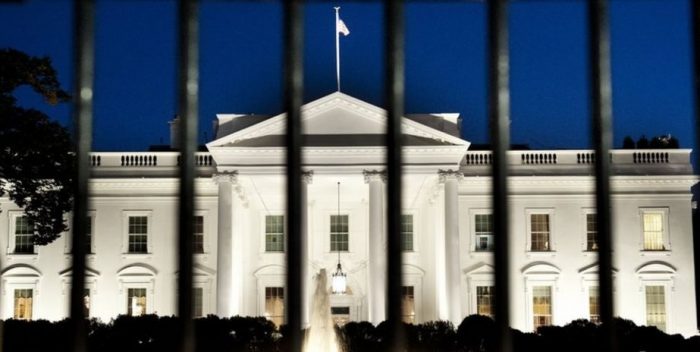
The White House cites alleged forced labor in its Chilean imports. The argument is crude and lacks documentation. Moreover, the FTA provides specific labor-related channels under the Labor Chapter (Chapter XVIII), including the Labor Affairs Council (18.4), the Labor Cooperation Mechanism (18.5), and Cooperative Consultations (18.6). By ignoring all these mechanisms, Trump is disregarding an agreement ratified by both governments and their respective congresses.
This tariff frenzy affects 99% of US trade in goods, extends to nearly 90 countries, and raises the average US tariff to around 12%. It is not a measure directed specifically against Chile, but for sensitive products it leaves us facing tariffs higher than those imposed on countries that do not have an FTA with the United States.
Although the government maintains that the FTA remains in effect, in practice it has been partially suspended: 40% of our exports are excluded from its benefits. We must avoid an agreement imposed under coercion that turns zero tariffs into a 10% floor. We should not accept a forced renegotiation of the FTA, which would also override the authority of Congress.
Besides, what would be negotiated? Every negotiation involves do ut des: giving something in order to get something. What would we have to concede, and in exchange for what achievement? Lowering the tariff from 12.5% to 10%? Why should we negotiate when we already have a free trade agreement?
The concessions could be sensitive: limiting Chinese investment, granting preferential treatment in rare earth minerals, aligning ourselves with the Donroe Doctrine, purchasing fighter jets, increasing defense spending from 1.5% to 3.5% of GDP, or changing our foreign policy toward the Middle East by aligning ourselves with Israel? Abandoning the International Criminal Court? When it comes to AI and the tech giants, will we be closer to the Pope or to Elon Musk and Peter Thiel?
The Foreign Ministry announced Chile’s withdrawal from the Non-Aligned Movement. The decision might appear coherent if the government has chosen to align itself with the strategic objectives of the United States, but if so, it must say so clearly and explain the studies supporting that decision. A definition of such magnitude requires a state policy: serious analysis, consultations with Congress and academia, and consideration of the diplomatic experience accumulated since the restoration of democracy in 1990. It should not be decided through a simple declaration that, moreover, fails to explain its reasoning.
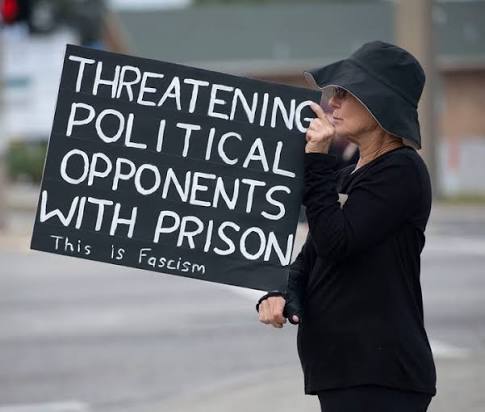
A fundamental feature of the new international reality is the structural change in the United States. The Republican Party has abandoned free trade and fiscal balance. The White House is constantly clashing with the judiciary, the press, and the country’s leading universities. The country has turned toward protectionism, is breaking with multilateralism, and is disregarding bilateral agreements. Proclaiming a primary strategic alliance with a country that is harming our exports does not seem like good business.
Diversifying markets is urgent. The Asia-Pacific region and Africa offer enormous potential: India; seven Asian economies with more than one billion consumers; and just four African countries together have 620 million people and economic growth that has been twice that of Latin America over the past five years. To take advantage of this, we need to spend more on innovation, strengthen ProChile, better coordinate it with Corfo and InvestChile, digitize customs procedures, and support the internationalization of small and medium-sized businesses through financing, international factoring, and investment in logistics and ports.
Since the return to democracy, Chile’s reintegration into the world has rested on a dual consensus: trade openness and the pursuit of new markets, together with the defense of principles such as sovereignty, strategic autonomy, non-intervention, international law, peace, human rights, and the strengthening of multilateralism. This has not merely been a commercial consensus: one need only recall President Lagos’s refusal to support the invasion of Iraq, even at the risk of freezing ratification of the FTA.
That consensus cannot be abandoned. The digital and energy transitions, AI, climate change, and the competition over new technologies and critical minerals will shape the coming decades. This scenario calls for a strategic vision from the Foreign Ministry, framed within a state policy—a vision that, so far, has yet to emerge.
Our export-oriented economy requires stable rules, strong multilateralism, and respect for trade agreements. Today, the United States does not provide those guarantees and is ceasing to be a reliable partner.
Chile should avoid aligning itself with either of the two superpowers. In the face of US protectionism and the weakening of multilateralism, Chile should strengthen the Comprehensive and Progressive Agreement for Trans-Pacific Partnership, move closer to the Regional Comprehensive Economic Partnership, prioritize pragmatic agreements within the region, advance the bi-oceanic corridor, and forge closer alliances with Europe, Canada, and other defenders of multilateralism.
*Osvaldo Rosales was the Chief Negotiator of the Free Trade Agreement with the United States.
First published in Spanish by El Mostrador and translated and posted in English by Havana Times.
Read more from Chile here on Havana Times.