Photos: Kamil Kenders
By Kamil Kenders
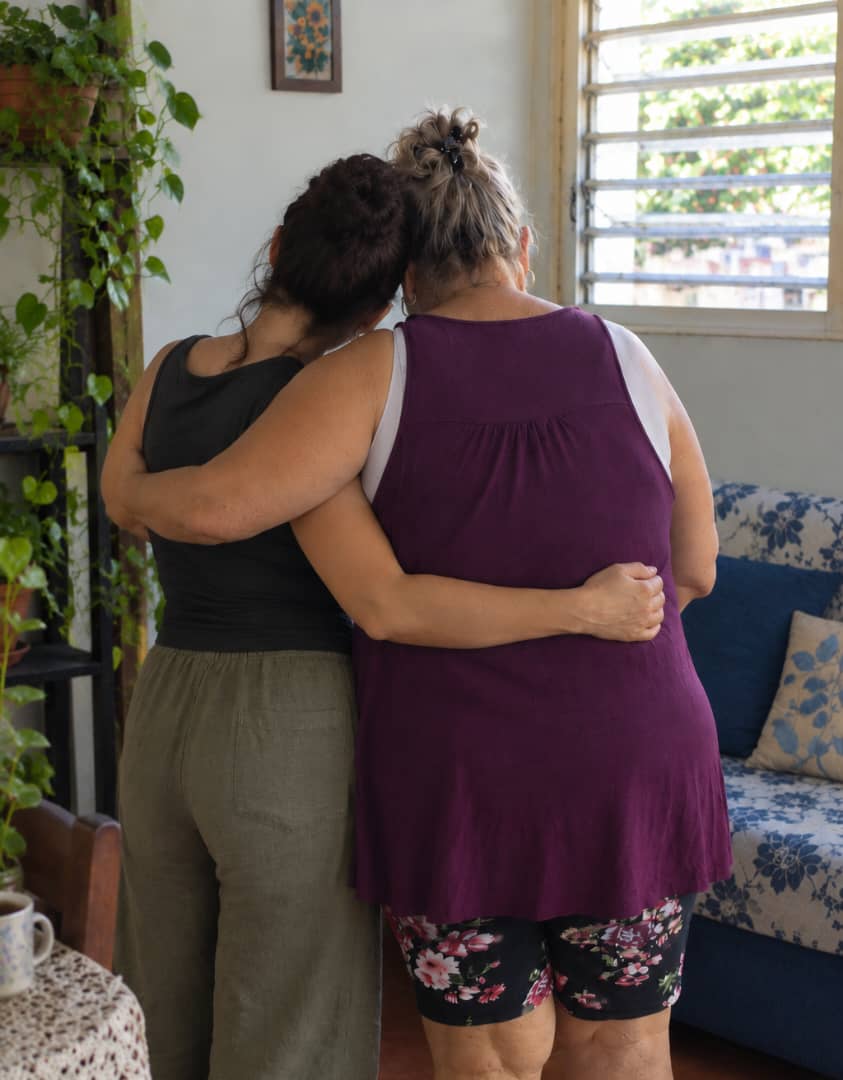
HAVANA TIMES – When Caridad was 35, her life changed overnight. Her daughter Carla, then just 13 years old, was diagnosed with lupus after suffering a stroke. What followed were nearly two years of hospitals, treatments, infections, relapses, and moments when death seemed far too close.
Carla underwent aggressive treatments, including high doses of prednisone, chloroquine, and cyclophosphamide, as well as antibiotics, calcium, and other medications needed during that long period of hospitalization. Caridad left her job to remain by her side. She took advantage of legislation known as the “caregiving mothers” program, which allowed a mother who temporarily left her job to care for a child with a serious illness to continue receiving her salary.
But that “temporarily” would eventually become a way of life.
Today, Carla is 40. Her illness is in remission, although she has suffered relapses. Caridad is 60 and never returned to work. For a quarter of a century, her main occupation has been caring for, accompanying, and watching over her daughter.
This is the story of a woman who learned to live constantly attentive to another person’s life. A woman whose salary has never been enough, but who, paradoxically, still finds a way to share what little she has with those she believes need it more.
HT: Caridad, do you remember the moment when they told you your daughter had lupus?
Caridad: How could I forget? Carla was only 13. She was still a child. And it wasn’t a calm diagnosis, the kind where they tell you that you have an illness and then you begin treatment. Her illness first appeared with a stroke. Everything happened very suddenly, and we felt we could lose her.
Then came the hospital admissions, the doctors, the medications, the complications… She spent almost two years in the hospital. There were moments when we thought she wasn’t going to make it. I practically lived in the hospital, beside her bed.
What do you remember about those first few months?
I remember being very afraid. I also remember the exhaustion, although at the time you don’t think about being tired. You think about your child having to survive. That’s the only thing that matters.
Carla received many treatments. They gave her high doses of prednisone, chloroquine, antibiotics because she developed infections, calcium, and also cyclophosphamide. There were better days and others when it seemed as though everything was starting all over again. I learned to pay attention to every change, every medication, every reaction.
When you have a sick child, you become a nurse without ever having studied to be one. You learn because you have no other choice.
At what point did you decide to stop working and devote yourself completely to her?
Actually, there wasn’t much to decide. I had to be with my daughter. I couldn’t think about work while she was fighting for her life.
At that time, there was the possibility of taking advantage of the law for caregiving mothers. They allowed you to stop working to care for a child with a serious illness, and the State continued paying your salary. For me, that meant I could stay with Carla without also having to face the complete loss of my income.
I thought it would be temporary. That my daughter would recover and I would go back to work.
But life took another path.
Twenty-five years have passed since then. What is it like to realize that the period you imagined would be temporary ended up becoming your entire life?
Sometimes I think about it and it seems incredible. I was 35, and today I’m 60. Carla was 13, and now she’s 40.
I never went back to work. My life became organized around her. If Carla is doing well, I’m doing well. If she has a problem, then I have a problem too.
There’s something I always say: “I do whatever I have to do for her. If she’s okay, I’m okay too.”
And it’s true. I don’t feel that I lost my life by taking care of her. Taking care of her has been my life.
Have you ever felt that you sacrificed too much?
Of course there are moments when you think about everything you might have done differently. But when you have a sick child, you don’t look at things that way.
I would do the same thing all over again.
I had support from my family, and that was very important. But there were things only I could do. I wanted to be at her bedside, to be with her, to know how she was when she woke up, how she was feeling, whether she had eaten, whether she had taken her medications. When a child is seriously ill, a mother wants to be there, and I don’t regret it.
What has it been like surviving for so many years on a salary that you yourself consider insufficient?
Difficult. That money has never been enough. And over the years, everything has become more expensive.
But you learn to live with what you have. There are months when it seems there won’t be enough for anything, and somehow someone appears who helps you. Someone who brings you something, gives you a little money, or shares what they have.
I’ve also received help from many people, and I try to do the same for others.
You often share even the little you have with people who are in more difficult situations. Where does that need to help come from?
Maybe because I know what it means to be in need.
When I see a mother struggling with a sick child, or an elderly person who is alone and needs something, I can’t pretend I didn’t see it. If I have something I can share, I share it.
Sometimes it isn’t much. It might be a meal, some medicine, a little money, or simply keeping someone company. But for that person, it might mean a great deal.
And helping makes me happy.
After so many years, what does it mean to you that Carla is now in remission?
It means so much. Because we know what it took to get here.
She’s 40 and she has had relapses, but seeing her today, seeing her move forward, is a happiness I can’t explain.
After everything we went through, you appreciate every good period differently. I don’t take anything for granted.
For me, knowing that she’s okay is enough.
Besides looking after and caring for Carla and doing the housework, is there any time during the day when you can take a few minutes for yourself?
Sunset. Almost every afternoon, I manage to watch the sunset from the balcony of my apartment. Every sunset reminds me that even though night is approaching, morning always comes again.
If you could speak today to that 35-year-old Caridad, the one sitting beside the bed of her 13-year-old daughter, what would you tell her?
I would tell her to hold on. Not to lose hope.
I would tell her there will be days when she thinks she can’t take any more, but to keep going. Not to leave that bedside. To stay with her daughter as much as she can.
And I would also tell her not to be afraid to ask for help. Because no one can do something like this completely alone.
I didn’t know then that 25 years would pass. I didn’t know my daughter would make it to 40. I only knew that I had to help her live… And here we are.
A Life Beside Another Life
Caridad’s story began with a medical emergency and ended up becoming a life devoted to caregiving. For 25 years, as Carla grew up and learned to live with a chronic illness, her mother remained in a kind of parallel time: one marked by medications, relapses, medical appointments, fears, and small everyday victories.
The caregiving-mother salary allowed her to remain beside her daughter at the time, but it did not meet a family’s material needs over the course of decades. Today, Caridad continues to depend on that insufficient income and on the solidarity of others.
Yet there is something that seems not to have changed since those days in the hospital room: her way of understanding life.
Caridad knows what it means to care for someone. She also knows what it means to need someone to care for you. That is why, when she encounters another mother, an elderly person, or anyone going through a difficult situation, she shares whatever she can.
Perhaps that is another consequence of those years: after spending half her life at a bedside, she learned that no one should feel alone while fighting to survive.
And although her daughter is now in remission — when an illness improves to the point that its symptoms are barely noticeable — Caridad continues doing what she has done for 25 years: being there.
Read more interviews here on Havana Times.