February the 7th, 2026 – There’s a Croatian road hidden within Gorski Kotar’s beautiful green hills that came to be only because a rather embarrassed emperor fell off his horse. It has two floors and a multitude of other unusual features.
As Putni kofer writes, much like many other Croatian historical roads, the famous Josephine Road (Jozefinska cesta) tells an interesting story. It weaves an old tale about progress, an attempt to tame nature and the innate, constant human desire for connection. The aforementioned roadway was built practically according to modern standards and was yet another attempt to connect mainland Croatia with the coast as quickly and simply as possible for the time.
a croatian road came after an emperor fell off his horse near josipdol
Borna Filic/PIXSELL
The well known Karolinska cesta was a real hit at first, but soon after its construction, cracks began to show and shortcomings came to the fore. In certain places it was too steep and inadequate for traffic and the transport of large quantities of cargo, and the search for a better option to the coastline began more or less immediately.
During the second half of the 18th century, Jozefinska cesta proved to be that better option. It was built by the order of Josip II, allegedly after he himself experienced the challenges of the journey at that time. This emperor fell off his horse near Josipdol and an alternative was made a necessity. The road stretched for 100 kilometres, and connected Karlovac with Senj, successfully linking a vital river port with a vital port on the coast.
Although work began in 1765, the main part of Jozefina cesta was built in the period from 1775 to 1779, under the supervision of Vinko Struppi. From the very beginning, it had better chances than Karolinska cesta ever did. According to Petar Feletar, “apart from the climb to Kapela and Velebit, the road used more favourable conditions than Karolinska cesta did, and it passed through the area of the Karlovac Generalate of the Military Frontier, which ensured better transport organisation and greater safety”.
an “honest mountain road”, but not without flaws
Borna Filic/PIXSELL
Its beginnings originated in Karlovac, marked by an obelisk, and the road itself then headed towards Kapela, Brinje and Vratnik and finally reached Senj. It was designed by Baron Antun Schreding, and although the first project was created in 1762, its final route, or direction, was only decided much, much later in 1965. The road itself was divided into two sections – a lowland sector which was about 47 kilometres long on the Karlovac-Josipdol stretch, and a mountain sector that stretched for 53 kilometres from Josipdol to Senj.
The construction was defined by several factors. Some existing roads were used in its construction, and the aim was to make it as short as possible. This again, as in the case of Karolinska cesta, resulted in steep sections, sometimes with slopes of up to 30%, because an attempt was made to save on construction elements such as bridges or support pillars. According to written reports from the time, the works were also organised in a rather military manner, and a lot of mining was done.
Josefinska cesta was met with plenty of praise and was considered an “honest” mountain road despite all its flaws. Unfortunately, however, repairs began almost immediately. The first repairs in a series were led by Filip Vukasović, one of the most famous Croatian road builders in history. As time rolled on, Jozefinska cesta itself began to lose its importance, as did the port of Senj.
this piece of cultural heritage remains in use today
Borna Filic/PIXSELL
Despite losing its importance, this section of road was never given up. The decision was made to build a new road from Karlovac to Senj. The work was entrusted to Josip Kajetan Knežić, who kept the old route to Josipdol, but changed the rest. Construction lasted from 1833 to 1845, and Jozefinska cesta was eventually extended to 115 kilometres, thanks to a partial change in the route. It served traffic for the following 120 years, until a new round of modernisation followed during the 1970s.
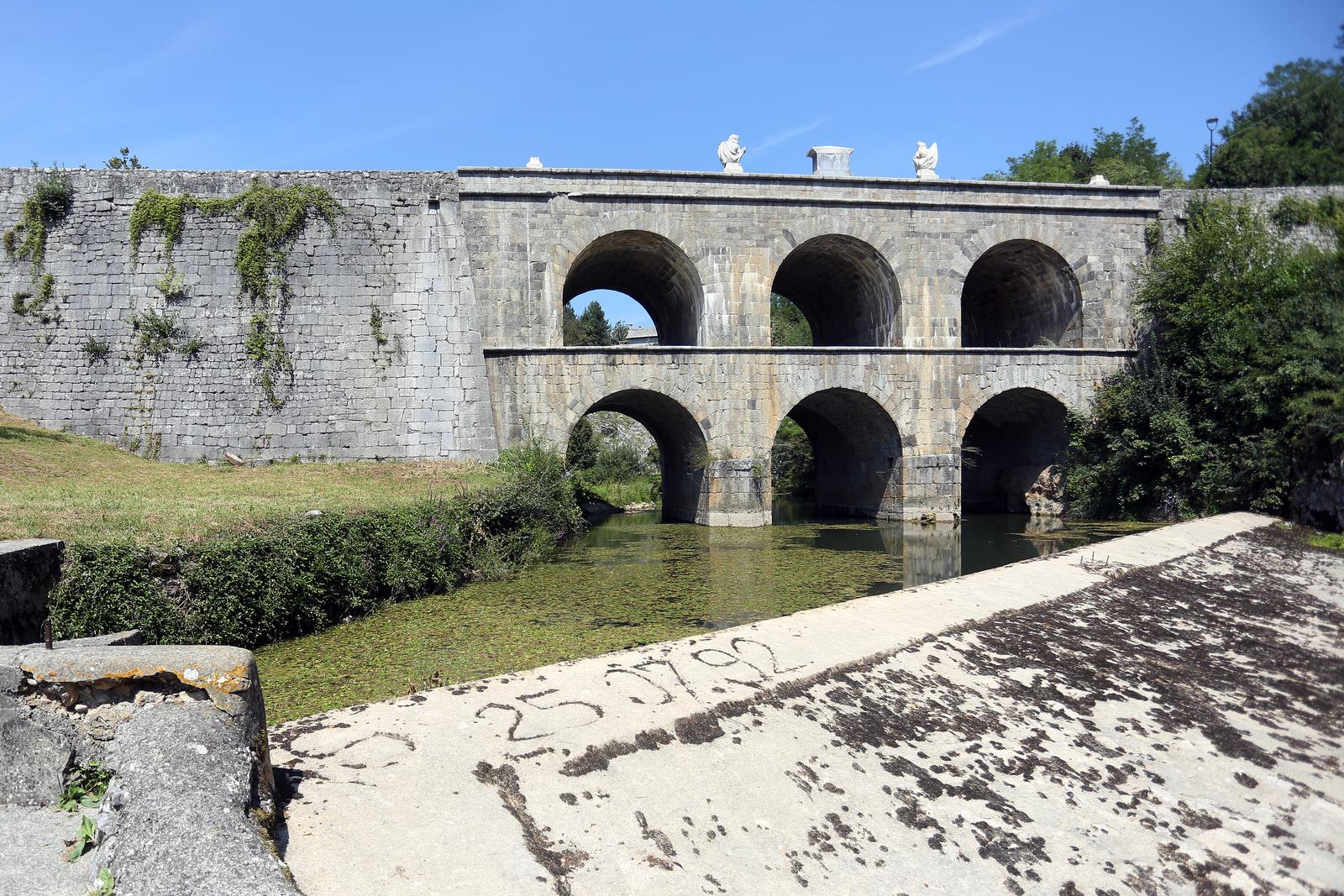
It is still very much in use today, and the historical story of this old traffic route is still told by the remaining traces of its former glory – the obelisk in Karlovac, the large gate in Senj, which is a milestone and marked the ‘end of Jozefinska’, the bridge on Tounjčica and the sundials. Overall, not much remains of its golden days, but what does still stand there represents an important piece of Croatia’s rich cultural heritage.
Subscribe to our newsletter
the fields marked with * are required