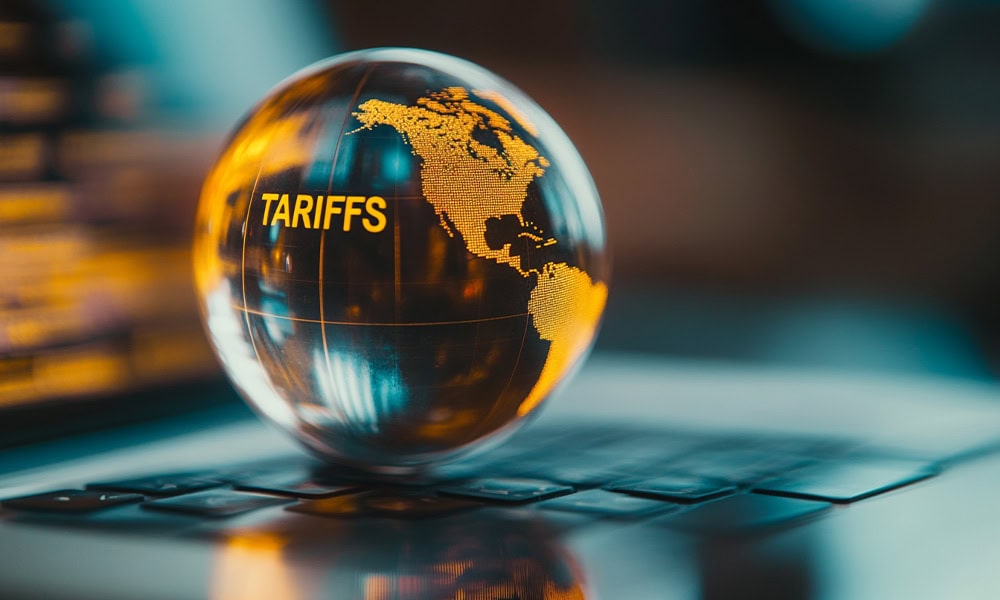
Costa Rica is among 60 economies that the United States has targeted for new tariffs tied to a federal investigation into forced labor in global supply chains, and formal announcements could come within days after US Trade Representative Jamieson Greer signaled on Tuesday that the measures are nearing completion.
Greer described the pending action during a televised interview, casting it as a response to trading partners that, in Washington’s assessment, have failed to keep goods produced with forced labor out of their own markets and, by extension, out of the United States.
The proposal sorts the 60 economies into two tariff tiers. The Office of the US Trade Representative determined that the large majority had neither established nor effectively enforced a legal prohibition on importing forced-labor goods, and it proposed a 12.5 percent rate for that group, which includes Costa Rica. A smaller set of economies that maintain at least a partial ban but that Washington considers to enforce it inadequately, among them Canada, Ecuador, the European Union, Indonesia, Mexico, and Pakistan, would instead face a 10 percent rate.
For Costa Rican exporters, the more consequential detail is what the new tariff would replace. Costa Rican goods currently enter the United States under a temporary 10 percent duty the Trump administration imposed in February, after the US Supreme Court struck down an earlier round of tariffs the administration had sought to justify under a separate legal authority.
That temporary duty is scheduled to lapse on July 24. The Costa Rican Ministry of Foreign Trade, known as Comex, has stated that the proposed 12.5 percent rate would substitute for the expiring 10 percent rather than stack on top of it, although earlier US filings were read by some analysts as implying a combined burden nearer 22.5 percent, a discrepancy that remains unresolved pending the final notice.
The stakes are considerable given how much Costa Rica sells northward. The United States is our single largest trading partner, absorbing roughly 47 percent of all national goods exports in 2025, a total Comex has valued at about $10.8 billion.
The investigation has advanced rapidly. USTR opened the proceedings on March 12 under Section 301 of the Trade Act of 1974, the same statute Washington has invoked to answer what it regards as unfair trade practices in other disputes. The process included consultations with the governments involved, public hearings in Washington in late April, and a comment period that drew hundreds of written submissions before USTR published its findings in early June.
Costa Rica has already lodged its objection. On July 6, the final day of the public comment period, Comex Minister Indiana Trejos submitted the country’s formal defense, asking Washington to exclude Costa Rican products and to preserve the zero-tariff access negotiated under CAFTA-DR, the free trade agreement linking the United States, Central America, and the Dominican Republic.
Trejos argued that the investigation had produced no evidence that Costa Rican exports are made with forced labor, and she framed the country’s manufacturers as reinforcing rather than displacing US production through integrated regional supply chains. The submission was prepared in coordination with business chambers, industry associations, and individual companies, which had pressed the government to mount a joint public and private response and to build a technical case for exemptions.
Costa Rica is not the only economy in the region caught up in the review. Several other Latin American countries appear on the list, including its Central American neighbors Guatemala, Honduras, El Salvador, and Nicaragua, alongside larger economies such as Brazil, Argentina, Colombia, Chile, and Mexico. Costa Rica’s exposure comes despite a relatively favorable standing on international measures of the problem, where it ranks among the lowest-risk economies in Latin America.
The forced-labor tariffs are also arriving amid a broader run of US trade actions against individual countries. Brazil was hit last Thursday with a 25 percent tariff on a range of products, and Washington has signaled further country-specific measures in recent days. With the July 24 expiry of the current duty now approaching and formal announcements expected imminently, the window for Costa Rican exporters and trade officials to press their case is narrowing.