Your support helps us to tell the story
From reproductive rights to climate change to Big Tech, The Independent is on the ground when the story is developing. Whether it’s investigating the financials of Elon Musk’s pro-Trump PAC or producing our latest documentary, ‘The A Word’, which shines a light on the American women fighting for reproductive rights, we know how important it is to parse out the facts from the messaging.
At such a critical moment in US history, we need reporters on the ground. Your donation allows us to keep sending journalists to speak to both sides of the story.
The Independent is trusted by Americans across the entire political spectrum. And unlike many other quality news outlets, we choose not to lock Americans out of our reporting and analysis with paywalls. We believe quality journalism should be available to everyone, paid for by those who can afford it.
Your support makes all the difference.Read more
The Thai Parliament convened Thursday as lawmakers prepared to vote for a new prime minister, more than a month after a general election that showed a conservative shift in the country’s politics.
Incumbent Prime Minister Anutin Charnvirakul is expected to secure enough support from the 500-member House of Representatives to remain in office. A simple majority is required to elect a prime minister.
Anutin’s Bhumjaithai Party won 191 seats, according to official results, and has since built a coalition with several other parties to form a governing majority. Among its partners is the populist Pheu Thai Party, which placed third with 74 seats.
The progressive People’s Party, which finished second with 120 seats, has said it will not join the Bhumjaithai-led government. However, it is expected to nominate one of its candidates as a rival in Thursday’s vote in what the party said would only be a symbolic contest.
Anutin became prime minister only in September after serving in the Cabinet of his immediate predecessor, Paetongtarn Shinawatra, who was forced out of office for an ethics violation regarding mishandling relations with Cambodia. Anutin dissolved Parliament in December to call an early election after he was threatened with a no-confidence vote.
He has since seen a surge in popularity following his self-presentation as a defender of the nation during the Thailand-Cambodia border conflict, which strengthened nationalist sentiment among voters.
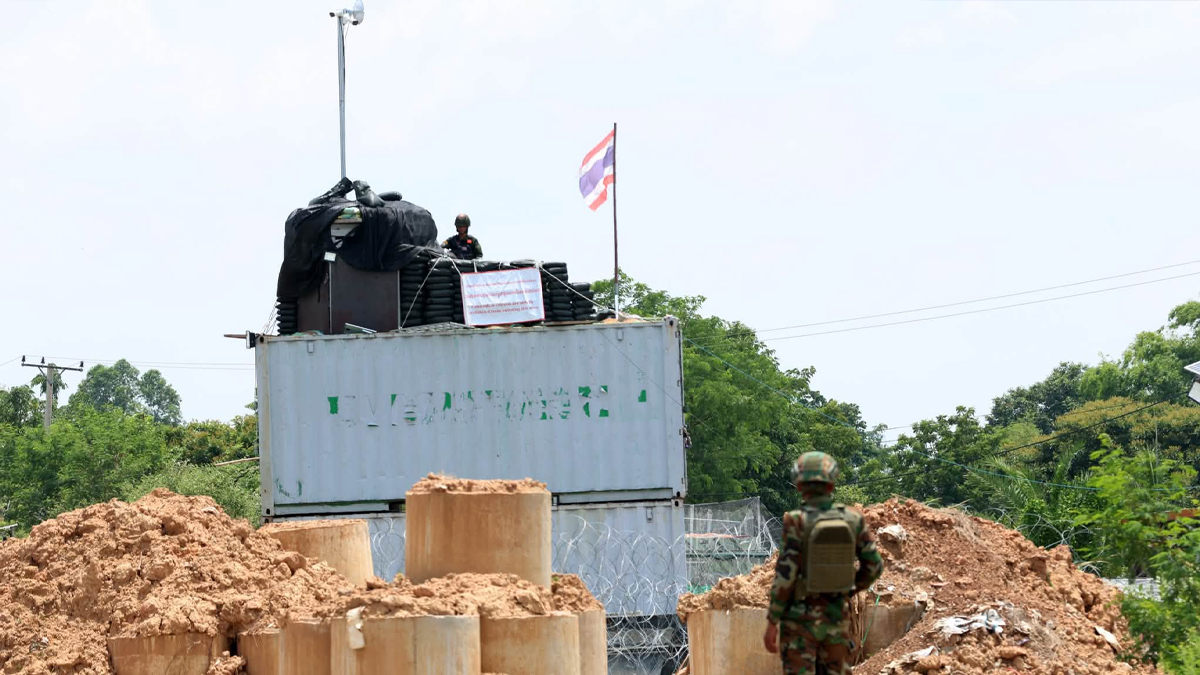
Thailand fought with Cambodia twice last year over competing territorial claims along their border.
After the vote, the new prime minister is expected to take office a few days after obtaining a formal appointment from King Maha Vajiralongkorn. The new cabinet is expected to be appointed in the following weeks.
The incoming government is expected to face immediate challenges. A war in the Middle East that broke out in February has driven up global energy prices, increasing the cost of goods and raising concerns about a potential oil shortage.
Another political uncertainty also arose after the Constitutional Court said Wednesday it would rule whether last month’s election should be invalidated.
The case stems from a petition filed by the Ombudsman’s Office against the Election Commission, alleging the inclusion of barcodes and QR codes on ballot papers could compromise voter anonymity in violation of election laws requiring a secret ballot.