Krakor district in Pursat province is seeking to build on its agricultural resources, natural attractions and industrial development, with about 82% of its population engaged in agriculture and 18 factories and enterprises operating in its central economic zone, district governor Orn Sophalla said.
Speaking to reporters in Kampong Luong commune on October 24, Sophalla said Krakor, one of seven districts and municipalities in Pursat province, had 11 communes, 107 villages, a population of approximately 120,000 people and more than 31,000 households.
The district has around 30,000 hectares of agricultural land and diverse natural attractions, including Chreav Leang Waterfall, which draws visitors seeking to enjoy its natural scenery.
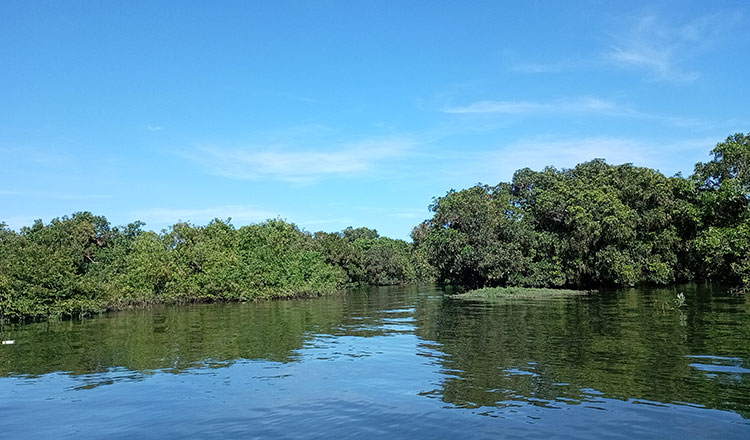
The district’s geography encompasses mountainous areas in the north, agricultural land in the central region and communities bordering Tonle Sap Lake in the south.
Seven communes are located along the national road, while communities around the lake depend largely on fishing and other water-related livelihoods.
“Approximately 82% of residents work in agriculture,” Sophalla said, adding that others earned their livelihoods through fishing, trading, civil service and factory employment.
The central part of the district has developed into an important economic area, with 18 factories and enterprises, while approximately 10 livestock farms across the communes raise chickens, ducks, pigs and cattle.
Many households combine factory employment with livestock raising and crop cultivation to diversify their income, he said.
Kampong Luong commune, a well-known floating community on Tonle Sap Lake, is another area with tourism potential. It has approximately 6,000 residents from 1,500 families living on the water across five villages.
Most residents work as fishers, labourers and traders, making fishing and lake-related economic activities central to the local economy.
Sophalla said residents’ livelihoods had benefited from efforts to combat illegal fishing over the past three to four years.
Previously, illegal fishing activities were widespread, with fishers expending considerable effort but obtaining relatively small catches. Following enforcement measures, residents fishing in accordance with the law had seen improved results, he said.
“Previously, there were many illegal fishing activities, and people worked hard but caught relatively little. Now, they can fish less intensively and obtain better catches,” he said.
Infrastructure development has also supported economic activity in Krakor, with National Road 5 serving as an important transport corridor for goods and commerce.
The district has also received infrastructure support, including paved roads, drainage systems and water facilities, through government initiatives and working groups led by Keo Rottanak, Minister of Mines and Energy, Sophalla said.
He said continued investment in infrastructure, agriculture, tourism and local economic activities would help support livelihoods and development across the district.
- Tags: agriculture, Tourism