Synopsis: Former Romanian Prime Minister Dacian Ciolos outlines his vision for an accountable, economically dynamic and inclusive Francophonie, placing youth, innovation and international cooperation at its heart.
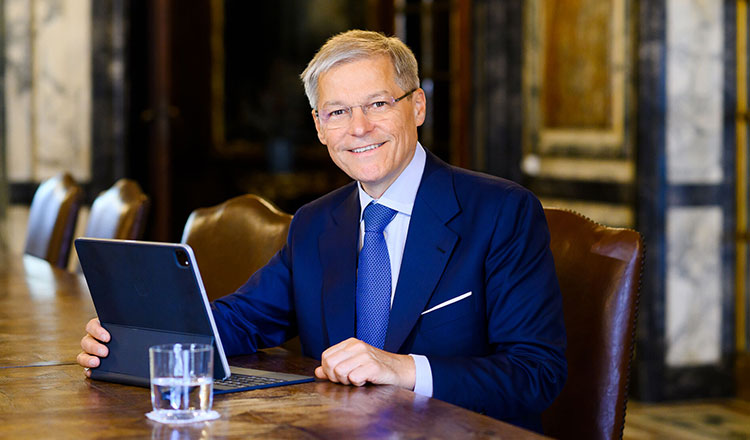
Romania’s candidate for secretary-general of La Francophonie, Dacian Ciolos, has outlined an agenda focused on economic dynamism, institutional accountability and youth empowerment ahead of the Phnom Penh Summit.
Ciolos previously served as presidential adviser, prime minister of Romania, European Commissioner for Agriculture and Rural Development, Minister of Agriculture, and President of the Renew Europe Group in the European Parliament.
On June 19, during his hearing before the Ministerial Conference of La Francophonie, Ciolos unveiled his manifesto entitled “Bringing Together to Build – Francophonie Vision 2030.”
By 2030, the manifesto aims to transform La Francophonie into a space of global trust and strategic autonomy that places Africa at its centre and strengthens its international voice. It seeks to expand French into a language of economic opportunity for youth, drive progress across digital transformation, climate action and education, and maximise global impact through accountable management and strategic public-private partnerships.
“My ambition is to make the Francophonie more effective, more accountable and more responsive to the needs of its member states and governments, as well as their citizens,” Ciolos said in an interview with Khmer Times.
Dacian Ciolos (L) meets with Senegalese President Bassirou Diomaye Faye in Dakar on June 8. DR
He said enhancing the governance model within La Francophonie is his first priority. To achieve this goal, the organisation needs greater transparency, stronger involvement of member states and operators, and more effective decentralised cooperation at the regional level.
“Cambodia’s needs differ from those of Canada, Senegal or Moldova. We cannot apply a one-size-fits-all approach,” Ciolos said.
“We must listen to our members, understand their priorities, and develop projects aligned with organisational orientations while responding to local realities.”
Ciolos said Africa is at the heart of his vision for the Francophonie because it is home to the largest number of French speakers and a young generation, though all regions, including Asia, are involved.
“If elected secretary-general at the Phnom Penh Summit, my priority over the next four years will be to translate this vision into concrete opportunities for citizens, particularly young people and women, and to increase the visibility and influence of the organisation at the international level,” he said.
“I see my role as a leader and facilitator of a cooperation process, based on member states’ needs, in which we bring together our resources, expertise and capabilities to respond to local needs and deliver results.”
Economic development is another priority, as Ciolos sees potential in entrepreneurship, sustainable agriculture, food security, renewable energy, digital transformation, artificial intelligence and technical training.
He added that the Francophonie must become an economic space that connects resources, expertise and investment to deliver development opportunities.
“Digital transformation, artificial intelligence, sustainable agriculture, food security and renewable energy are priorities shared by many of our member states,” Ciolos said.
“We must strengthen partnerships between governments and their economic policies, businesses and capital investment, universities and research institutions, while facilitating knowledge and technology transfer across regions.”
Ciolos added that the OIF and relevant operators should work closely with international financial institutions, development banks and private investors to attract funding beyond member states’ contributions.
He said that while emerging sectors can create jobs, support innovation and open opportunities for young people, French-language education must align with labour-market needs and investments to increase employability.
“Young people will choose French if it creates opportunities for them in education, employment, entrepreneurship and professional mobility,” he said.
“My priority is to build connections between education, the labour market and investment, bringing together universities, training institutions, businesses and investors.”
Ciolos said education leaders and policymakers need to connect skills and French language mastery with economic opportunities in digital technologies, artificial intelligence, sustainable agriculture and renewable energy.
“French must be a language of culture, diplomacy, communication, innovation, economic development and opportunity.”
In his view, the future of French will be shaped by the future it helps young people build in Asia, Africa, Europe and America.
“We must strengthen access to education, professional training, employment, entrepreneurship, academia and public decision-making, and mobilise additional financial resources,” he said.
“I want the OIF to engage with international financial institutions, development banks and private investors, and explore new partnerships and programmes with the European Union to support development priorities.”
According to the former Romanian premier, the Francophonie has a unique strength in its ability to gather countries across five continents with diverse experiences, resources and expertise.
“By connecting these strengths across regions, we can facilitate knowledge transfer, build partnerships and turn local solutions into shared opportunities for development,” he said.
“This is relevant in education, technical training, digital transformation, artificial intelligence, climate change, sustainable agriculture, investments and entrepreneurship.”
Another strength of the Francophonie is its status as a community of equal member states.
“Its strength lies in diversity and the ability to bring together countries with different histories, interests and perspectives,” he said. “Building consensus starts with listening to every member state, respecting their priorities and identifying common interests.”
In a fragmented world, the Francophonie can play a greater diplomatic role by facilitating dialogue, building bridges and offering a space for mediation when political positions differ, Ciolos said.
“What makes the Francophonie unique is that it goes beyond inter-state cooperation to include operators, institutions, civil society organisations and business cooperation,” he said.
“This is enlightened multilateralism: bringing countries, operators and organisations together around shared interests, building trust through cooperation and turning dialogue into collective action. The Francophonie’s influence should come from its capacity to build consensus, prevent conflict and promote peace.”
Ciolos is among four candidates – alongside Louise Mushikiwabo of Rwanda, Juliana Amato Lumumba of the Democratic Republic of Congo, and Coumba Ba of Mauritania – standing for election as the next secretary-general during the Phnom Penh Summit in November. The outcome will affect the direction of the Francophonie towards 2030.
Ciolos said it is up to member states to decide which vision best serves the interests of the Francophonie and the needs of their communities.
“The Francophonie has value as long as it creates value for its member states and citizens. This should be the guiding principle for its development towards 2030,” he said.
Serving as prime minister of Romania during a difficult period taught him a great deal about building consensus, making difficult decisions and turning dialogue into action, Ciolos added.
“Since then, my political experience has continued to grow through my work in the European Parliament as a political group leader, where building cooperation across different political and national perspectives was essential,” he said.
He added that what has not changed in the past decade is his strong belief in dialogue, moderation, balance, respect and bringing people together to build solutions.
“These principles guided me as prime minister, and they will guide me as secretary-general of the Francophonie,” he said.
“Ten years later, I have more experience, a broader perspective and more wisdom, but I remain the same person.”
- Tags: Cambodia, Francophonie