Synopsis: Cambodia calls on ASEAN lawmakers in Manila to uphold international law and support the safe return of over 20,000 displaced civilians.
National Assembly President Khuon Sudary has called for an end to the Thai military’s illegal occupation of Cambodian territory and the immediate resumption of border demarcation, urging ASEAN parliamentarians to uphold international law and help ensure the safe return of more than 20,000 displaced civilians.
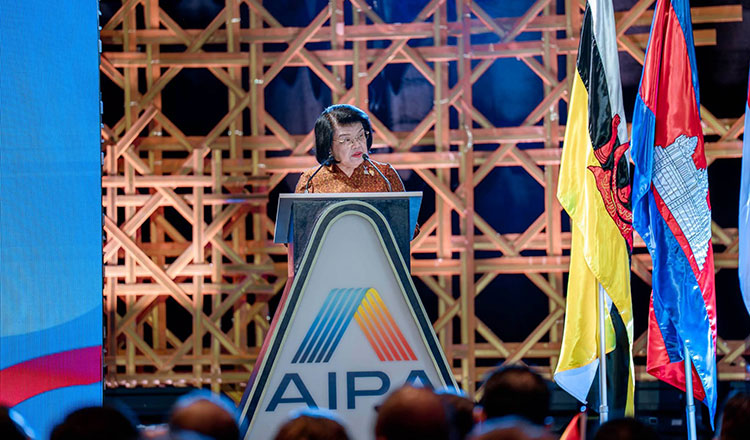
Addressing the 47th General Assembly of the ASEAN Inter-Parliamentary Assembly (AIPA) in Manila yesterday, Sudary urged regional parliamentarians to defend sovereignty and territorial integrity, strengthen ASEAN solidarity and translate shared commitments into meaningful action to safeguard regional peace and stability.
She said the Assembly’s theme, “Parliaments Securing a Peaceful, Prosperous and People-Centred ASEAN,” was timely amid growing strategic mistrust, geopolitical rivalry and geoeconomic fragmentation, stressing that regional peace must be built on trust, respect for international law, preventive diplomacy and peaceful dispute resolution.
“We are on the same boat,” she said, calling for stronger ASEAN solidarity and collective efforts to ensure regional cooperation delivers security, dignity and well-being for all people.
Addressing the Cambodia-Thailand border situation, Sudary thanked ASEAN members and the international community for supporting the ceasefire, dialogue and respect for international law, and commended the ASEAN Observer Team for monitoring and verifying the truce.
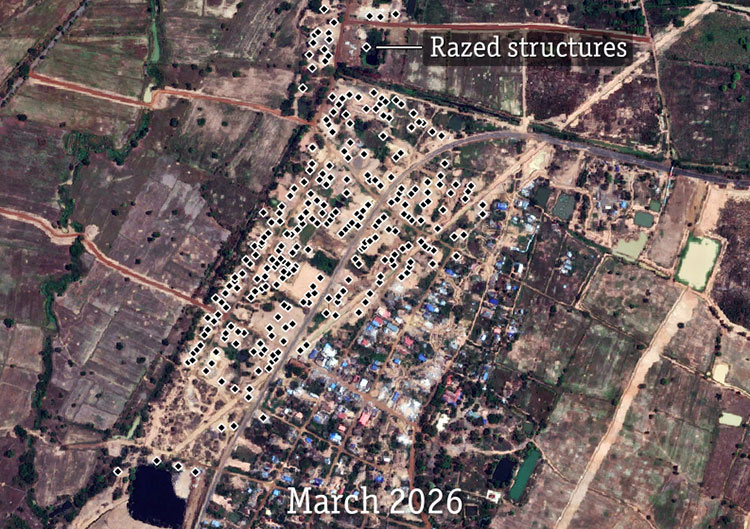
Shipping containers deployed by Thai forces encircle Cambodian territory in Thmar Da commune, Veal Veng district, Pursat province, following the December 27, 2025 ceasefire. KT/Khem Sovannara
However, she voiced concern over continued activities by Thai armed forces in areas Cambodia says they are illegally occupying, saying such actions violate international law and bilateral and international treaties and agreements.
She reiterated Cambodia’s rejection and condemnation of unilateral actions to alter international boundaries through force or by creating a fait accompli on the ground before decisions are made through legitimate joint mechanisms.
Sudary called for an end to the occupation and the full implementation of the Kuala Lumpur Peace Accord of October 26, 2025, the Joint Statement of December 27, 2025, the Fuxian Consensus of December 29, 2025, and the Cebu spirit of May 7, 2026 particularly the prompt resumption of survey and demarcation activities under the Joint Boundary Commission (JBC).
At the 15th ASEAN-AIPA Leaders’ Interface on November 15, Deputy Prime Minister Hang Chuon Naron also called for the full implementation of the December 27 Joint Statement, including the immediate resumption of border demarcation to enable displaced Cambodians to return home.
He said around 20,000 Cambodians who had lived for decades in territory under Cambodia’s sovereignty had been displaced following the border clashes. He cited the 1904 and 1907 treaties between Siam and France and the 1:200,000 maps established by the bilateral Border Commission as the basis for the boundary between Cambodia and Thailand.
The December 27 Joint Statement provided for the immediate commencement of demarcation by the JBC in affected areas where civilians reside, with a view to enabling their return, he said, calling for its full and faithful implementation to ensure peace for both countries and maintain ASEAN’s credibility and unity.
The AIPA message also encouraged Cambodia and Thailand to implement their ceasefire commitments, including the Kuala Lumpur Peace Accord, the December 27 Joint Statement and the Fuxian Consensus, while supporting the ASEAN Observer Team’s monitoring role and calling for the safe, voluntary and dignified return of displaced civilians.
Thailand’s National Assembly President Sophon Zaram, however, said references to displaced civilians and their return were unacceptable to Thailand, arguing that the figures and underlying assertions remained disputed and had not been jointly verified.
He maintained that the border dispute should be resolved through mutually agreed bilateral mechanisms and should not be raised in multilateral forums in a manner that could affect either party’s position.
Highlighting the humanitarian situation, Sudary said more than 20,000 civilians remained displaced and unable to return home. Referring to the UN Special Rapporteur’s visit to affected areas in July, she recalled his words: “They need and they deserve to go home.”
She said that the commitment to their return must be honoured without delay.
On the maritime dispute, Sudary said Cambodia had chosen the legal path of compulsory conciliation under the United Nations Convention on the Law of the Sea, describing Thailand’s participation as a sign of hope.
She urged parliamentarians to use their collective voice to defend ASEAN’s core values, principles, norms and rules. “Actions speak louder than words,” she said, calling on AIPA members to turn their shared commitments into meaningful action.
Senate President Hun Sen has urged Thailand to begin implementing the December 2025 agreement on actual on-the-ground border demarcation, warning that Cambodia will continue raising the dispute in international forums if Bangkok fails to honour its commitments.
Related Posts
-
July 26, 2026
-
November 18, 2026
-
March 2, 2026
-
September 22, 2026