Over the past decade, Prickly Pear East, a small, privately owned island in the Caribbean, has become a beacon of hope for a critically endangered lizard.
The islet, near the main island of Anguilla, a British territory, is one of just five locations where the lesser Antillean iguana (Iguana delicatissima) is breeding and thriving, protected from invasive iguanas and human disturbances, conservationists say.
The latest surveys, from July, show the species’ population on Prickly Pear East has grown to more than 300 adults and adolescents — up from just 23 individuals that were moved there from Anguilla starting in 2016.
“This is a wonderful reward after having invested several years of work to plan this reintroduction, engage with their local communities, eradicate the non-native rats, and survey and protect the precious iguana population,” Jenny Daltry, Caribbean alliance director of the NGOs Fauna & Flora and Re:wild, which are supporting the NGO Anguilla National Trust in the iguana’s conservation, told Mongabay by email.
The lesser Antillean iguana was once widespread across the Caribbean, but habitat destruction, hunting, and the introduction of invasive species, including the common green iguana (I. iguana), led to its extinction across several islands.
It was also on the verge of being wiped out from Anguilla mainland. So, between 2016 and 2021, conservationists translocated Anguilla’s remaining 23 individuals to the uninhabited Prickly Pear East. The islet had a suitable habitat for the native iguana; it also lacked invasive iguanas, and conservationists had eradicated all invasive brown rats by 2018, Daltry said.
But there was a problem: the small population could suffer from inbreeding. So the conservationists reached out to the government of Dominica, one of the last strongholds of the lesser Antillean iguana. The government permitted 10 individuals to be moved from its island to Prickly Pear East.
A lesser Antillean iguana from Dominica receiving a health screening before being translocated to Prickly Pear East, an islet off mainland Anguilla. Image by Farah Mukhida/Anguilla National Trust.
Four years later, population surveys show the iguanas are breeding on Prickly Pear East, with their numbers increasing almost tenfold since the translocations. Conservationists have also collected DNA samples to monitor the genetic makeup of the rising population, Daltry said.
The conservation teams are now preparing to reestablish a secure population of lesser Antillean iguanas on Anguilla. For this, they’ve fully encircled Fountain National Park with a fence “designed to exclude cats, rodents, goats, green iguanas and other harmful non-native animals, to create a sanctuary for native wildlife,” Daltry said.
This new population will be important “not only to avoid Anguilla having all its eggs in one basket (Prickly Pear East), but to restore the iguanas’ place and role in their natural ecosystem. The iguanas are the top native herbivores and help to germinate and disperse seeds,” Daltry said.
She added the case of the lesser Antillean iguana shows how a group of dedicated individuals can achieve their dream of saving a species, given inter-regional collaboration and international support. “What greater legacy can there be?”
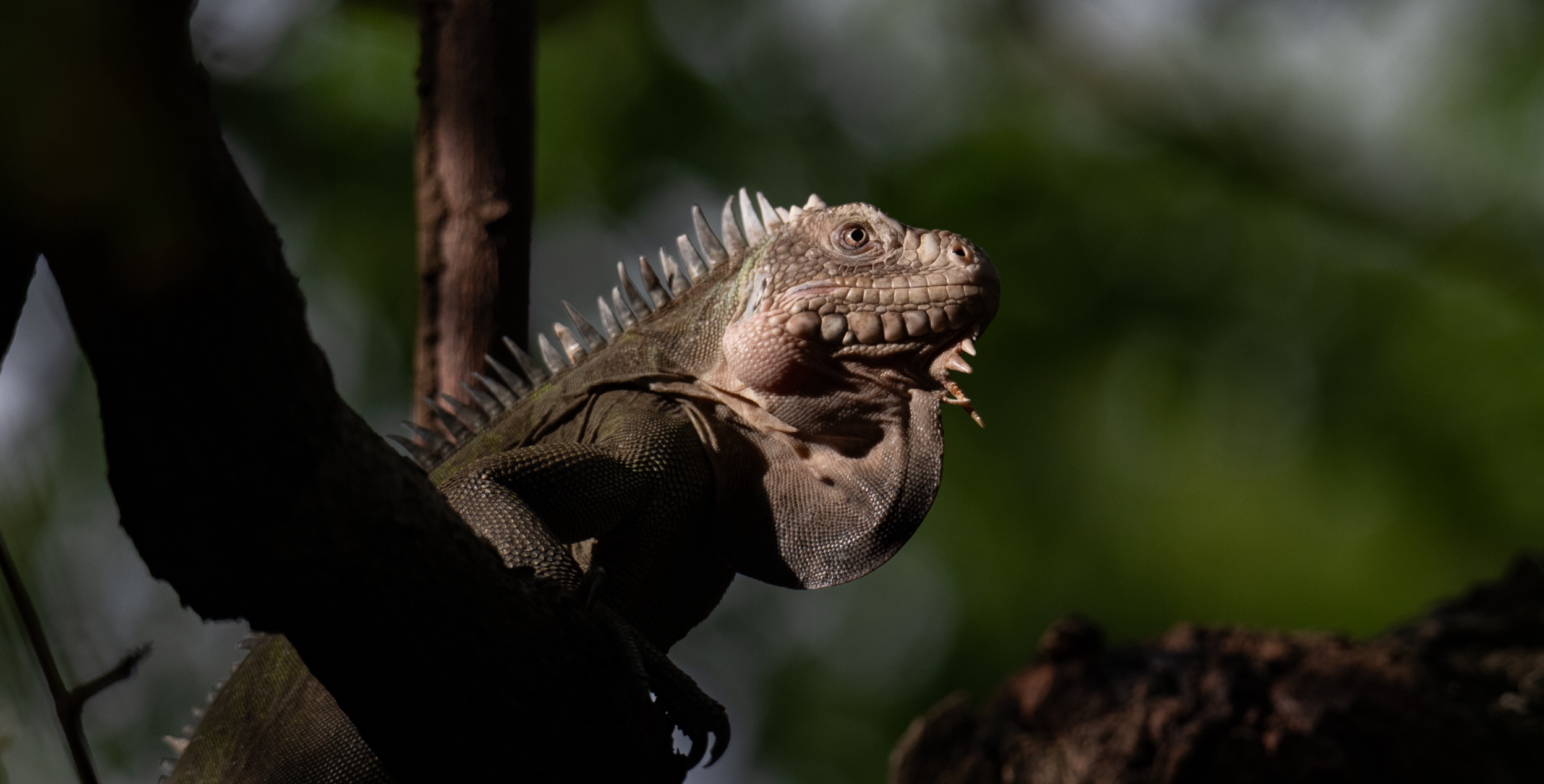
Banner image: A critically endangered lesser Antillean iguana in Dominica. Image courtesy of Andrew Snyder/Re:wild.