The UK’s OECD national contact point (NCP), which oversees complaints related to corporate conduct with the Organisation for Economic Co-operation and Development (OECD) has ruled admissible a complaint from Senegalese fishers alleging wrongdoing by energy companies in Senegal.
A local NGO and an artisanal fishers’ association assert that the natural gas platform Grand Tortue Ahmeyim (GTA) offshore Senegal is polluting their local environment. In a win for civil society, the OECD plans to bring all parties to the negotiating table to find a solution.
“This decision is a major one,” Mamadou Sarr, spokesperson for Gaadlou Guèrri, the association of artisanal fishers that brought the complaint, told Mongabay in a phone call. “It can later help us seek compensation for the losses we have suffered, for the environmental consequences, and for gas leaks,” he added.
The OECD is an organization of 38 member states, including the U.K., that have committed to respecting guidelines that cover several areas of corporate responsibility, including human rights, the environment and corruption.
GTA is being co-developed by multinational oil company BP, U.S.-based Kosmos Energy and the national oil companies of Senegal and Mauritania. It is located offshore from Saint-Louis, Senegal, near one of the country’s largest fishing communities. The complaint accused the energy companies of denying local artisanal fishers access to the area surrounding GTA, compromising their livelihoods and reducing food availability for local communities. Fish accounts for almost 70% of the animal protein consumed in Senegal. It’s a vital resource for a region facing rising food insecurity.
Civil society representatives are also challenging the validity of an environmental and social impact assessment (ESIA) created by BP. They argue the ESIA insufficiently analyzed the natural gas project’s impacts on the marine and coastal environment, that it didn’t properly assess the project’s components and didn’t establish adequate mitigation measures.
GTA began producing gas in January 2025, and by February of the same year, a gas leak had been declared. Moreover, while visiting the area offshore Senegal, Mongabay observed flaring operations of gas burning into the atmosphere, a significant contributor to climate change and a waste of energy. Mongabay contacted BP for comment, but received no response.
Sarr said authorities have largely ignored local concerns, adding that the silence may stem from a potential conflict of interest. “The authorities have an interest in this project going ahead. Do not forget that the state-owned oil company of Senegal, Petrosen, is a shareholder in this project. But at least this decision [OECD’s decision], they won’t be able to ignore,” he said.
OECD is not a court of justice; however, the organization plans to act as a mediator, “and if any party to the complaint declines mediation, the U.K.NCP … will conduct a further examination of this complaint,” the decision states.
A negative opinion from the OECD could prompt funders to stop financing the project, an OECD specialist revealed to Mongabay.
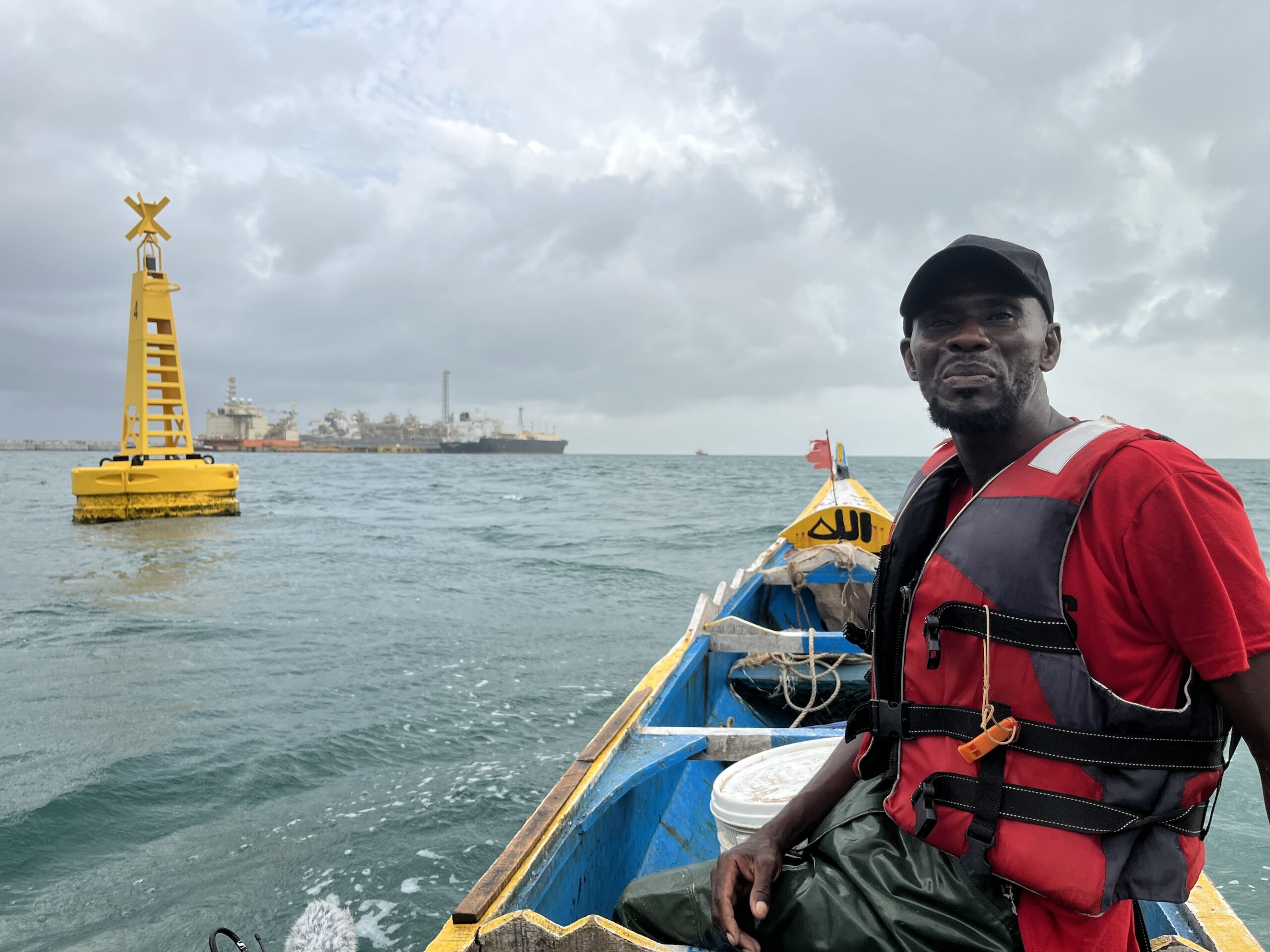
Banner image: A small-scale fisherman in front of a buoy marking the boundary of his fishing zone. Image by Elodie Toto/Mongabay.