Founder’s Briefs: An occasional series where Mongabay founder Rhett Ayers Butler shares analysis, perspectives and story summaries.
Reforestation has become a feel-good global rallying cry. From corporations touting “net zero” targets to philanthropies seeking visible impact, planting trees has become shorthand for planetary repair. Yet behind the glossy photos of saplings and smiling farmers lies a question few can answer with confidence: Which organizations are actually doing it well?
Karen D. Holl, a professor of environmental studies at the University of California, Santa Cruz, has spent decades studying forest recovery.
“I would give talks, and people would ask, ‘Who should I donate my money to?’” she told Mongabay’s Liz Kimbrough. “There was really no standardized way to answer that question.”
To fill that gap, Holl and postdoctoral researcher Spencer Schubert surveyed and analyzed more than 125 intermediary reforestation groups, the entities that funnel most global funding to local tree-planting projects, Kimbrough reported last month. Their year-long study now forms the backbone of Mongabay’s Global Reforestation Organization Directory.
Rather than ranking or endorsing projects, the directory presents standardized information on each group’s transparency and adherence to scientific best practices. Users can compare organizations based on four criteria: permanence, ecological soundness, social benefit, and financial disclosure. The researchers verified whether monitoring protocols, tree survival data and financial reports were publicly available, though much of the data relies on self-reporting.
The result is not a verdict, but a map of a sprawling, opaque sector. Many organizations claim to restore forests; fewer disclose evidence that trees survive or communities benefit. “We’ve graduated from asking, ‘How many trees did they plant?’ to ‘Has tree cover increased over time?’” Schubert said.
For donors, the tool offers clarity in a crowded market. For practitioners, it hints at a higher bar. Transparency, Holl argues, is itself a measure of competence. “If you’re going to say you’re doing this, then you need to show that you actually are.”
Read the full story by Liz Kimbrough here.
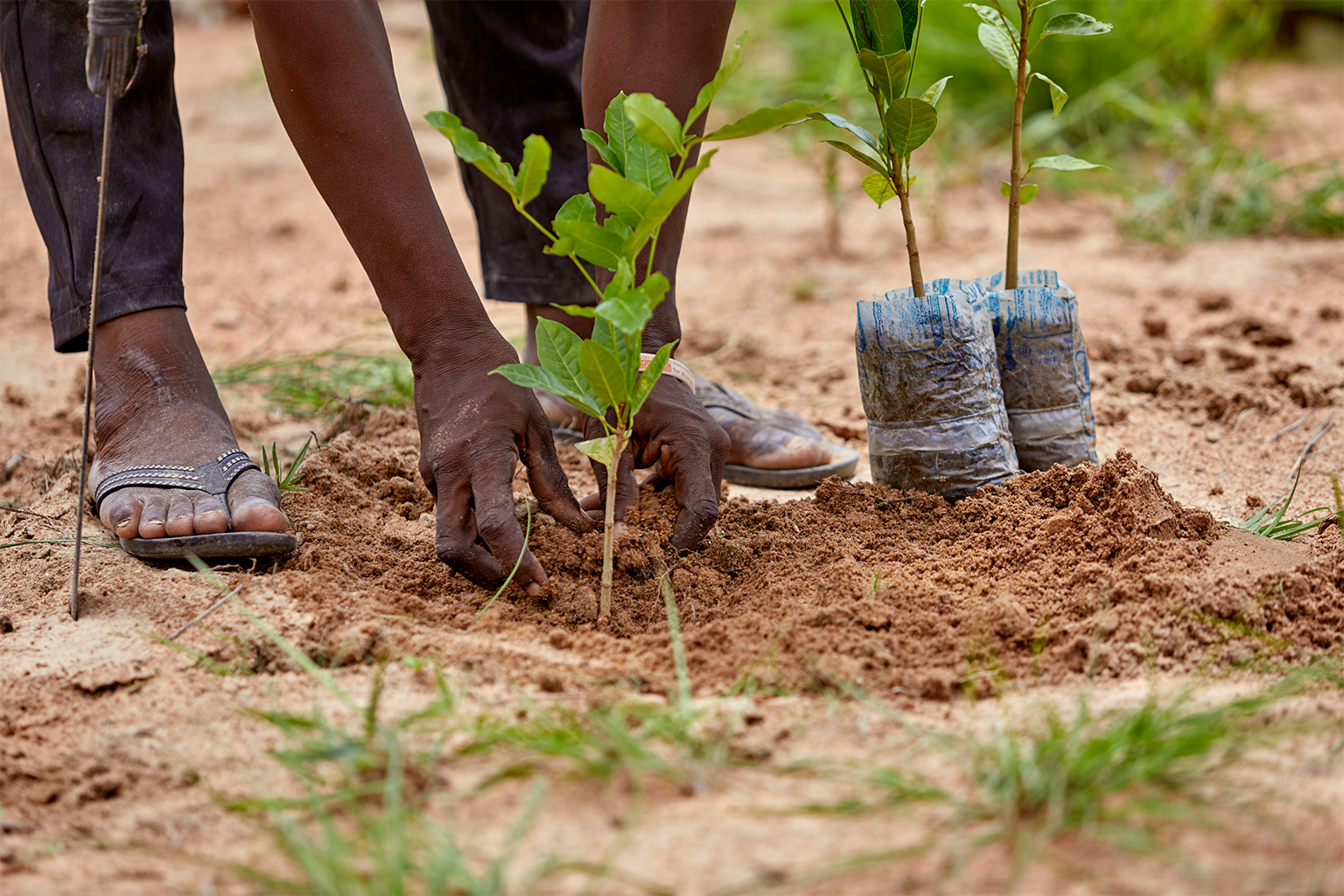
Banner image: Tree Aid’s efforts as part of the Great Green Wall in Mali. Image courtesy of Tree Aid.