Authorities in Malawi have credited stronger monitoring and border controls with effectively ending the smuggling of invasive crayfish into the country, nearly a year after a major seizure from neighboring Zambia.
Davie Khumbanyiwa, the fisheries department officer responsible for monitoring, control and surveillance, said the department has increased inspections for redclaw crayfish (Cherax quadricarinatus), a species farmed in Zambia but native to Australia and Papua New Guinea.
“Our monitoring now also includes fish farms along the borders, spot checks in markets and river systems that are within the catchments with Zambia,” Khumbanyiwa told Mongabay.
He said Malawi is collaborating with authorities in Zambia, Tanzania and Mozambique. “Our intention is to make sure that we don’t have those exotic species here.”
Jeremiah Kang’ombe, a fisheries expert at the Lilongwe University of Agriculture and Natural Resources, said strengthening border controls is key.
“Our borders being porous, this is the first line of defense when it comes to smuggling of these alien species. It will ensure some biosafety measures are applied accordingly,” Kang’ombe told Mongabay.
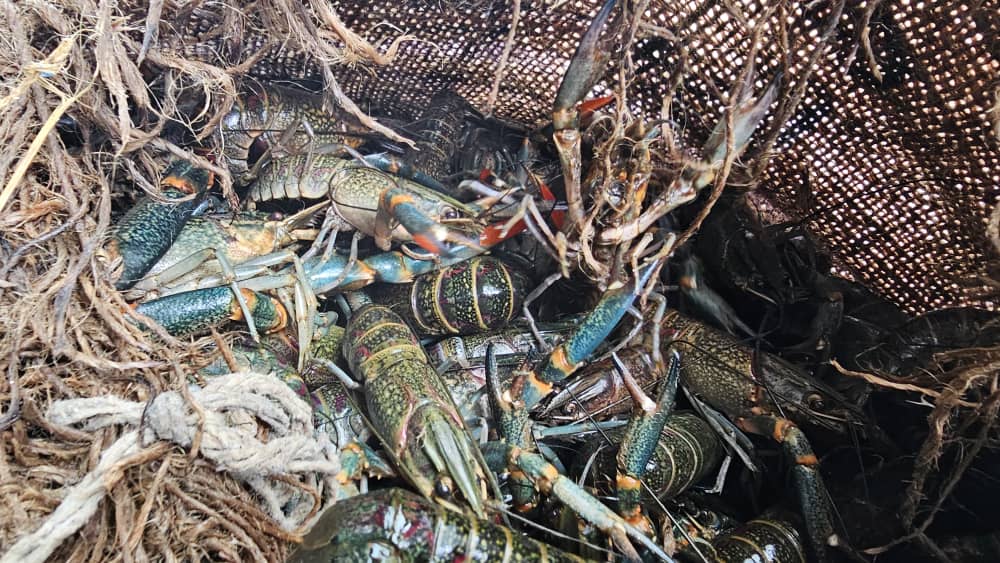
In May 2025, Malawian authorities arrested four people from Zambia carrying a quarter-ton of live redclaw, a violation of fisheries and environmental regulations. The contraband was incinerated and the smugglers fined and released. Since then, the Malawi fisheries department says, increased monitoring has not detected any more smuggled crayfish.
One of the Zambians told investigators at the time that this was his second trip; earlier in 2025, he had brought 20 kilograms (44 pounds) of redclaw to a Chinese buyer. The seized 250 kg (550 lbs), for which the Zambians were to be paid $1,700, was also reportedly for a Chinese buyer for use in a Chinese restaurant.
Environmentalists and fisheries experts said the fines, between $29 and $86, were too small to be a deterrent, and noted the Zambians could have been sentenced to a year in prison.
“However, as department, we are somewhat satisfied that the Court upheld our request to destroy the contraband,” Maxon Ngochera, the senior deputy director of fisheries, told local media.
Research shows redclaw were introduced to Zambia from Australia in the early 2000s for aquaculture. The crayfish are aggressive and prey on native fish and their eggs. They also reproduce quickly, outcompeting native species for food and shelter, and can carry pathogens that cause disease outbreaks in other species.
A Malawi fisheries department report warned that if the crayfish gained a foothold in the country’s rivers and wetlands, it would damage ecosystems, communities and the economy.
In a statement after the May 2025 seizure, the fisheries department said a crayfish infestation could lower fishery yields, economically harming the country’s estimated 82,000 fishers, plus the half-million people involved in processing and selling fish.
“The decline of native fish populations due to invasive species would jeopardize these livelihoods and food security,” the department said.
Banner image: Crayfish seized by officials in May 2025. Image courtesy of Malawi Department of Fisheries.