The Environment and Land court at Isiolo has ruled that a class action lawsuit against British oil giant BP can proceed to a full hearing, in a case that alleges toxic waste left behind from oil exploration in the 1980s contaminated groundwater in northern Kenya, killing more than 500 people and thousands of livestock.
The matter shall be taken up on May 6.
The lawsuit, filed in February by 299 petitioners at the Environment and Land Court at Isiolo, was brought by residents of Kargi and Kalacha, two remote settlements in Marsabit county. It alleges that oil exploration activities conducted between 1985 and 1993 in northern and northwestern Kenya by Amoco Corporation, which was acquired by BP in 1998, improperly discharged hazardous and toxic contaminants into the environment, contaminating groundwater that communities depend on for drinking water and to rear livestock.
Court documents allege that drilling waste containing radium isotopes, arsenic, lead and nitrates, was dumped in unlined pits or left exposed on the ground. The petition names British Petroleum PLC as the first respondent, alongside 11 other respondents including the National Oil Corporation of Kenya; the cabinet secretaries for environment, water, health and mining; the Water Resources Authority; the county government of Marsabit; the attorney general; the National Environment Management Authority; the Kenya Nuclear Regulatory Authority; and the Kenya Medical Research Institute.
BP’s press office told Mongabay via email that it had no comment on the case.
The High Court’s April ruling does not establish liability but clears the procedural threshold for the case to be fully heard.
The 299 named petitioners may represent only a fraction of those affected. The case is backed by the Pastoralist Alliance for Resilience and Adaptation Across Nations (PARAAN) a civil society network of 37 organisations drawn from nine Kenyan counties and three East African countries. Liban Golicha, PARAAN’s coordinator, told Mongabay the organization became involved after a member organization in the region brought the community’s evidence to their attention.
“This was a long-standing historical injustice that happened some time back,” Golicha said. “We came to support them, giving them a hand to get the community’s consent, to facilitate the legal team to visit the sites and to help coordinate stakeholders.”
The case, Golicha said, is not isolated. Similar allegations of toxic waste dumping by oil exploration companies have been raised in other counties in northern Kenya including Garissa, Wajir and Isiolo, and PARAAN has begun receiving inquiries from those areas about how to pursue similar legal action or whether they can be enjoined. “There’s an allegation that similar incidents happened in the entire northern Kenya,” he said. “If this goes through, this will be an eye-opener.” For now, PARAAN is treating the Kargi and Kalacha case as a pilot.
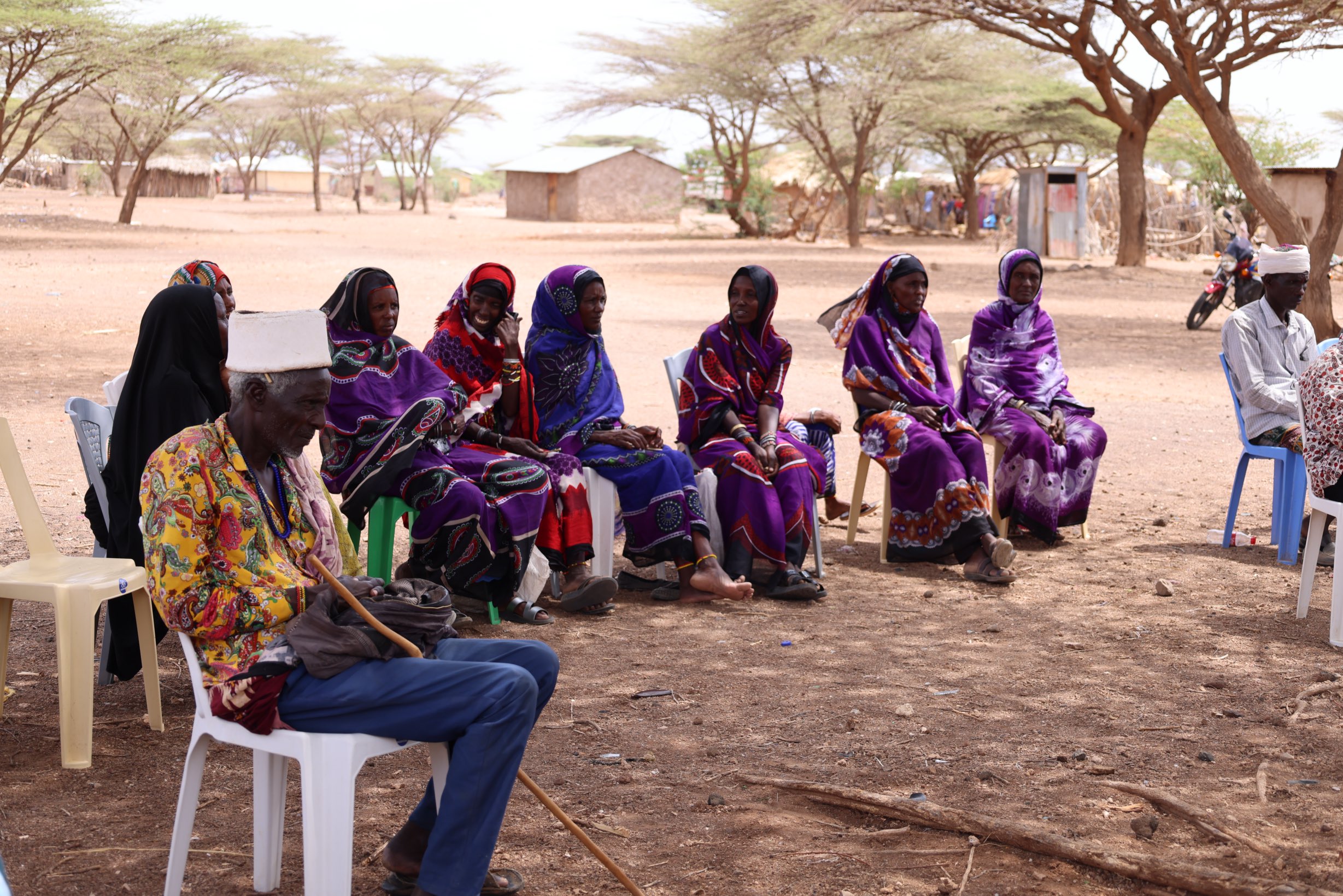
Banner Image: Residents of Kalacha settlement during a meeting with civil society representatives and lawyers in February, 2026. Image courtesy of Zeitun.