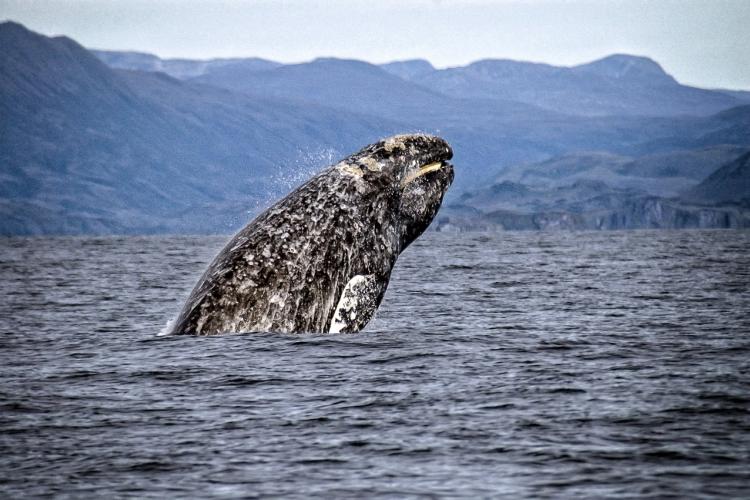
Gray whales are experiencing a potentially catastrophic population decline, a sharp reversal from what had been considered a conservation success. As of July 6, 2026, there were 145 gray whale (Eschrichtius robustus) stranding deaths in the Pacific, according to National Oceanic and Atmospheric Administration (NOAA) data. The environmental non-profit Public Employees for Environmental Responsibility (PEER) estimates that for every one stranded gray whale observed, another nine or more may have died at sea, meaning another 1,305 gray whales may have died this year without anyone knowing. Scientists consider such a rate of gray whale deaths a “catastrophic mortality event.” In 2019, there were roughly 20,500 gray whales; by 2023, the population had declined to 14,526 individuals, nearly 30% of the entire population gone in four years. The whale’s population was already greatly reduced by a century of whaling, but protection under the Endangered Species Act had helped the species recover. Gray whales live in the eastern North Pacific and migrate between 16,000 and 22,500 kilometers (10,000 and 14,000 miles) from their winter calving lagoons off Baja California, Mexico, to their Arctic feeding grounds. But climate change is disrupting the Arctic food web on which the gray whales depend. The whales are coastal bottom feeders and use baleen plates inside their mouths to filter tiny invertebrates from the seafloor or benthic layer. Warming temperatures and earlier-than-usual ice melt mean that phytoplankton bloom earlier and are eaten before they can fall to the seafloor to feed benthic invertebrates and, ultimately, gray whales.…This article was originally published on Mongabay