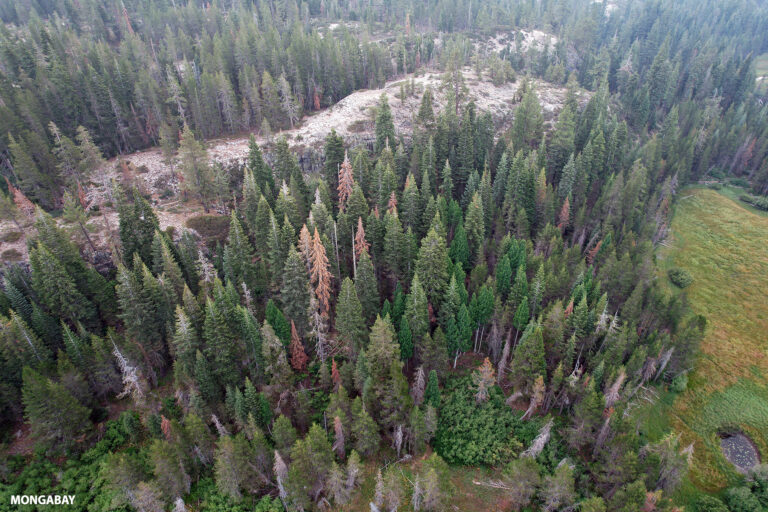
Elizabeth Goldman is a co-director of Global Nature Watch, previously known as Global Forest Watch, a database measuring forest loss that’s frequently cited in Mongabay reporting. She joins this week’s podcast to detail GNW’s updated 25-year analysis of global forest fire trends. The picture is stark: Forest fires burn twice as much forest today as they did 20 years ago, and historic fire seasons are the “new normal,” she says. “Catastrophic, large-scale fires are becoming more of a normal. The last three years are the worst three years in the record-keeping in our data set,” Goldman says. “Fires now burn twice as much forest as they did earlier in the time series from our data.” 2025, considered a drop from 2024, still saw 11 million hectares (27 million acres) of forest, an area roughly the size of Guatemala, burn. Rhett Butler, founder and CEO of Mongabay, published an analysis of the dip in 2025, cautioning readers against reading too much into what appeared to be a reprieve. He noted that large-scale commodity agriculture and climate change, the causes of this forest loss, remain. Goldman agrees. In the absence of “serious action” internationally to combat it, and commodity-driven agriculture that continues contributing to these fires, Goldman says there are things governments can do to mitigate their risk locally. “There are ways to sustainably manage a forest, like through thinning and prescribed burns, fire breaks, those sorts of things that don’t involve clear-cutting an entire forest, but leave the tree standing, leave the…This article was originally published on Mongabay