Brazil · Business
Vivo Brazil earnings for the second quarter of 2026 showed a 17.0% jump in net profit, as Telefônica Brasil (B3: VIVT3), the country’s largest telecom operator, reported net income of R$1.57 billion (~US$308 million). The result, released on July 27, was in line with market expectations and marked the strongest EBITDA growth since the third quarter of 2023.
Key Facts
—Net Profit. R$1.57 billion (~US$308 million), up 17.0% year-on-year in Q2 2026.
—Operating Revenue. R$15.76 billion (~US$3.09 billion), a 7.6% increase from the prior year.
—EBITDA. R$6.58 billion (~US$1.29 billion), rising 10.9% YoY with a 41.8% margin.
—Growth Drivers. Mobile postpaid services, FTTH (fiber-to-the-home), and digital services.
—Electronics Push. Appliance and electronics revenue jumped 27.8% to R$1.048 billion (~US$205 million), advancing Vivo’s move into consumer-electronics retail.
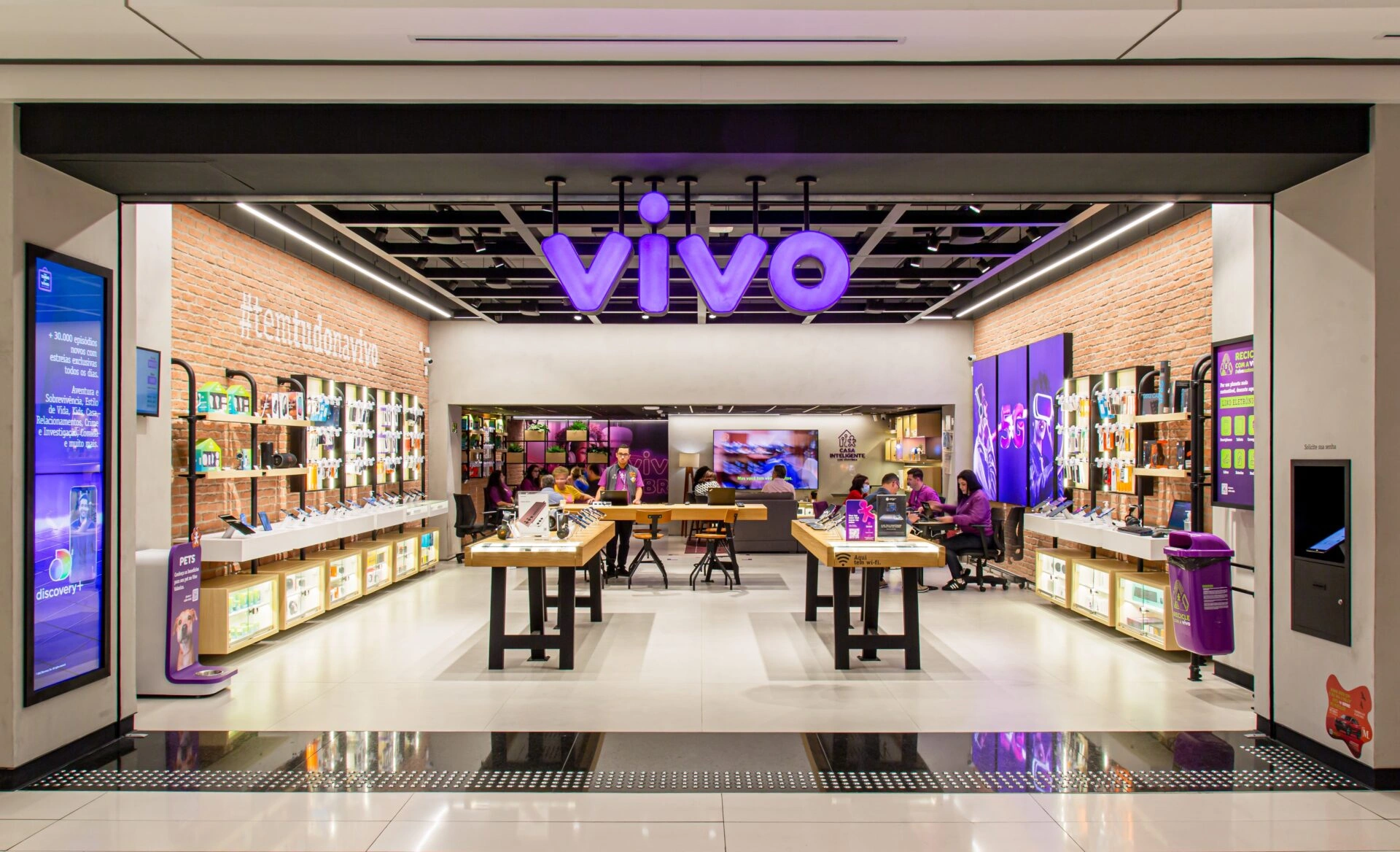
Vivo Brazil Earnings Jump 17% on Mobile, Fiber Growth. (Photo internet reproduction)RTAsk Rio TimesMarkets, currencies and the economy›
Revenue and Profitability Drivers
Net operating revenue for Brazil‘s top carrier climbed 7.6% year-on-year to R$15.76 billion (~US$3.09 billion). The expansion was primarily fueled by its mobile postpaid segment, fiber-to-the-home (FTTH) broadband service, and a growing portfolio of digital services.
Earnings before interest, taxes, depreciation, and amortization (EBITDA) reached R$6.58 billion (~US$1.29 billion). This 10.9% increase from the R$5.93 billion (~US$1.16 billion) recorded a year earlier pushed the EBITDA margin to a robust 41.8%.
For readers unfamiliar with the term, EBITDA is a widely used measure of a company’s core operating profitability. It strips out costs that can vary significantly depending on a firm’s debt structure, tax situation, and accounting choices around large asset purchases. A rising EBITDA margin, such as the one Vivo just posted, often signals that a business is gaining operating leverage — meaning each additional real of revenue is generating proportionally more profit. In Brazil’s high-volume, infrastructure-heavy telecom sector, this metric is closely watched because building and maintaining networks requires enormous upfront capital, and investors want to see those investments translate into efficient, recurring cash generation.
The Push into Consumer Electronics Retail
Beyond connectivity, Vivo is expanding into consumer-electronics retail – and it is already showing up in the numbers. Revenue from appliances and electronics jumped 27.8% year over year to R$1.048 billion (~US$205 million) in the quarter.
By selling devices through its large store network and digital channels, the carrier competes more directly with traditional retailers and captures higher-margin hardware sales alongside recurring service fees – a diversification foreign investors are watching closely.
This strategy mirrors a broader global trend among telecom operators seeking to become more than simple connectivity providers. By controlling the point of sale for smartphones, laptops, and smart-home devices, a carrier can bundle hardware with long-term service contracts, potentially reducing customer churn. In Brazil, where a significant portion of the population still buys electronics through installment plans, a trusted carrier with an existing billing relationship can position itself as a natural financing partner. The open question is whether Vivo can scale this retail push without the inventory risk and thin margins that typically challenge dedicated electronics chains.
Live Company IntelligenceTelefônica Brasil S.A. — the full investor dossier
T
◆ Live Company Intelligence
Telefônica Brasil
SA: VIVT3VIVT3Communication ServicesTelecom Services35,010 employees
Valuation & profitability
Market capR$115.39B
Revenue (TTM)R$60.66B
P / E ratio18.3
Profit margin10.5%
Return on equity9.3%
Price & risk
52-wk low
$28.5452-wk high
$41.36
Beta (volatility)0.22
200-day average$36.40
Revenue trend · 6y
20202025
Latest R$59.60B
Ownership
Institutions9.3%
Shares outstanding3.20B
Dividend
Yield2.1%
Payout ratio67.3%
Fwd. annual$2.48
What Telefônica Brasil does. Telefônica Brasil S.A., together with its subsidiaries, operates as a mobile telecommunications company in Brazil. Its fixed line voice services portfolio includes local, domestic long-distance, and international long-distance calls; and mobile portfolio comprises voice and broadband internet access through 3G, 4G, 4.5G, and 5G, as well as value-added, prepaid plans with data…
Market Position: Vivo vs. TIM and Claro
Vivo operates as the market leader in Brazil’s competitive telecom sector, which is dominated by three major players. Its main rivals are TIM Brasil and Claro, the local subsidiary of Mexican telecom group América Móvil.
The company’s scale in mobile postpaid and fiber broadband provides a defensive moat. While all three carriers compete aggressively on 5G expansion, Vivo’s latest results underscore its ability to grow profitability while maintaining its number-one market share.
For context, Brazil’s telecom market is structured around a national regulatory framework overseen by Anatel, the country’s telecommunications agency. The three-way rivalry among Vivo, TIM, and Claro has shaped pricing and investment cycles for years. Postpaid mobile customers — those who pay a monthly bill rather than topping up prepaid credit — are particularly valuable because they generate more predictable revenue and tend to consume more data. Fiber-to-the-home broadband, meanwhile, has become a key battleground as millions of Brazilian households upgrade from older copper-based connections. Vivo’s ability to lead in both categories simultaneously is a central reason its financial results have drawn consistent attention from analysts covering Latin American equities.
Shareholder Returns and Capital Allocation
Telefônica Brasil has a well-established policy of distributing earnings to shareholders through dividends and interest on equity (JCP). The company continued this practice in the second quarter, though the exact per-share payout amount for the period was not specified in the initial earnings summary.
For expats and foreign investors holding VIVT3 shares on the B3 exchange, these regular distributions form a key part of the stock’s total return profile. The company’s free cash flow generation supports these payouts, even as it invests in network expansion.
Interest on equity, or JCP, is a Brazil-specific mechanism that allows companies to treat a portion of shareholder distributions as a tax-deductible expense, making it a tax-efficient way to return capital. For international investors, understanding the interplay between dividends and JCP is important because the tax treatment can differ depending on one’s country of residence and whether a double-taxation treaty applies. What remains to be seen is how Vivo will balance its capital allocation priorities going forward — specifically, whether the accelerating push into electronics retail will require heavier inventory investment that could temporarily pressure the free cash flow available for shareholder returns.
What It Means for Foreign Investors
For international readers, the results demonstrate the resilience of Brazil’s large consumer market. A net profit of ~US$308 million in a single quarter reflects the scale opportunity in Latin America’s biggest economy, where demand for premium data services continues to rise.
The US dollar figures, converted at a rate of 5.1 reais, offer a clear lens for portfolio evaluation. Vivo’s push into device retail adds a new growth vector, though execution risk remains a factor to monitor in future earnings calls.
Currency volatility is a permanent consideration when evaluating Brazilian equities. The real has historically swung widely against the dollar, meaning that even strong local-currency results can translate into uneven returns for foreign portfolios. Beyond the exchange rate, investors will likely be watching two broader themes. First, whether Brazil’s macroeconomic environment — including the trajectory of interest rates set by the central bank — supports continued consumer spending on telecom and electronics. Second, how the competitive dynamics with TIM and Claro evolve as all three players deepen their fiber and 5G footprints. These factors will help determine whether Vivo’s current margin strength proves durable or faces compression in the quarters ahead.
Frequently Asked Questions
What drove the 17% increase in Vivo Brazil earnings for Q2 2026?
The profit jump was driven by a 7.6% rise in net operating revenue, fueled by growth in mobile postpaid subscriptions, fiber broadband (FTTH), and digital services. EBITDA grew 10.9%, marking the strongest increase since Q3 2023.
How much is Vivo’s net profit in US dollars?
Vivo’s Q2 2026 net profit of R$1.57 billion converts to approximately US$308 million, based on an exchange rate of 5.1 Brazilian reais per US dollar.
What is Vivo’s consumer electronics retail strategy?
Vivo’s appliance and electronics revenue grew 27.8% to R$1.048 billion (~US$205 million) in Q2 2026. The carrier is using its store network and digital channels to expand into consumer-electronics retail.
Display draft for copy-paste review only — NOT published. Cover image viewed and cleared as brand-safe.